


Preoperative MRI in breast cancer: effect of breast density on biopsy rate and yield
Supporting Files

-
1 2022
-

File Language:
English
Details
-
Alternative Title:Breast Cancer Res Treat
-
Personal Author:
-
Description:Purpose
Preoperative breast MRI is used to evaluate for additional cancer and extent of disease for newly diagnosed breast cancer, yet benefits and harms of preoperative MRI are not well documented. We examined whether preoperative MRI yields additional biopsy and cancer detection by extent of breast density.
Methods
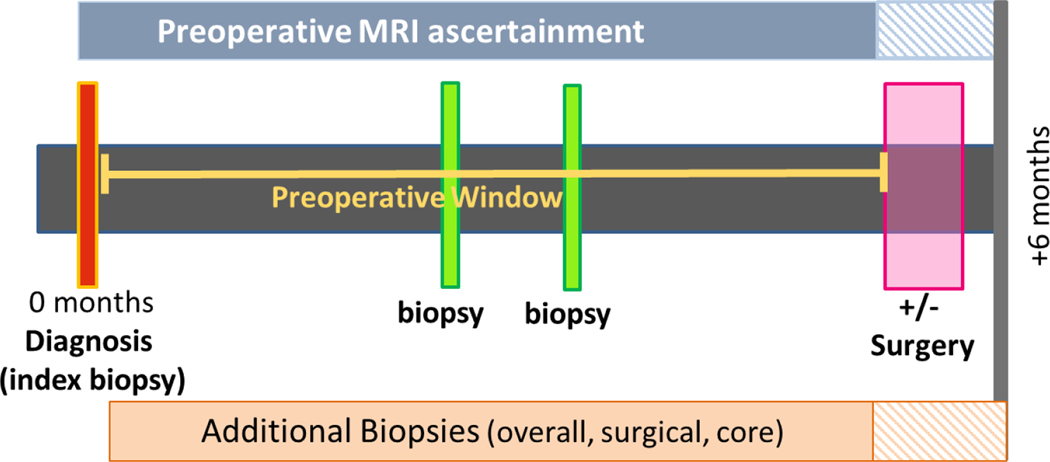
We followed women in the Breast Cancer Surveillance Consortium with an incident breast cancer diagnosed from 2005–2017. We quantified breast biopsies and cancers detected within 6 months of diagnosis by preoperative breast MRI receipt, overall and by breast density, accounting for MRI selection bias using inverse probability weighted logistic regression.
Results
Among 19,324 women with newly diagnosed breast cancer, 28% had preoperative MRI, 11% additional biopsy, and 5% additional cancer detected. Four times as many women with preoperative MRI underwent additional biopsy compared to women without MRI (22.6% v. 5.1%). Additional biopsy rates with preoperative MRI increased with increasing breast density (27.4% for extremely dense compared to 16.2% for almost entirely fatty breasts). Rates of additional cancer detection were almost four times higher for women with v. without MRI (9.9% v. 2.6%). Conditional on additional biopsy, age-adjusted rates of additional cancer detection were lowest among women with extremely dense breasts, regardless of imaging modality (with MRI: 35.0%; 95%CI=27.0%−43.0%; without MRI: 45.1%; 95%CI=32.6%−57.5%).
Conclusion
For women with dense breasts, preoperative MRI was associated with much higher biopsy rates, without concomitant higher cancer detection. Preoperative MRI may be considered for some women, but selecting women based on breast density is not supported by evidence.
-
Subjects:
-
Source:Breast Cancer Res Treat. 191(1):177-190
-
Pubmed ID:34686934
-
Pubmed Central ID:PMC9881728
-
Document Type:
-
Funding:HHSN261201000140C/CA/NCI NIH HHSUnited States/ ; P01 CA154292/CA/NCI NIH HHSUnited States/ ; CS-1504-30370/PCORI/Patient-Centered Outcomes Research InstituteUnited States/ ; U54 CA163303/CA/NCI NIH HHSUnited States/ ; HHSN261201300012I/CA/NCI NIH HHSUnited States/ ; HHSN261201000035I/CA/NCI NIH HHSUnited States/ ; U58 DP003862/DP/NCCDPHP CDC HHSUnited States/ ; HHSN261201000029C/CA/NCI NIH HHSUnited States/ ; N01 CN067009/CN/NCI NIH HHSUnited States/ ; U01 CA086082/CA/NCI NIH HHSUnited States/ ; N01PC35142/CA/NCI NIH HHSUnited States/ ; R01 CA149365/CA/NCI NIH HHSUnited States/ ; HHSN261201000035C/PC/NCI NIH HHSUnited States/ ; HHSN261201000034C/CA/NCI NIH HHSUnited States/ ; N01 CN005230/CN/NCI NIH HHSUnited States/ ; R01 HS018366/HS/AHRQ HHSUnited States/
-
Volume:191
-
Issue:1
-
Collection(s):
-
Main Document Checksum:urn:sha256:b1b1081b12ba69baaae36c5888cc1ff52af2307714e02882ea76c91fc400fedd
-
Download URL:
-
File Type:
 [PDF
- 383.23 KB
]
[PDF
- 383.23 KB
]

Supporting Files


File Language:
English
ON THIS PAGE


CDC STACKS serves as an archival repository of CDC-published products including
scientific findings,
journal articles, guidelines, recommendations, or other public health information authored or
co-authored by CDC or funded partners.
As a repository, CDC STACKS retains documents in their original published format to ensure public access to scientific information.
As a repository, CDC STACKS retains documents in their original published format to ensure public access to scientific information.
You May Also Like
COLLECTION
CDC Public Access