


Fatigue development in the finger flexor muscle differs between keyboard and mouse use
Supporting Files

-
12 2014
File Language:
English
Details
-
Alternative Title:Eur J Appl Physiol
-
Personal Author:
-
Description:Purpose
The aim of the present study was to determine whether there were any physiological changes in the muscle as a result of intensive computer use.
Methods
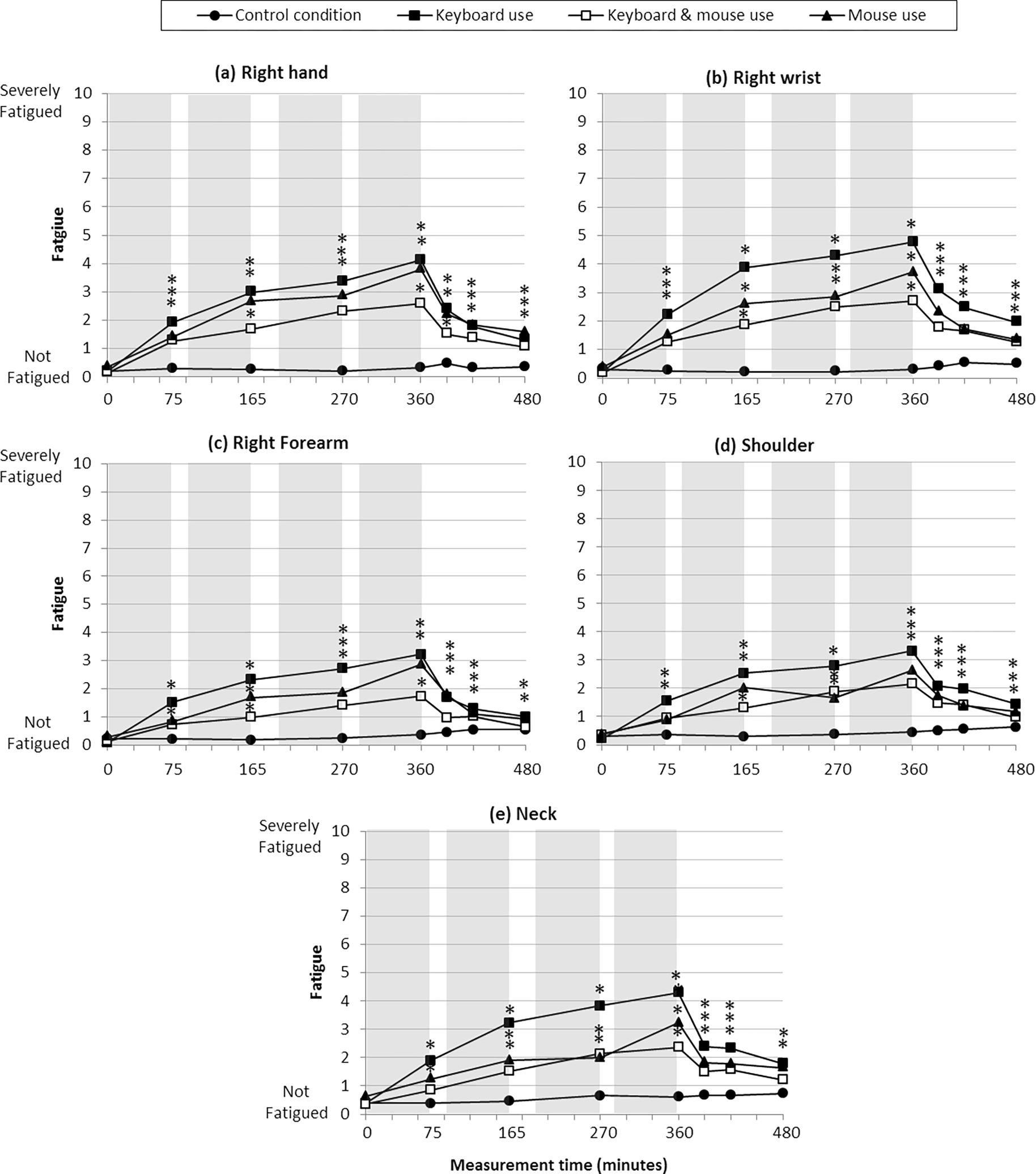
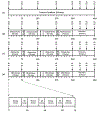
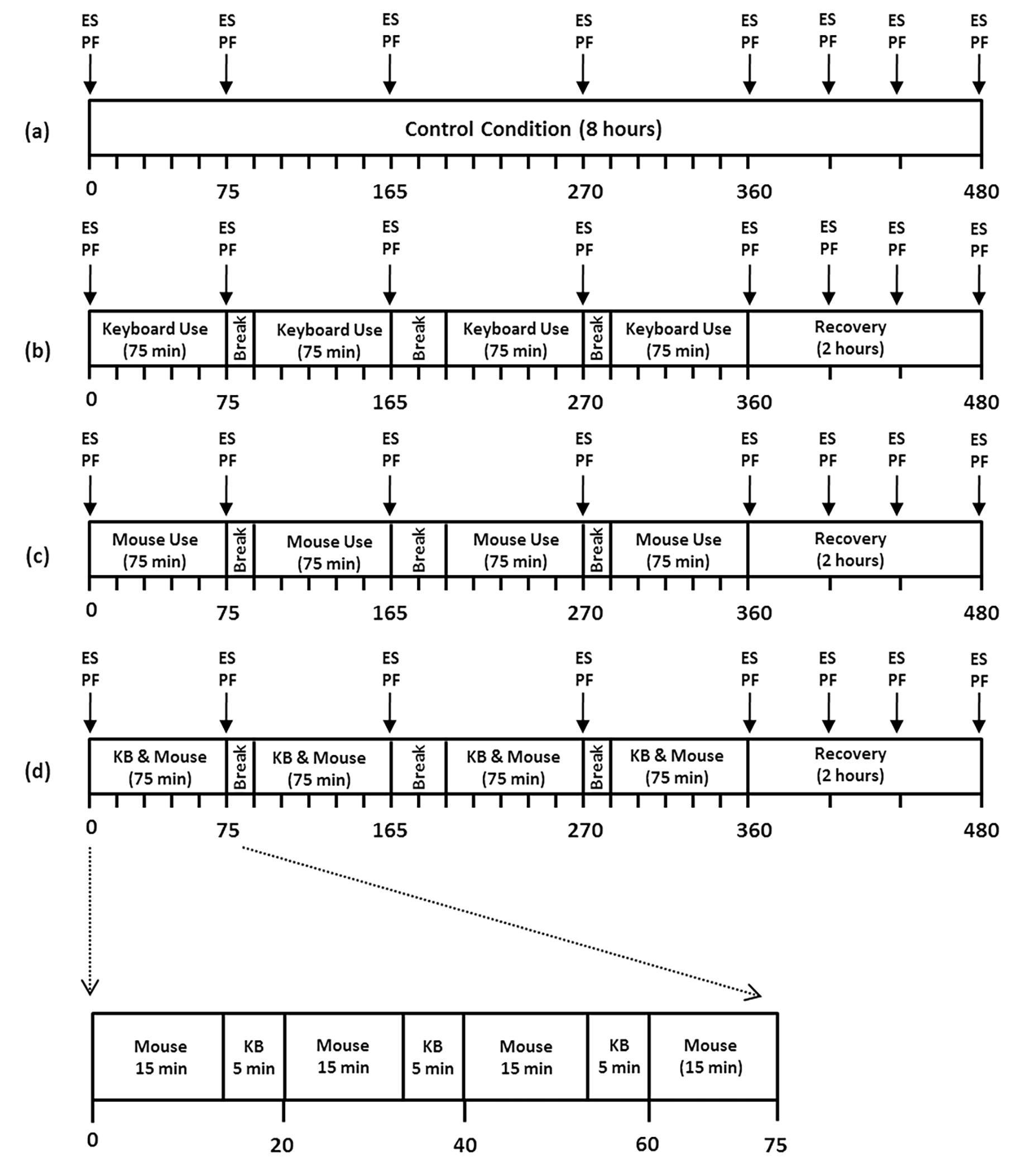
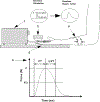
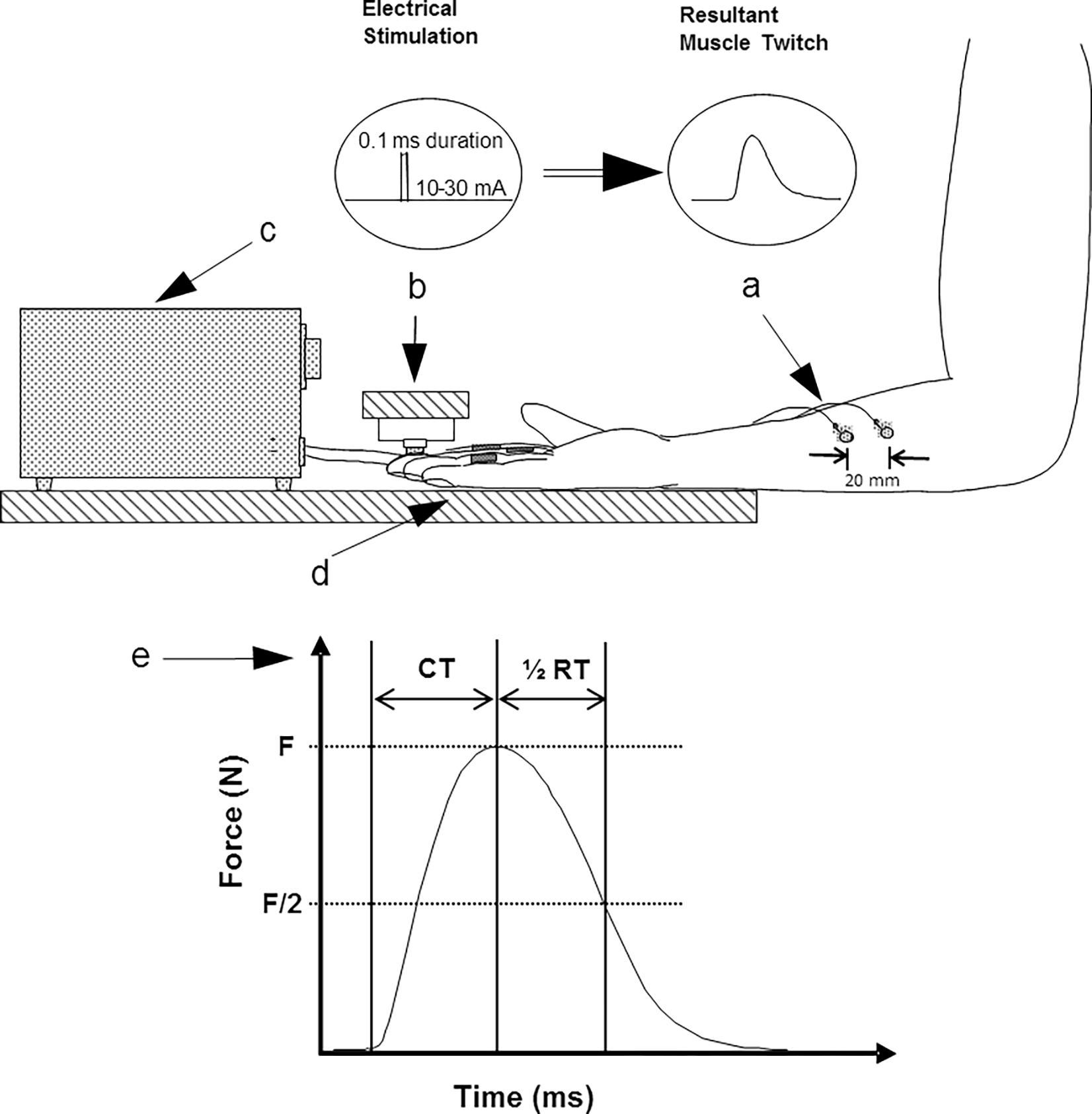
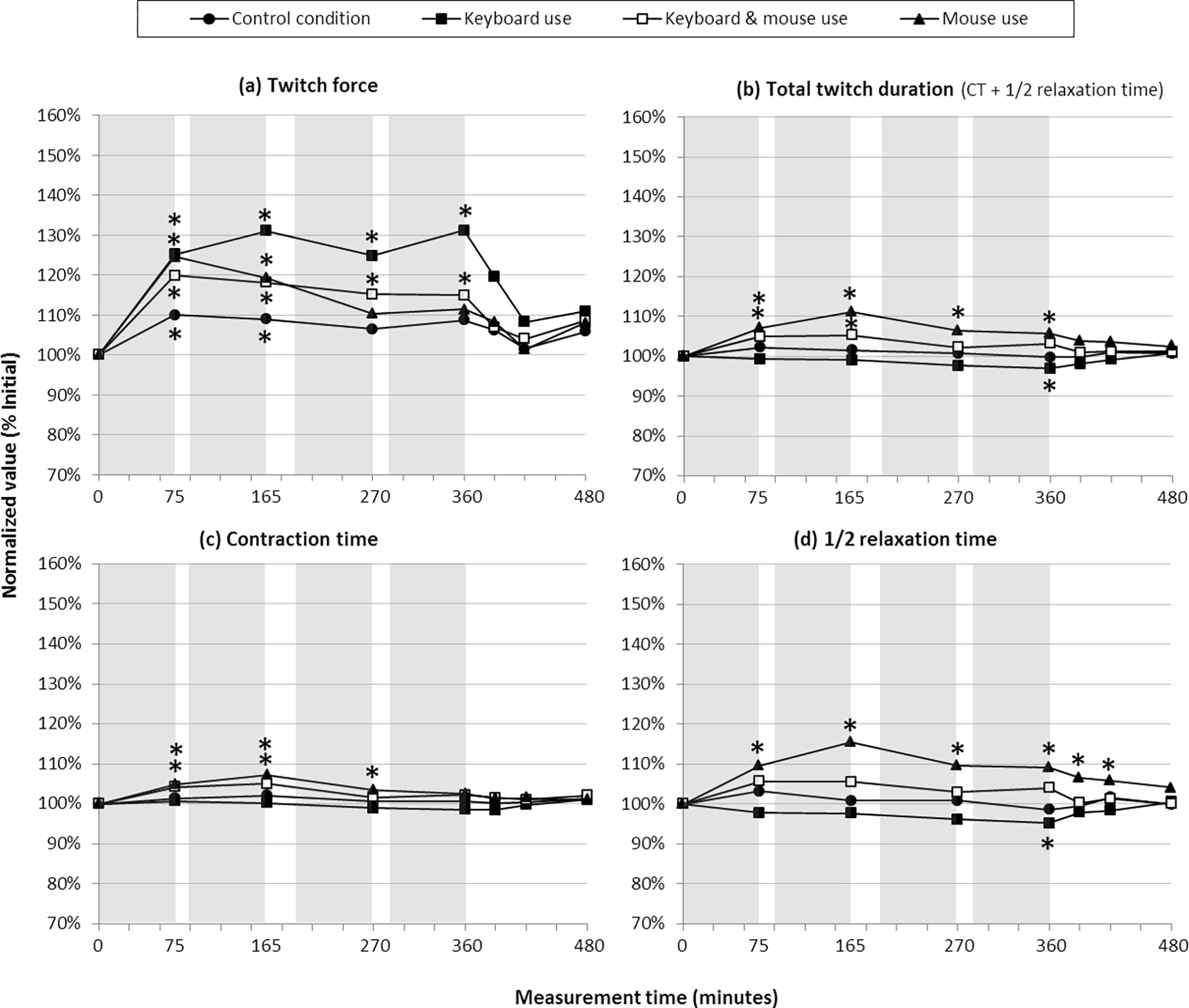
Using a repeated measures experimental design, eighteen subjects participated in four different eight-hour conditions: a control (no exposure) condition and three exposure conditions comprised of 6 hours of computer use (keyboard, mouse, and combined keyboard and mouse use) followed by 2 hours of recovery. In each condition, using 2 Hz neuromuscular electrical stimulation, eight temporal measurements were collected to evaluate the fatigue state (twitch force, contraction time, and ½ relaxation time) of the right middle finger Flexor Digitorum Superficialis (FDS) muscle before, during, and after computer use.
Results
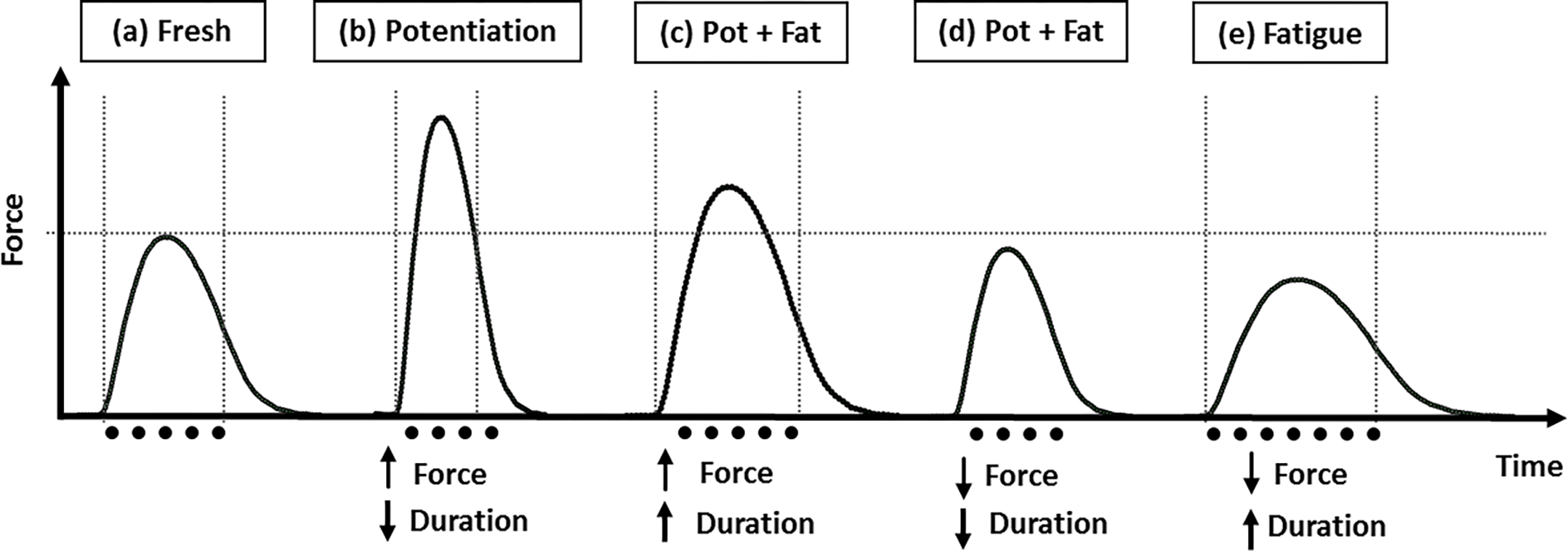
The results indicated that 6 hours of keyboard, mouse, and combined mouse and keyboard use all caused temporal fatigue-related changes in physiological state of the FDS muscle. Keyboard use resulted in muscle potentiation, which was characterized by approximately 30% increase in twitch force (p < 0.0001) and 3% decrease (p = 0.04) in twitch durations. Mouse use resulted in a combined state of potentiation and fatigue, which was characterized by an increase in twitch forces (p = 0.002) but a prolonging (11%) rather than a shortening of twitch durations (p < 0.0001).
Conclusions
When comparing mouse and keyboard use, the more substantial change in the physiological state of the muscle with mouse use (potentiation and fatigue compared to just potentiation with keyboard use) provides some physiological evidence which may explain why mouse use has a greater association with computer-related injuries.
-
Subjects:
-
Source:Eur J Appl Physiol. 114(12):2469-2482
-
Pubmed ID:25107647
-
Pubmed Central ID:PMC9798874
-
Document Type:
-
Funding:
-
Volume:114
-
Issue:12
-
Collection(s):
-
Main Document Checksum:urn:sha256:8c61d4691d0199ad0268df559a7cecd3dce95f621b51a924ac09d7d761d92560
-
Download URL:
-
File Type:
 [PDF
- 1.10 MB
]
[PDF
- 1.10 MB
]
Supporting Files


File Language:
English
ON THIS PAGE

CDC STACKS serves as an archival repository of CDC-published products including
scientific findings,
journal articles, guidelines, recommendations, or other public health information authored or
co-authored by CDC or funded partners.
As a repository, CDC STACKS retains documents in their original published format to ensure public access to scientific information.
As a repository, CDC STACKS retains documents in their original published format to ensure public access to scientific information.
You May Also Like
COLLECTION
CDC Public Access