



Vital Signs: Influenza Hospitalizations and Vaccination Coverage by Race and Ethnicity—United States, 2009–10 Through 2021–22 Influenza Seasons
Supporting Files
Public Domain

-
10 28 2022
File Language:
English
Details
-
Alternative Title:Influenza Hospitalizations and Vaccination Coverage by Race and Ethnicity—United States, 2009–10 Through 2021–22 Influenza Seasons
-
Journal Article:Morbidity and Mortality Weekly Report (MMWR)
-
Personal Author:Black, Carla L. ; O’Halloran, Alissa ; Hung, Mei-Chuan ; Srivastav, Anup ; Lu, Peng-jun ; Garg, Shikha ; Jhung, Michael ; Fry, Alicia ; Jatlaoui, Tara C. ; Davenport, Elizabeth ; Burns, Erin ; Reingold, Arthur ; Alden, Nisha B. ; Yousey-Hindes, Kimberly ; Anderson, Evan J. ; Ryan, Patricia A. ; Kim, Sue ; McMahon, Melissa ; Bleecker, Molly ; Spina, Nancy ; Bennett, Nancy M. ; Lung, Krista ; Sutton, Melissa ; Schaffner, William ; Talbot, H. Keipp ; Crossland, Melanie T. ; Reed, Carrie ; Holstein, Rachel ; Ujamaa, Dawud ; Cummings, Charisse
-
Corporate Authors:
-
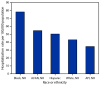
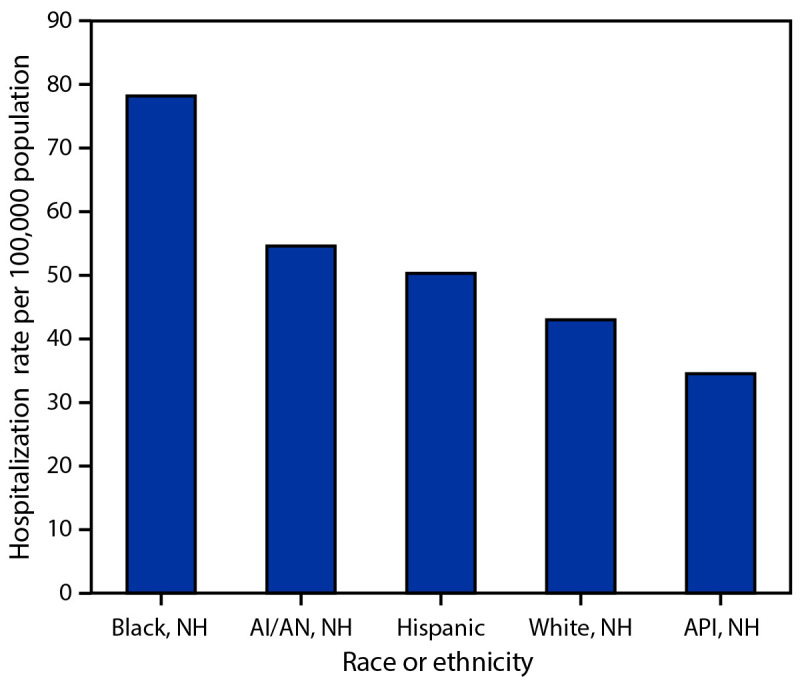
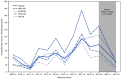
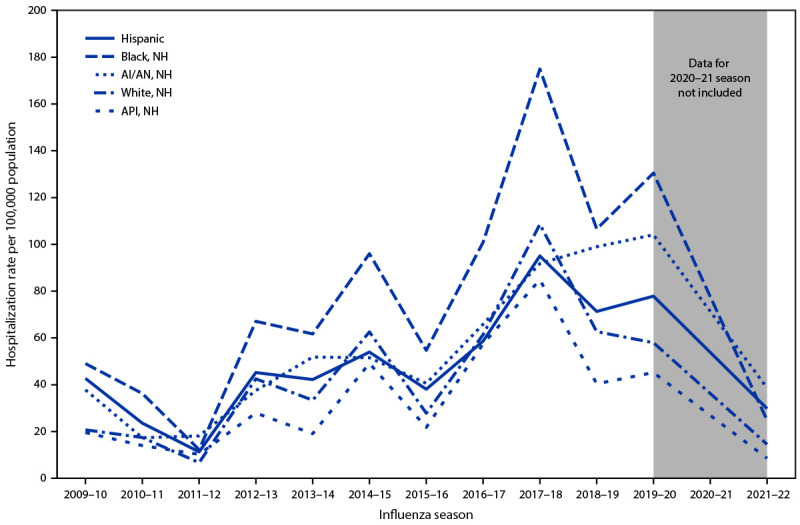
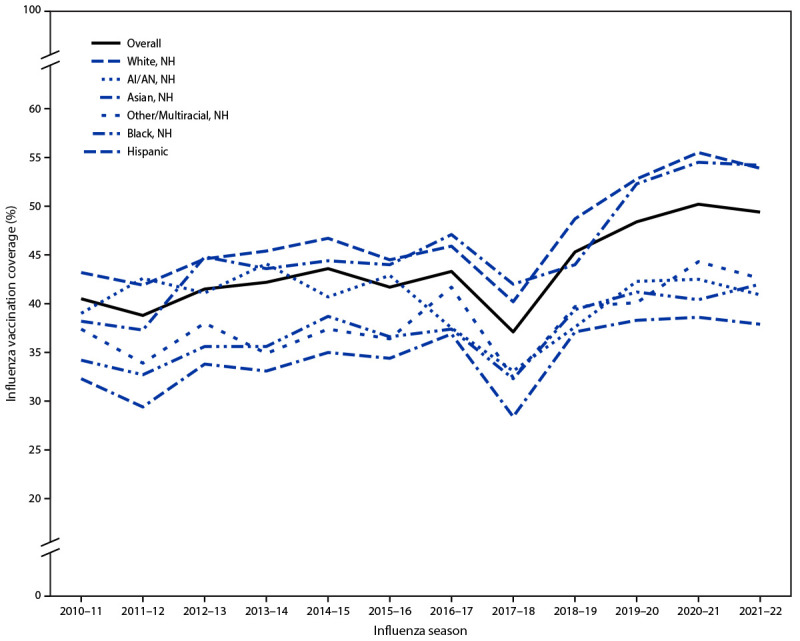
Description:Introduction ; CDC estimates that influenza resulted in 9–41 million illnesses, 140,000–710,000 hospitalizations, and 12,000–52,000 deaths annually during 2010–2020. Persons from some racial and ethnic minority groups have historically experienced higher rates of severe influenza and had lower influenza vaccination coverage compared with non-Hispanic White (White) persons. This report examines influenza hospitalization and vaccination rates by race and ethnicity during a 12–13-year period (through the 2021–22 influenza season). ; Methods ; Data from population-based surveillance for laboratory-confirmed influenza-associated hospitalizations in selected states participating in the Influenza-Associated Hospitalization Surveillance Network (FluSurv-NET) from the 2009–10 through 2021–22 influenza seasons (excluding 2020–21) and influenza vaccination coverage data from the Behavioral Risk Factor Surveillance System (BRFSS) from the 2010–11 through 2021–22 influenza seasons were analyzed by race and ethnicity. ; Results ; From 2009–10 through 2021–22, age-adjusted influenza hospitalization rates (hospitalizations per 100,000 population) were higher among non-Hispanic Black (Black) (rate ratio RR = 1.8), American Indian or Alaska Native (AI/AN; RR = 1.3), and Hispanic (RR = 1.2) adults, compared with the rate among White adults. During the 2021–22 season, influenza vaccination coverage was lower among Hispanic (37.9%), AI/AN (40.9%), Black (42.0%), and other/multiple race (42.6%) adults compared with that among White (53.9%) and non-Hispanic Asian (Asian) (54.2%) adults; coverage has been consistently higher among White and Asian adults compared with that among Black and Hispanic adults since the 2010–11 season. The disparity in vaccination coverage by race and ethnicity was present among those who reported having medical insurance, a personal health care provider, and a routine medical checkup in the past year. ; Conclusions and Implications for Public Health Practice ; Racial and ethnic disparities in influenza disease severity and influenza vaccination coverage persist. Health care providers should assess patient vaccination status at all medical visits and offer (or provide a referral for) all recommended vaccines. Tailored programmatic efforts to provide influenza vaccination through nontraditional settings, along with national and community-level efforts to improve awareness of the importance of influenza vaccination in preventing illness, hospitalization, and death among racial and ethnic minority communities might help address health care access barriers and improve vaccine confidence, leading to decreases in disparities in influenza vaccination coverage and disease severity.
-
Subjects:
-
Source:MMWR Morb Mortal Wkly Rep. 71(43):1366-1373
-
Series:
-
DOI:
-
ISSN:0149-2195 (print) ; 1545-861X (digital)
-
Pubmed ID:36302226
-
Pubmed Central ID:PMC9620569
-
Document Type:
-
Genre:
-
Place as Subject:
-
Pages in Document:8 pdf pages
-
Volume:71
-
Issue:43
-
Download URL:
-
File Type:
 [PDF - 519.34 KB]
 -
Collection(s):
-
Main Document Checksum:urn:sha-512:548a6e84d0be2d6cd7754c28b217aafbef1f20c53199bfae58d709ab80acf8c952aa00a9194a6f2cccb2a2f715e63ac460b003c59938dd70ccccf67319cf08e1
Supporting Files

Related Documents


File Language:
English
 Was this page helpful?
 Found an issue?

CDC STACKS serves as an archival repository of CDC-published products including
scientific findings, journal articles, guidelines, recommendations, or other public health information authored or
co-authored by CDC or funded partners.
As a repository, CDC STACKS retains documents in their original published format to ensure public access to scientific information.
As a repository, CDC STACKS retains documents in their original published format to ensure public access to scientific information.
You May Also Like
COLLECTION
Morbidity and Mortality Weekly Report (MMWR)