


Viral load scale-up in South Sudan: Strategic implementation of tools to monitor HIV treatment success among people living with HIV
Supporting Files

-
7 2022
-
File Language:
English
Details
-
Alternative Title:Int J STD AIDS
-
Personal Author:
-
Description:Introduction:
As access to antiretroviral therapy (ART) for people with HIV (PWH) in the Republic of South Sudan (RSS) increases, viral load (VL) suppression is critical to protect global HIV response investments. We describe VL scale-up between 2017–2020 in the RSS President’s Emergency Plan for AIDS Relief (PEPFAR)-supported program.
Methods:
President’s Emergency Plan for AIDS Relief (PEPFAR) South Sudan developed a VL scale-up plan and tools spanning the VL cascade: pre-test, test and post-test and included assessment of clinical facility and laboratory readiness; clinical and laboratory forms and standard operating procedures for test ordering, specimen collection, processing, results return and utilization; procedures to map clients, monitor turn-around-times (TAT), and an electronic system to monitor VL performance.
Results:
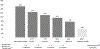
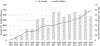
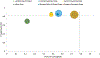
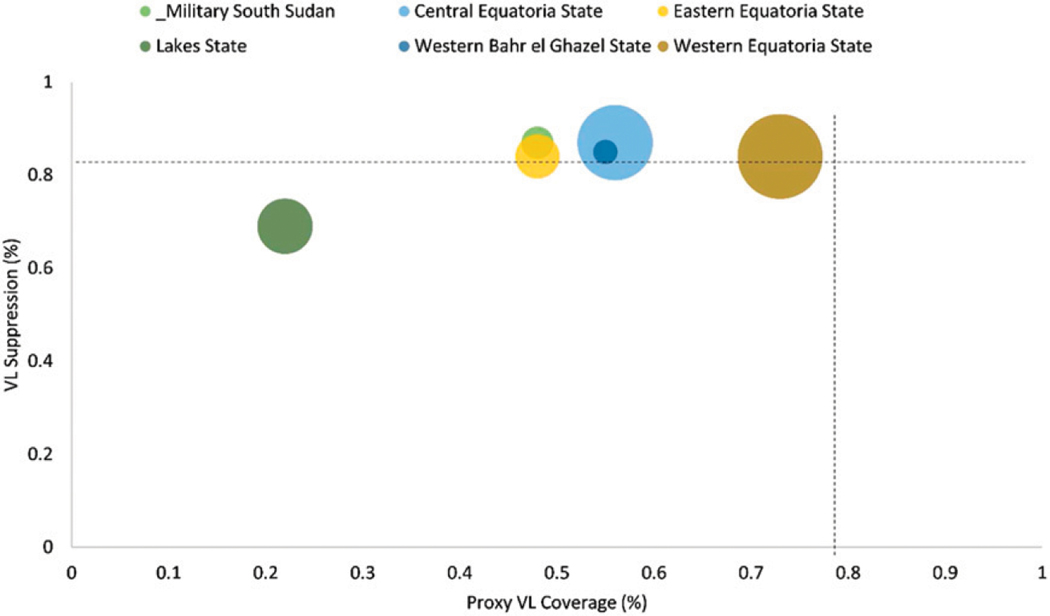
Between 2017 to 2020, VL monitoring was established in 58 facilities, with 59,600 VL samples processed, and improvements in TAT (150–28 days) and rejection rates (1.9%–0.8%). VL documentation improved for dates of ART initiation, VL test request and dispatch, and HIV regimen. Total average time from high VL to repeat VL decreased from 15.9 months to 6.4 months in 2017 and 2019, respectively.
Conclusions:
A concerted approach to VL scale-up has been fundamental as South Sudan strives towards UNAIDS 95-95-95 targets for PWH on ART.
-
Subjects:
-
Source:Int J STD AIDS. 33(8):784-791
-
Pubmed ID:35618534
-
Pubmed Central ID:PMC9668367
-
Document Type:
-
Funding:
-
Place as Subject:
-
Volume:33
-
Issue:8
-
Collection(s):
-
Main Document Checksum:urn:sha256:c916b60a3464769e6546c7f747a871b4a5400908f91ec67ec51e6decbb50c34a
-
Download URL:
-
File Type:
 [PDF
- 1016.73 KB
]
[PDF
- 1016.73 KB
]
Supporting Files


File Language:
English
ON THIS PAGE





CDC STACKS serves as an archival repository of CDC-published products including
scientific findings,
journal articles, guidelines, recommendations, or other public health information authored or
co-authored by CDC or funded partners.
As a repository, CDC STACKS retains documents in their original published format to ensure public access to scientific information.
As a repository, CDC STACKS retains documents in their original published format to ensure public access to scientific information.
You May Also Like
COLLECTION
CDC Public Access