



Prior COVID-19 Infection, Mental Health, Food and Financial Insecurity, and Association With COVID-19 Vaccination Coverage and Intent Among College-Aged Young Adults, US, 2021
Supporting Files

-
12 16 2021
File Language:
English
Details
-
Journal Article:Preventing Chronic Disease (PCD)
-
Personal Author:
-
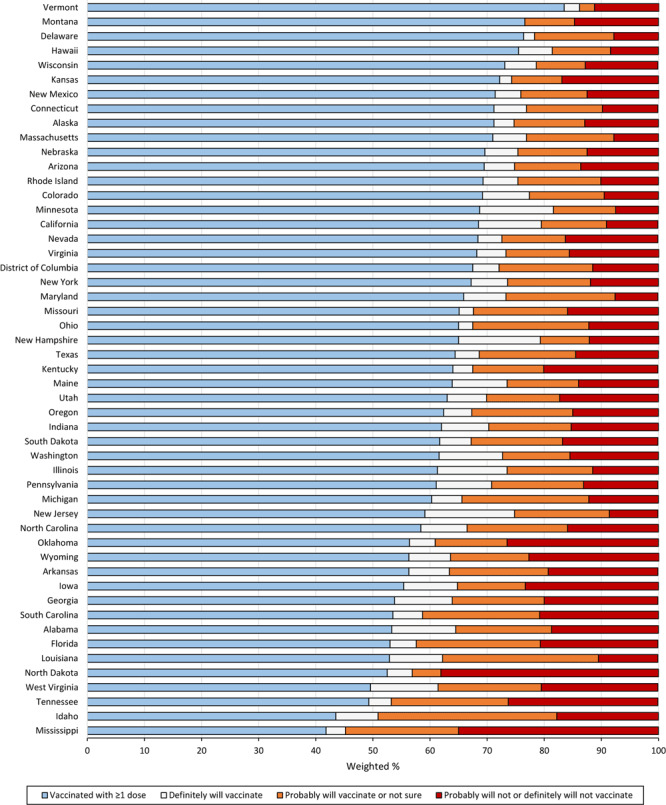
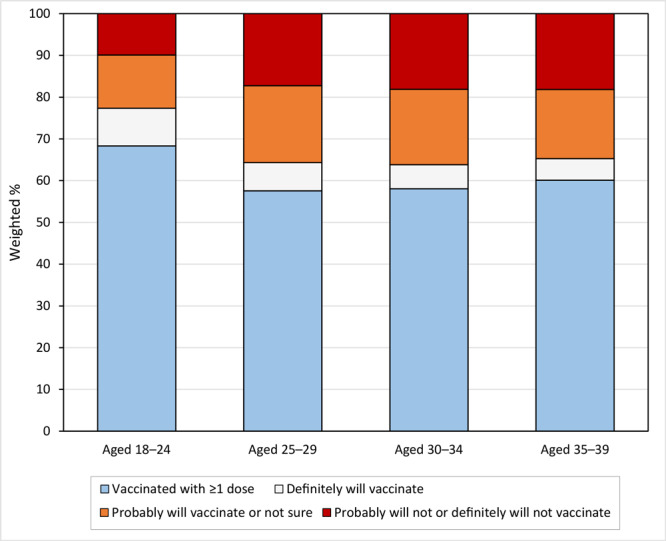
Description:Introduction ; More than 700,000 COVID-19 cases have been linked to American colleges and universities since the beginning of the pandemic. However, studies are limited on the effects of the pandemic on college-aged young adults and its association with their COVID-19 vaccination status and intent. ; Methods ; Using the Census Bureau’s Household Pulse Survey (HPS), a large, nationally representative survey fielded from April 14 through May 24, 2021, we assessed the effects of the pandemic (COVID-19 infection, mental health, food and financial security) on COVID-19 vaccination coverage (≥1 dose) and intentions toward vaccination among college-aged young adults in the United States (N = 6,758). We examined factors associated with vaccination coverage and intent, and reasons for not getting vaccinated. ; Results ; Approximately one-fifth (19.6%) of college-aged young adults had a previous diagnosis of COVID-19, 43.5% and 39.1% reported having anxiety or depression, respectively, 10.9% reported that they sometimes or often did not have enough food to eat, and 22.6% and 12.3% found it somewhat or very difficult, respectively, to pay for household expenses. Of college-aged young adults, 63.1% had received at least 1 dose of the COVID-19 vaccine, 15.4% probably would be vaccinated or were unsure about getting the vaccine, and 14.0% probably will not or definitely will not get vaccinated. Adults who were non-Hispanic Black (vs non-Hispanic White) or had food or financial insecurities (vs did not) were less likely to be vaccinated or intend to be vaccinated. Among adults who probably will not or definitely will not be vaccinated, more than one-third said that they did not believe a vaccine was needed. ; Conclusion ; Ensuring high and equitable vaccination coverage among college-aged young adults is critical for safely reopening in-person learning and resuming prepandemic activities.
-
Subjects:
-
Source:Prev Chronic Dis. 2021; 18
-
DOI:
-
ISSN:1545-1151
-
Pubmed ID:34914579
-
Pubmed Central ID:PMC8718122
-
Document Type:
-
Funding:
-
Place as Subject:
-
Location:
-
Volume:18
-
Download URL:
-
File Type:
 [PDF - 540.48 KB]
 -
Collection(s):
-
Main Document Checksum:urn:sha-512:ed5f01b763dcea94d59575073d88f2347a00b7820172b804742647a00081ea13636d1a746691cd67639ec1afbc8c1e93ed75d42f9a9c5938dcbfaca8f046e40c
Supporting Files


File Language:
English
 Was this page helpful?
 Found an issue?

CDC STACKS serves as an archival repository of CDC-published products including
scientific findings, journal articles, guidelines, recommendations, or other public health information authored or
co-authored by CDC or funded partners.
As a repository, CDC STACKS retains documents in their original published format to ensure public access to scientific information.
As a repository, CDC STACKS retains documents in their original published format to ensure public access to scientific information.
You May Also Like
COLLECTION
Preventing Chronic Disease