



Multidrug-resistant tuberculosis imported into low-incidence countries—a GeoSentinel analysis, 2008–2020
Supporting Files

-
8 27 2021 ; 8-27-
-
Available in CDC Stacks on 2022-11-07T00:00:00Z
File Language:
English
Details
-
Alternative Title:J Travel Med
-
Personal Author:Eimer, Johannes ; Patimeteeporn, Calvin ; Jensenius, Mogens ; Gkrania-Klotsas, Effrossyni ; Duvignaud, Alexandre ; Barnett, Elizabeth D. ; Hochberg, Natasha S. ; Chen, Lin H. ; Trigo-Esteban, Elena ; Gertler, Maximilian ; Greenaway, Christina ; Grobusch, Martin P. ; Angelo, Kristina M. ; Hamer, Davidson H. ; Caumes, Eric ; Asgeirsson, Hilmir
-
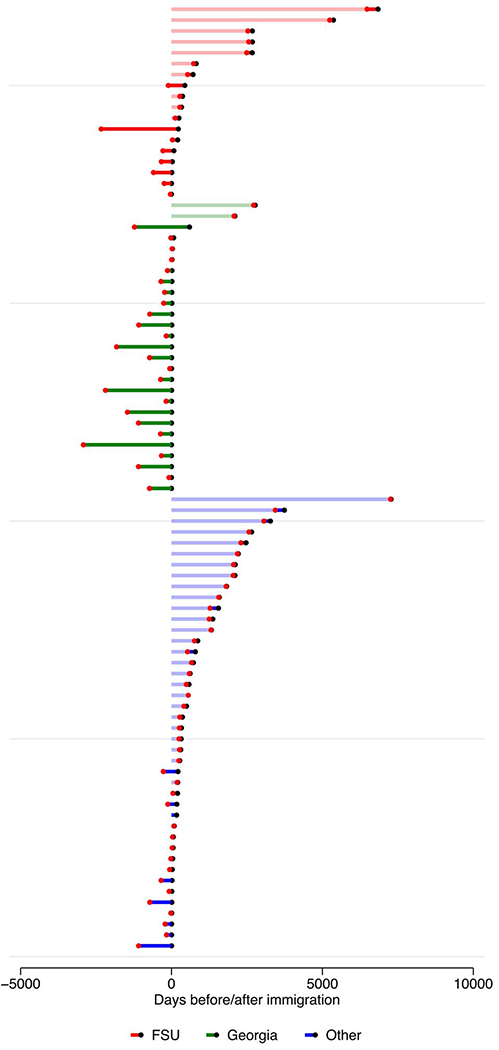
Description:Background: ; Early detection of imported multidrug-resistant tuberculosis (MDR-TB) is crucial, but knowledge gaps remain about migration- and travel-associated MDR-TB epidemiology. The aim was to describe epidemiologic characteristics among international travellers and migrants with MDR-TB. ; Methods: ; Clinician-determined and microbiologically confirmed MDR-TB diagnoses deemed to be related to travel or migration were extracted from GeoSentinel, a global surveillance network of travel and tropical medicine clinics, from January 2008 through December 2020. MDR-TB was defined as resistance to both isoniazid and rifampicin. Additional resistance to either a fluoroquinolone or a second-line injectable drug was categorized as pre-extensively drug-resistant (pre-XDR) TB, and as extensively drug-resistant (XDR) TB when resistance was detected for both. Sub-analyses were performed based on degree of resistance and country of origin. ; Results: ; Of 201 patients, 136 had MDR-TB (67.7%), 25 had XDR-TB (12.4%), 23 had pre-XDR TB (11.4%) and 17 had unspecified MDR- or XDR-TB (8.5%); 196 (97.5%) were immigrants, of which 92 (45.8%) originated from the former Soviet Union. The median interval from arrival to presentation was 154 days (interquartile range IQR: 10–751 days); 34.3% of patients presented within 1 month after immigration, 30.9% between 1 and 12 months and 34.9% after ≥1 year. Pre-XDR- and XDR-TB patients from the former Soviet Union other than Georgia presented earlier than those with MDR-TB (26 days IQR: 8–522 vs. 369 days IQR: 84–827), while patients from Georgia presented very early, irrespective of the level of resistance (8 days IQR: 2–18 vs. 2 days IQR: 1–17). ; Conclusions: ; MDR-TB is uncommon in traditional travellers. Purposeful medical migration may partly explain differences in time to presentation among different groups. Public health resources are needed to better understand factors contributing to cross-border MDR-TB spread and to develop strategies to optimize care of TB-infected patients in their home countries before migration.
-
Subjects:
-
Keywords:
-
Source:J Travel Med. 28(6)
-
Pubmed ID:33987682
-
Pubmed Central ID:PMC9638878
-
Document Type:
-
Funding:
-
Volume:28
-
Issue:6
-
Download URL:
-
File Type:
 [PDF - 201.37 KB]
 -
Collection(s):
-
Main Document Checksum:urn:sha-512:1bca94588f01f4753fdcea3deb378e70e3822fd1a478f795c5b6f25a19114b03964e3f06503b22e22e57a1fdf9fd2d30b9b7ad46dacce0be603ea75b0b4f0fa9
Supporting Files


File Language:
English
 Was this page helpful?
 Found an issue?



CDC STACKS serves as an archival repository of CDC-published products including
scientific findings, journal articles, guidelines, recommendations, or other public health information authored or
co-authored by CDC or funded partners.
As a repository, CDC STACKS retains documents in their original published format to ensure public access to scientific information.
As a repository, CDC STACKS retains documents in their original published format to ensure public access to scientific information.
You May Also Like
COLLECTION
CDC Public Access