


Determinants of Serum Concentrations of Lipopolysaccharide-Binding Protein (LBP) in the Adult Population: The Role of Obesity
Supporting Files
Public Domain

-
Jan 22 2013
-
File Language:
English
Details
-
Alternative Title:PLoS One
-
Personal Author:
-
Description:Background and Aim
Assessment of serum concentration of lipopolysaccharide (LPS)-binding protein (LBP) has been suggested as a useful biomarker to indicate activation of innate immune responses to microbial products. We investigated LBP concentrations and associations with demographics, lifestyle factors, and common metabolic abnormalities in adults. We also examined if LBP concentrations were associated with common polymorphisms in genes coding for LBP (rs2232618), CD14 (rs2569190), and TLR4 (rs4986790), the molecules responsible for the innate immune response to LPS, or serum levels of soluble CD14 (sCD14) and proinflammatory cytokines.
Methods
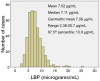
Serum LBP was measured with a commercial immunoassay in a random sample of the adult population (n = 420, 45% males, age 18–92 years) from a single municipality.
Results
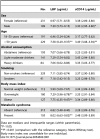
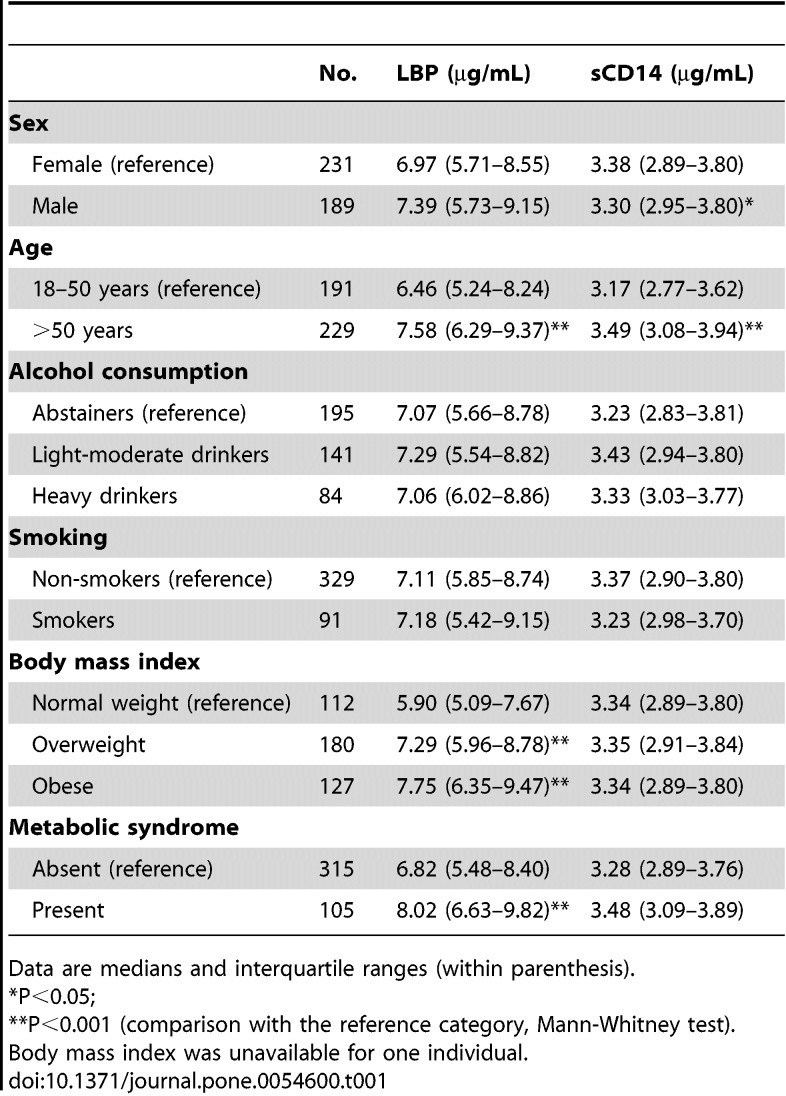
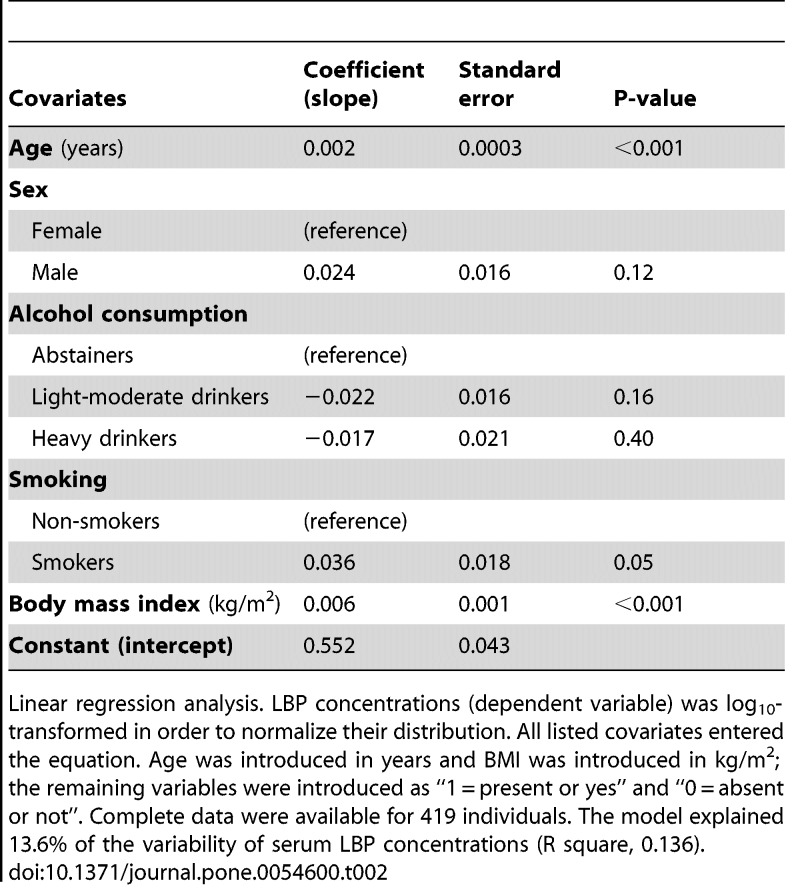
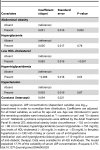
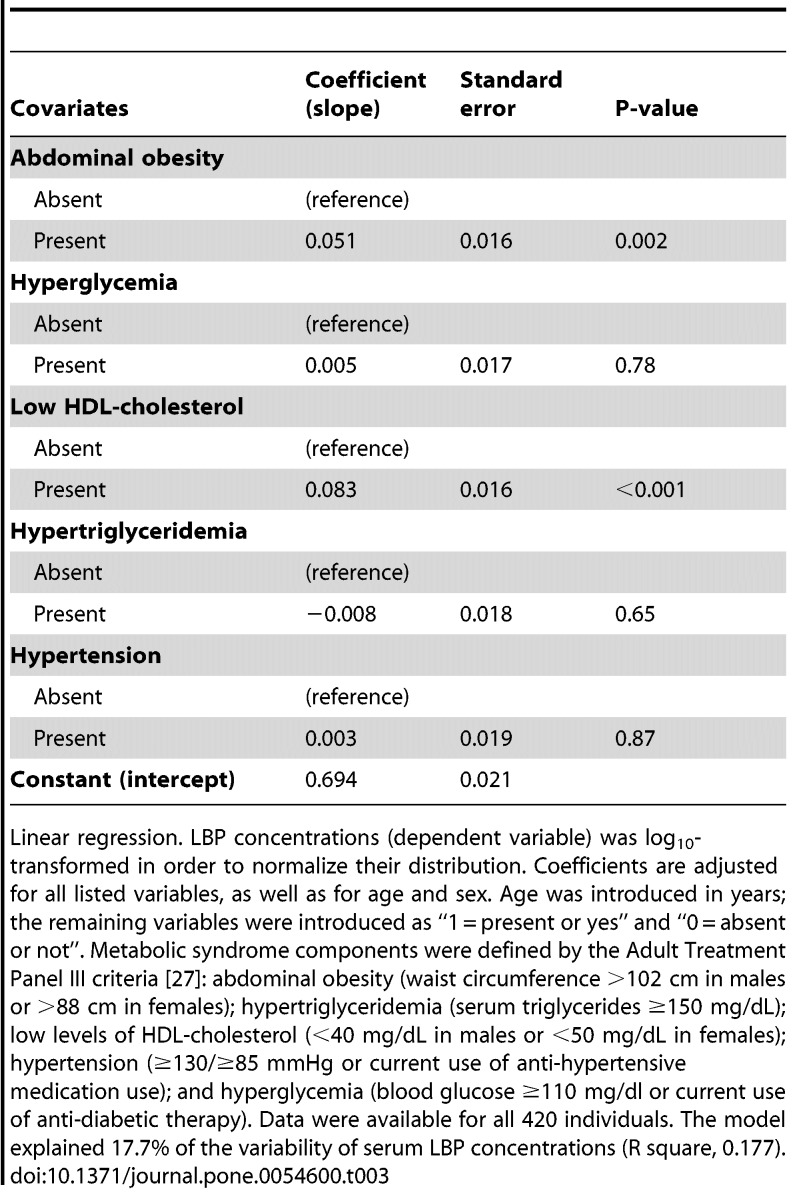
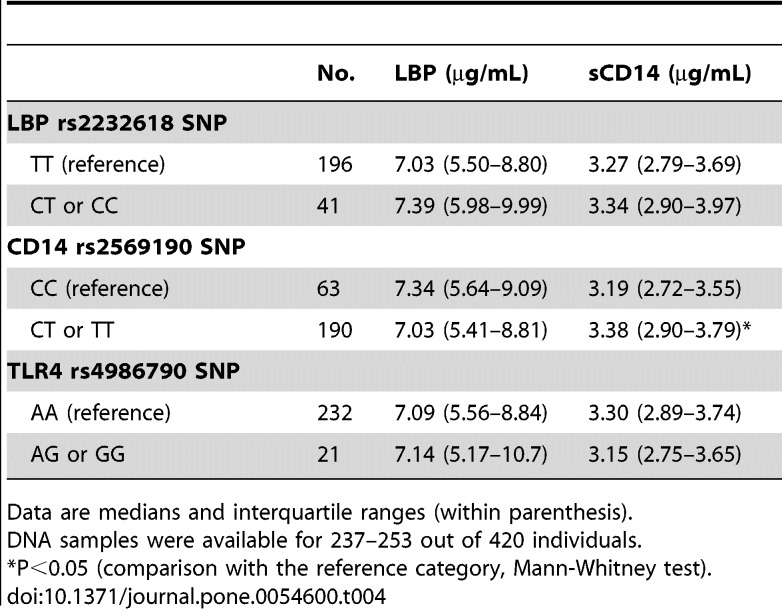
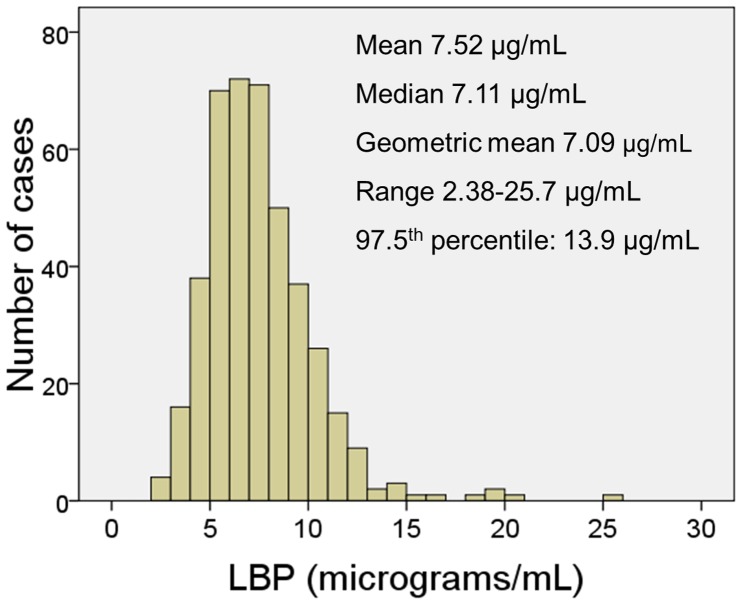
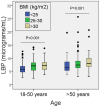
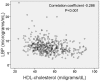
Serum LBP concentrations increased with age (P<0.001) and were higher in individuals who were overweight or obese than in normal-weight individuals (P<0.001). Similarly, LBP concentrations were higher in individuals with metabolic syndrome than in individuals without it (P<0.001). Among metabolic syndrome components, LBP concentrations were independently associated with abdominal obesity (P = 0.002) and low concentrations of HDL-cholesterol (P<0.001). Serum LBP concentrations tended to be independently associated with smoking (P = 0.05), but not with alcohol consumption. Likewise, there was not significant association between LBP concentrations and gene polymorphisms. Concentrations of LBP significantly correlated with serum levels of proinflammatory cytokines (IL-6 and IL-8), sCD14, and with liver enzymes.
Conclusions
Serum LBP concentrations increased with age. Overweight, obesity, and having metabolic syndrome (particularly, low HDL cholesterol levels) were associated with higher LBP concentrations. These findings are consistent with microbial exposure playing a role in these inflammatory, metabolic abnormalities.
-
Subjects:
-
Source:PLoS One. 2013; 8(1).
-
Document Type:
-
Volume:8
-
Issue:1
-
Collection(s):
-
Main Document Checksum:urn:sha256:80e7bc0f6d3d042654a2d1c77415fa52a1b5b4336ec90933d26e7bedf245306a
-
Download URL:
-
File Type:
 [PDF
- 288.49 KB
]
[PDF
- 288.49 KB
]
Supporting Files


File Language:
English
ON THIS PAGE







CDC STACKS serves as an archival repository of CDC-published products including
scientific findings,
journal articles, guidelines, recommendations, or other public health information authored or
co-authored by CDC or funded partners.
As a repository, CDC STACKS retains documents in their original published format to ensure public access to scientific information.
As a repository, CDC STACKS retains documents in their original published format to ensure public access to scientific information.
You May Also Like
COLLECTION
CDC Public Access