


High Levels of Adherence and Viral Suppression in a Nationally Representative Sample of HIV-Infected Adults on Antiretroviral Therapy for 6, 12 and 18 Months in Rwanda
Supporting Files
Public Domain

-
Jan 09 2013
-
File Language:
English
Details
-
Alternative Title:PLoS One
-
Personal Author:
-
Description:Background
Generalizable data are needed on the magnitude and determinants of adherence and virological suppression among patients on antiretroviral therapy (ART) in Africa.
Methods
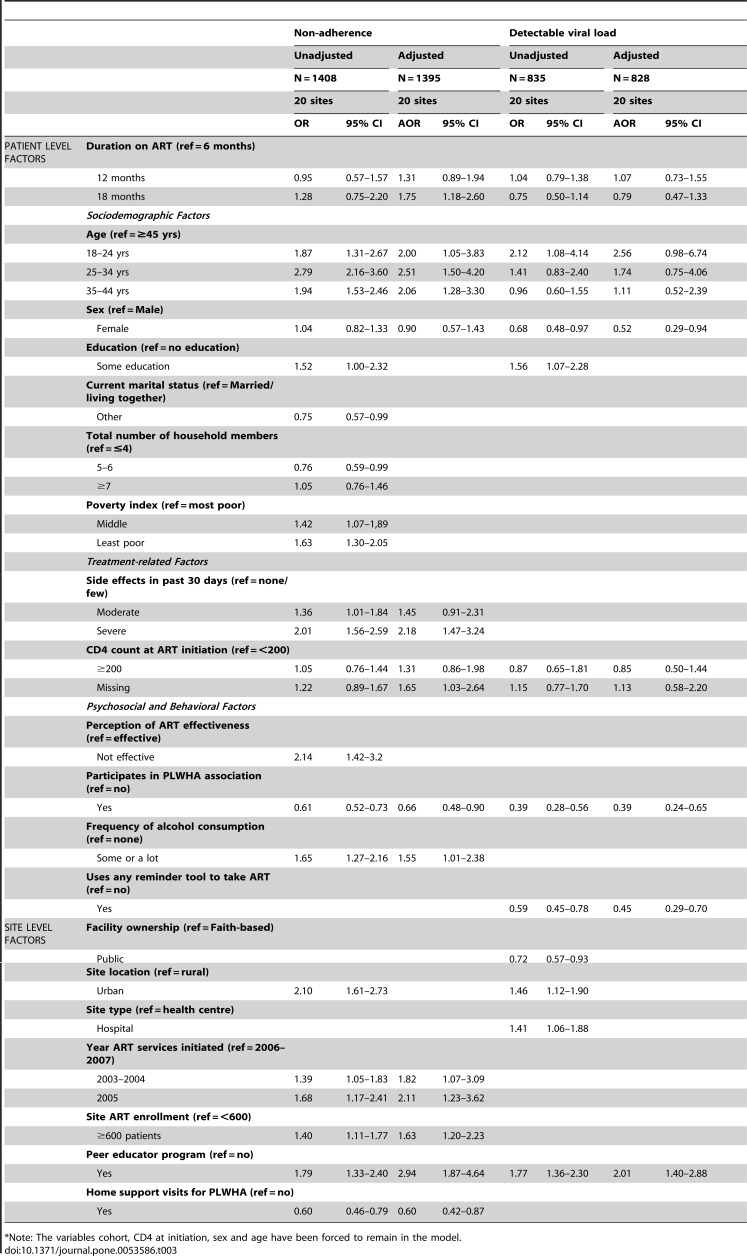
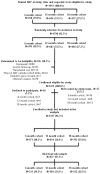
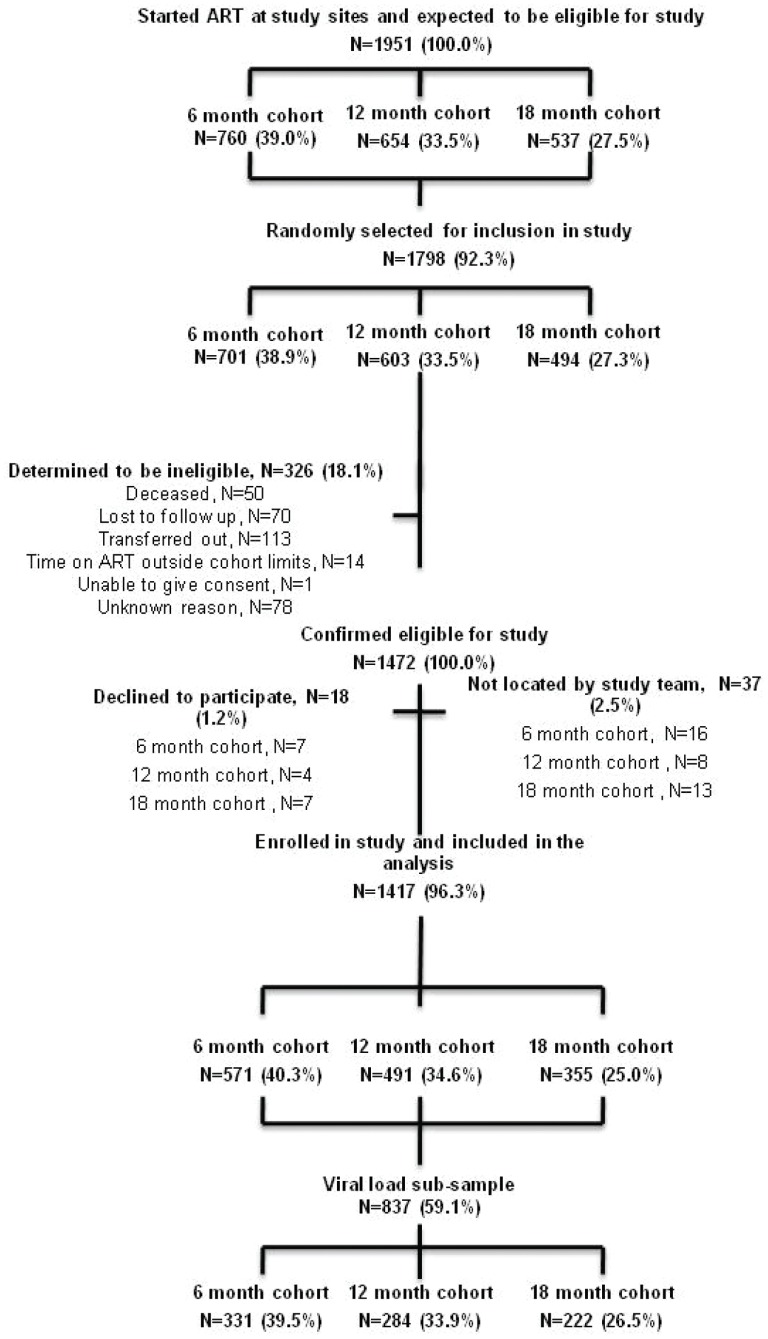
We conducted a cross-sectional survey with chart abstraction, patient interviews and site assessments in a nationally representative sample of adults on ART for 6, 12 and 18 months at 20 sites in Rwanda. Adherence was assessed using 3- and 30-day patient recall. A systematically selected sub-sample had viral load (VL) measurements. Multivariable logistic regression examined predictors of non-perfect (<100%) 30-day adherence and detectable VL (>40 copies/ml).
Results
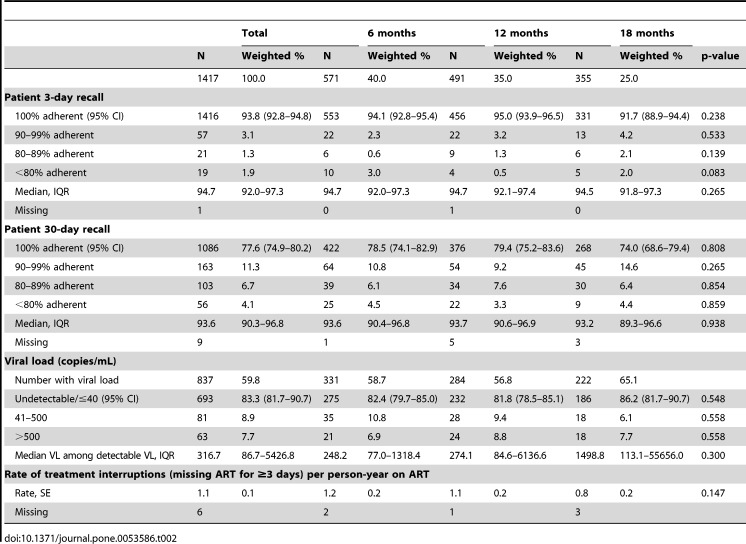
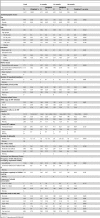
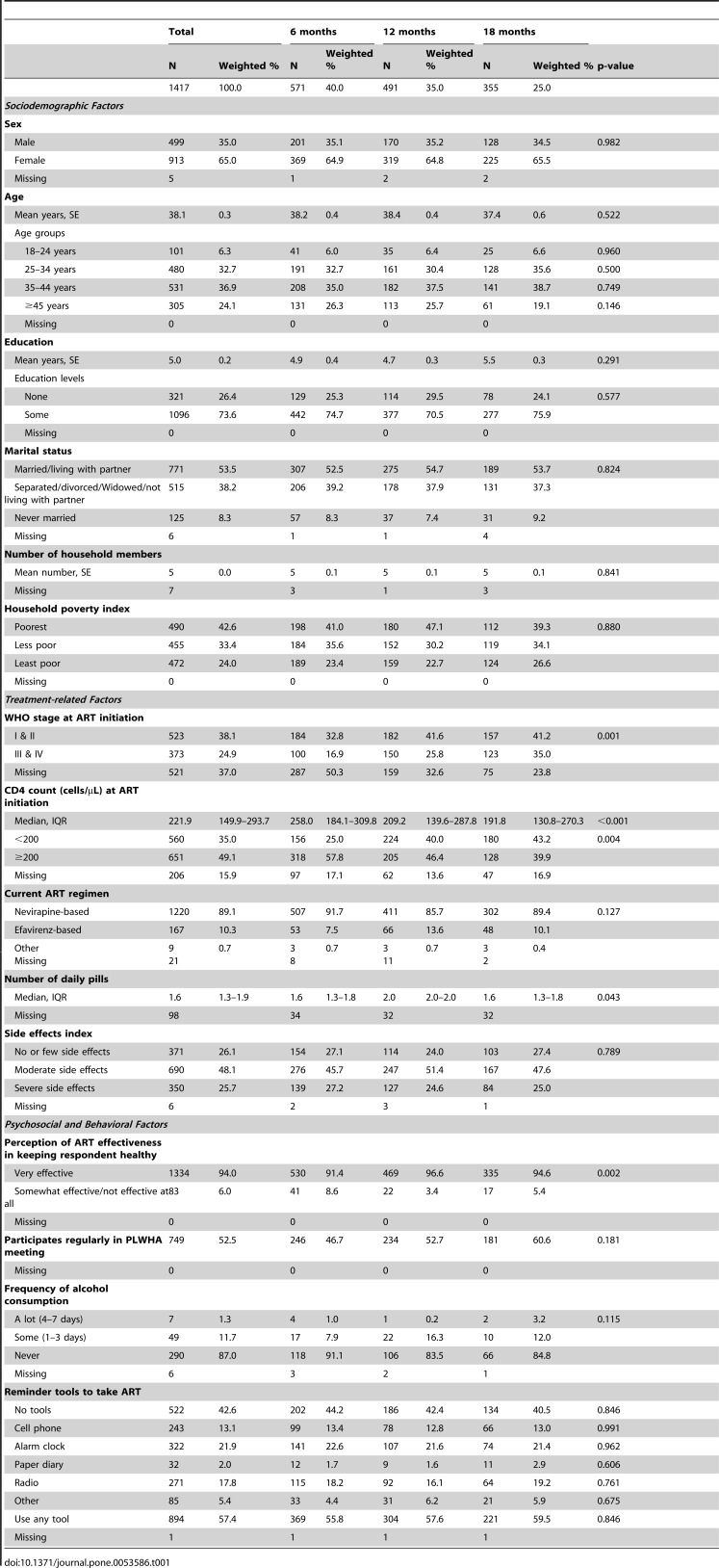
Overall, 1,417 adults were interviewed and 837 had VL measures. Ninety-four percent and 78% reported perfect adherence for the last 3 and 30 days, respectively. Eighty-three percent had undetectable VL. In adjusted models, characteristics independently associated with higher odds of non-perfect 30-day adherence were: being on ART for 18 months (vs. 6 months); younger age; reporting severe (vs. no or few) side effects in the prior 30 days; having no documentation of CD4 cell count at ART initiation (vs. having a CD4 cell count of <200 cells/µL); alcohol use; and attending sites which initiated ART services in 2003–2004 and 2005 (vs. 2006–2007); sites with ≥600 (vs. <600 patients) on ART; or sites with peer educators. Participation in an association for people living with HIV/AIDS; and receiving care at sites which regularly conduct home-visits were independently associated with lower odds of non-adherence. Higher odds of having a detectable VL were observed among patients at sites with peer educators. Being female; participating in an association for PLWHA; and using a reminder tool were independently associated with lower odds of having detectable VL.
Conclusions
High levels of adherence and viral suppression were observed in the Rwandan national ART program, and associated with potentially modifiable factors.
-
Subjects:
-
Source:PLoS One. 2013; 8(1).
-
Document Type:
-
Place as Subject:
-
Volume:8
-
Issue:1
-
Collection(s):
-
Main Document Checksum:urn:sha256:4ca70dd158fd97d735d938953ae493eef55cb6b338ae778dc0ebca67423693ca
-
Download URL:
-
File Type:
 [PDF
- 533.77 KB
]
[PDF
- 533.77 KB
]
Supporting Files


File Language:
English
ON THIS PAGE



CDC STACKS serves as an archival repository of CDC-published products including
scientific findings,
journal articles, guidelines, recommendations, or other public health information authored or
co-authored by CDC or funded partners.
As a repository, CDC STACKS retains documents in their original published format to ensure public access to scientific information.
As a repository, CDC STACKS retains documents in their original published format to ensure public access to scientific information.
You May Also Like
COLLECTION
CDC Public Access