



Feasibility of measles and rubella vaccination programmes for disease elimination: a modelling study
Supporting Files

-
9 13 2022
-
Available in CDC Stacks on October 01, 2023, 12:00 AM
File Language:
English
Details
-
Alternative Title:Lancet Glob Health
-
Personal Author:Winter, Amy K ; Lambert, Brian ; Klein, Daniel ; Klepac, Petra ; Papadopoulos, Timos ; Truelove, Shaun ; Burgess, Colleen ; Santos, Heather ; Knapp, Jennifer K ; Reef, Susan E ; Kayembe, Lidia K ; Shendale, Stephanie ; Kretsinger, Katrina ; Lessler, Justin ; Vynnycky, Emilia ; McCarthy, Kevin ; Ferrari, Matthew ; Jit, Mark
-
Description:Background
Marked reductions in the incidence of measles and rubella have been observed since the widespread use of the measles and rubella vaccines. Although no global goal for measles eradication has been established, all six WHO regions have set measles elimination targets. However, a gap remains between current control levels and elimination targets, as shown by large measles outbreaks between 2017 and 2019. We aimed to model the potential for measles and rubella elimination globally to inform a WHO report to the 73rd World Health Assembly on the feasibility of measles and rubella eradication.
Methods
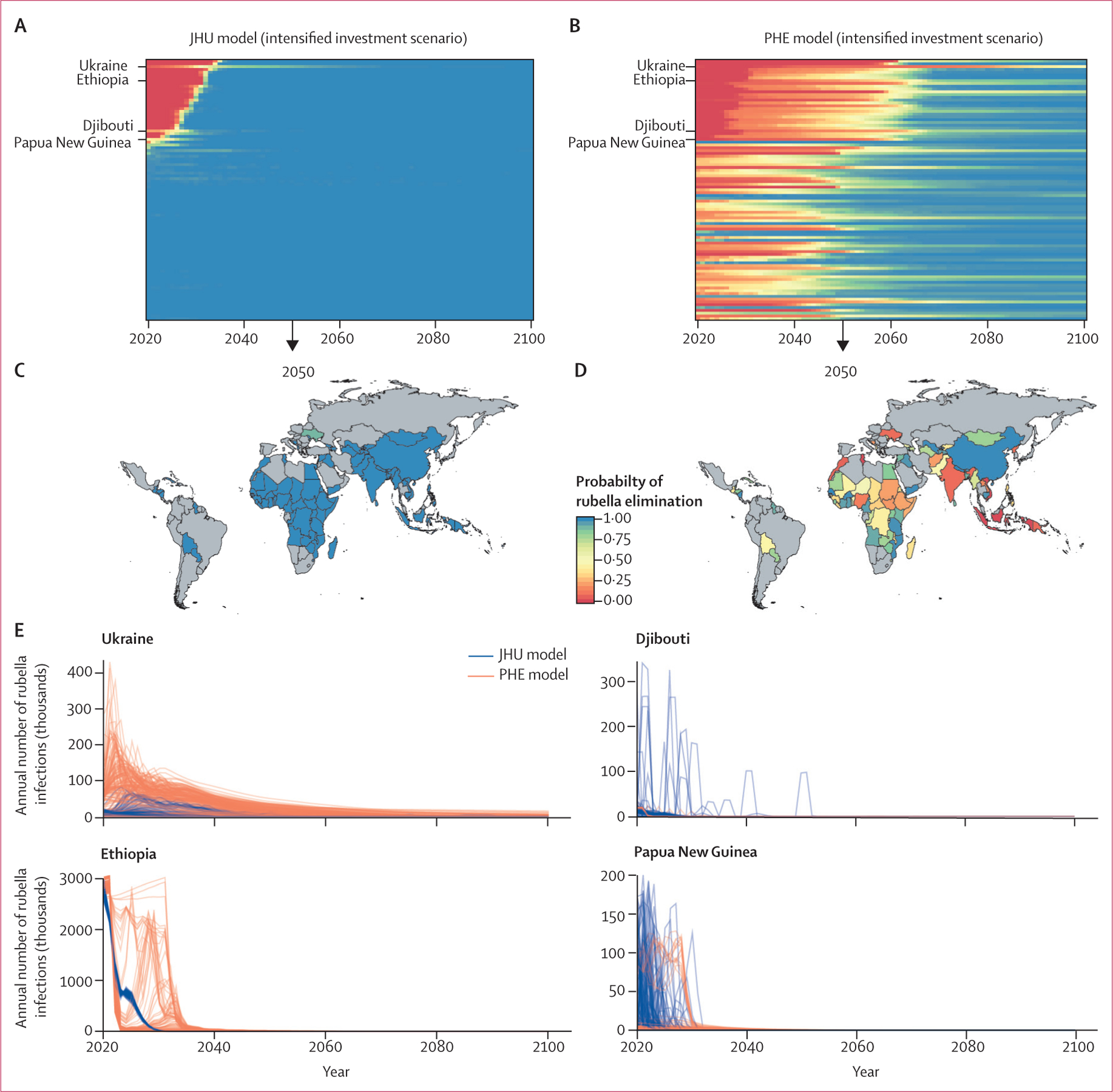
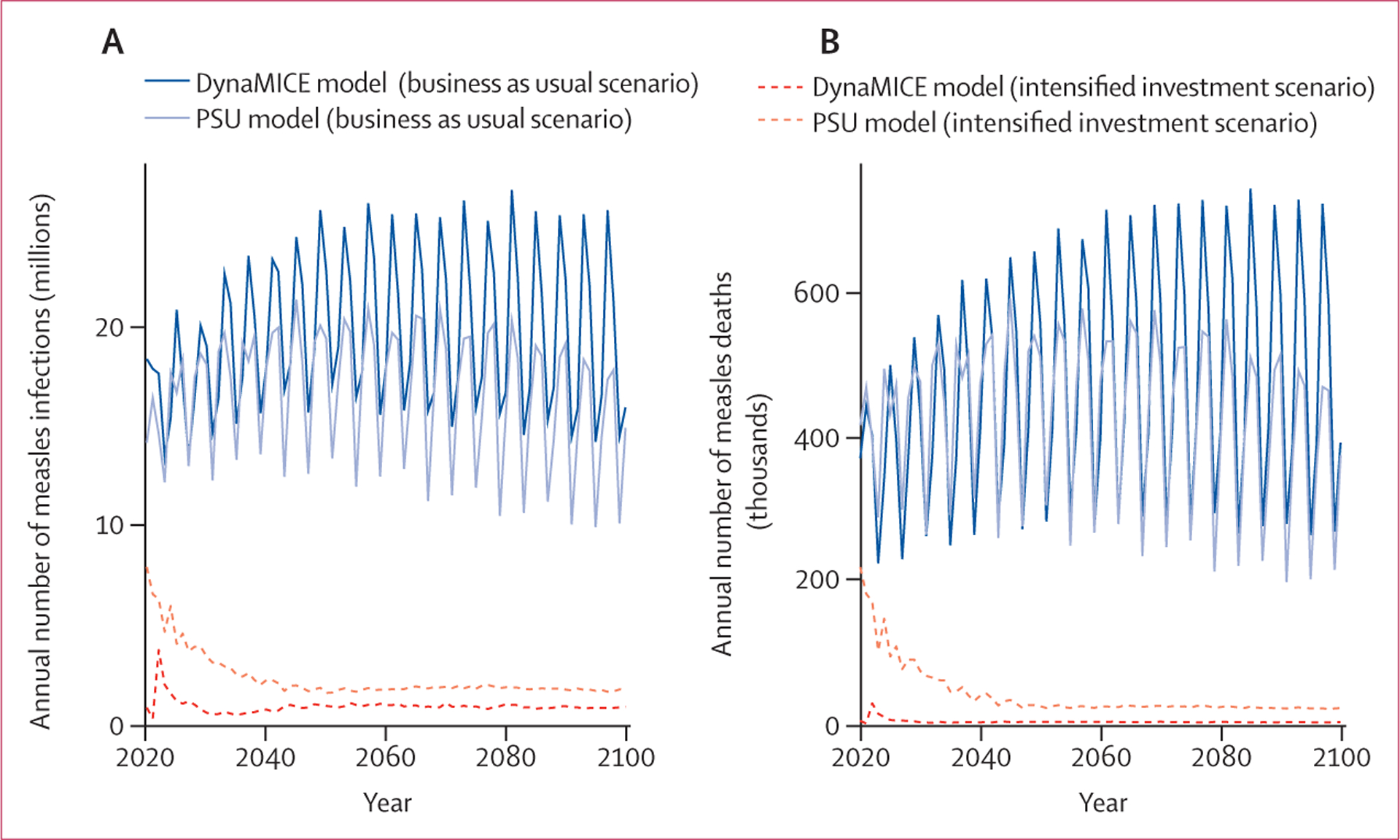
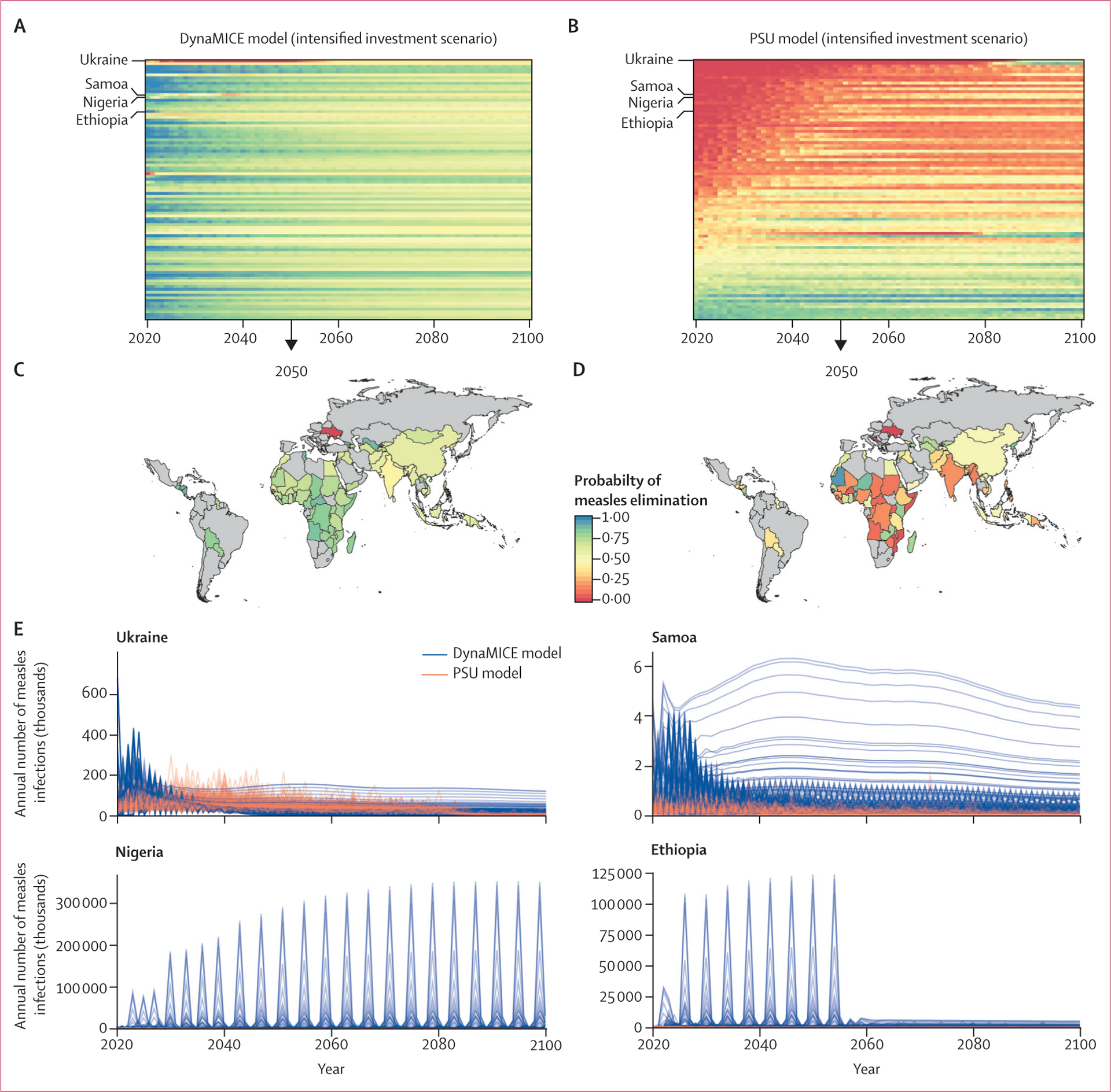
In this study, we modelled the probability of measles and rubella elimination between 2020 and 2100 under different vaccination scenarios in 93 countries of interest. We evaluated measles and rubella burden and elimination across two national transmission models each (Dynamic Measles Immunisation Calculation Engine DynaMICE, Pennsylvania State University PSU, Johns Hopkins University, and Public Health England models), and one subnational measles transmission model (Institute for Disease Modeling model). The vaccination scenarios included a so-called business as usual approach, which continues present vaccination coverage, and an intensified investment approach, which increases coverage into the future. The annual numbers of infections projected by each model, country, and vaccination scenario were used to explore if, when, and for how long the infections would be below a threshold for elimination.
Findings
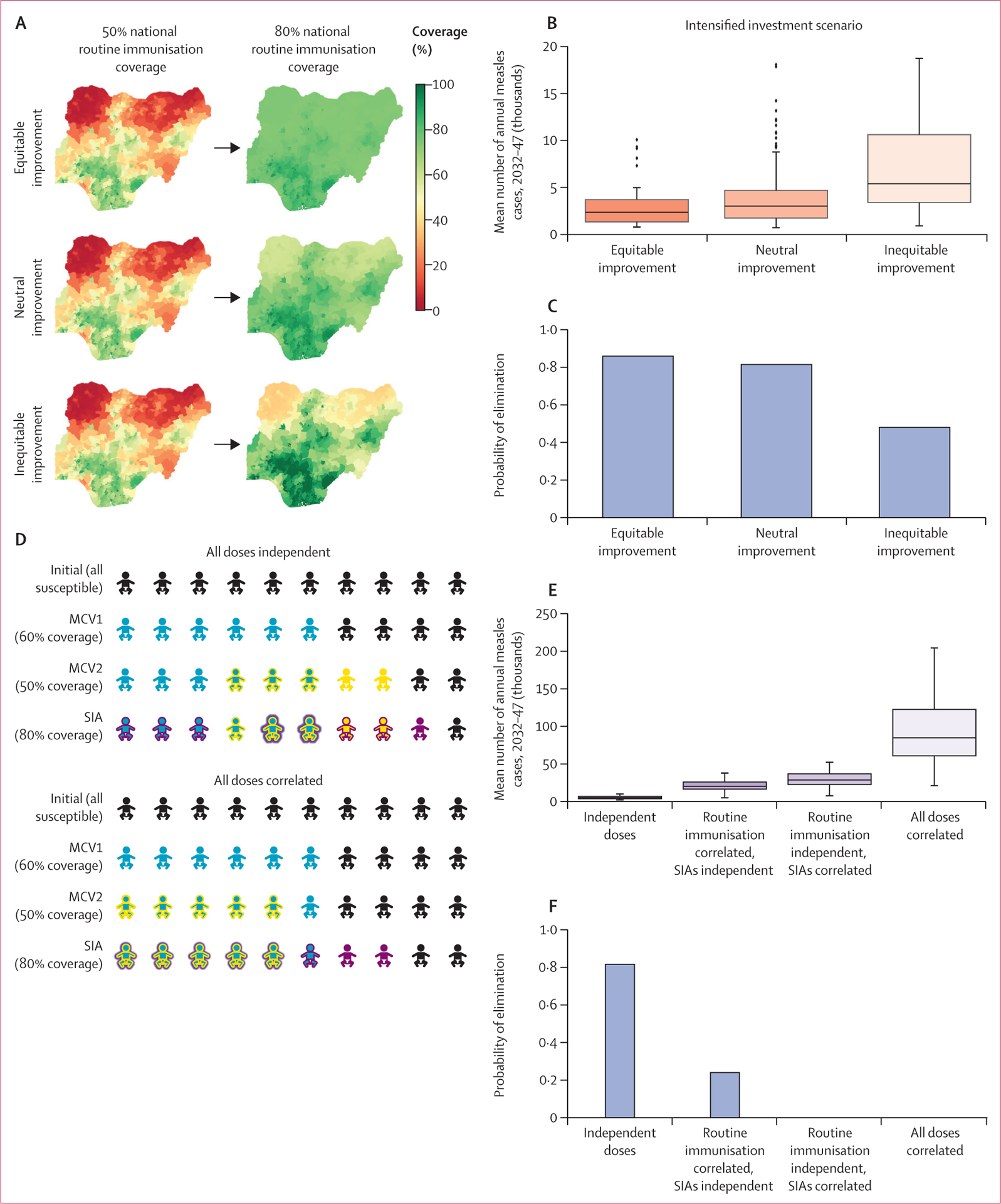
The intensified investment scenario led to large reductions in measles and rubella incidence and burden. Rubella elimination is likely to be achievable in all countries and measles elimination is likely in some countries, but not all. The PSU and DynaMICE national measles models estimated that by 2050, the probability of elimination would exceed 75% in 14 (16%) and 36 (39%) of 93 modelled countries, respectively. The subnational model of measles transmission highlighted inequity in routine coverage as a likely driver of the continuance of endemic measles transmission in a subset of countries.
Interpretation
To reach regional elimination goals, it will be necessary to innovate vaccination strategies and technologies that increase spatial equity of routine vaccination, in addition to investing in existing surveillance and outbreak response programmes. -
Keywords:
-
Source:Lancet Glob Health. 10(10):e1412-e1422
-
Pubmed ID:36113527
-
Pubmed Central ID:PMC9557212
-
Document Type:
-
Funding:
-
Volume:10
-
Issue:10
-
Download URL:
-
File Type:
 [PDF - 1.71 MB]
 -
Collection(s):
-
Main Document Checksum:urn:sha256:d51c154e332de24cb196f014e1d2d69ff5908371562f670287f5a5152dbff4d8
Supporting Files


File Language:
English
 Was this page helpful?
 Found an issue?






CDC STACKS serves as an archival repository of CDC-published products including
scientific findings, journal articles, guidelines, recommendations, or other public health information authored or
co-authored by CDC or funded partners.
As a repository, CDC STACKS retains documents in their original published format to ensure public access to scientific information.
As a repository, CDC STACKS retains documents in their original published format to ensure public access to scientific information.
You May Also Like
COLLECTION
CDC Public Access