


Reducing Crime by Remediating Vacant Lots: The Moderating Effect of Nearby Land Uses
Supporting Files

-
9 2022
-
File Language:
English
Details
-
Alternative Title:J Exp Criminol
-
Personal Author:
-
Description:Objective:
Place-based blight remediation programs have gained popularity in recent years as a crime reduction approach. This study estimated the impact of a citywide vacant lot greening program in Philadelphia on changes in crime over multiple years, and whether the effects were moderated by nearby land uses.
Methods:
The vacant lot greening program was assessed using quasi-experimental and experimental designs. Entropy distance weighting was used in the quasi-experimental analysis to match control lots to be comparable to greened lots on pre-existing crime trends. Fixed-effects difference-in-differences models were used to estimate the impact of the vacant lot greening program in quasi-experimental and experimental analyses.
Results:
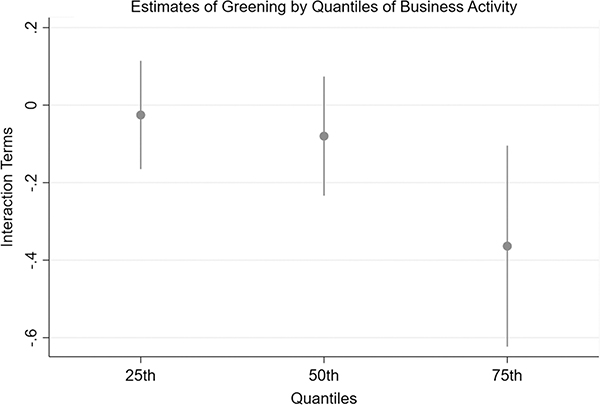
Vacant lot greening was estimated to reduce total crime and multiple subcategories in both the quasi-experimental and experimental evaluations. Remediating vacant lots had a smaller effect on reducing crime when they were located nearby train stations and alcohol outlets. The crime reductions from vacant lot remediations were larger when they were located near areas of active businesses. There is some suggestive evidence that the effects of vacant lot greening are larger when located in neighborhoods with higher pre-intervention levels of social cohesion.
Conclusions:
The findings suggest that vacant lot greening provides a sustainable approache to reducing crime in disadvantaged neighborhoods, and the effects may vary by different surrounding land uses. To better understand the mechanisms through which place-based blight remediation interventions reduce crime, future research should measure human activities and neighborly socialization in and around places before and after remediation efforts are implemented.
-
Subjects:
-
Source:J Exp Criminol. 18(3):639-664
-
Pubmed ID:36172506
-
Pubmed Central ID:PMC9512253
-
Document Type:
-
Funding:
-
Volume:18
-
Issue:3
-
Collection(s):
-
Main Document Checksum:urn:sha256:190c85cbd1e12a12b27a3d9433f65dc93454881a149521cbd4b25ea3f134a8e8
-
Download URL:
-
File Type:
 [PDF
- 671.39 KB
]
[PDF
- 671.39 KB
]
Supporting Files


File Language:
English
ON THIS PAGE

CDC STACKS serves as an archival repository of CDC-published products including
scientific findings,
journal articles, guidelines, recommendations, or other public health information authored or
co-authored by CDC or funded partners.
As a repository, CDC STACKS retains documents in their original published format to ensure public access to scientific information.
As a repository, CDC STACKS retains documents in their original published format to ensure public access to scientific information.
You May Also Like
COLLECTION
CDC Public Access