



Large Animal Veterinarians' Knowledge, Attitutes, and Practices Regarding Livestock Abortion-Associated Zoonoses in the United States Indicate Potential Occupational Health Risk
Supporting Files
Peer Reviewed

-
2022/02/16
-
Available in CDC Stacks on February 16, 2023, 12:00 AM
File Language:
English
Details
-
Journal Article:Journal of the American Veterinary Medical Association
-
Personal Author:
-
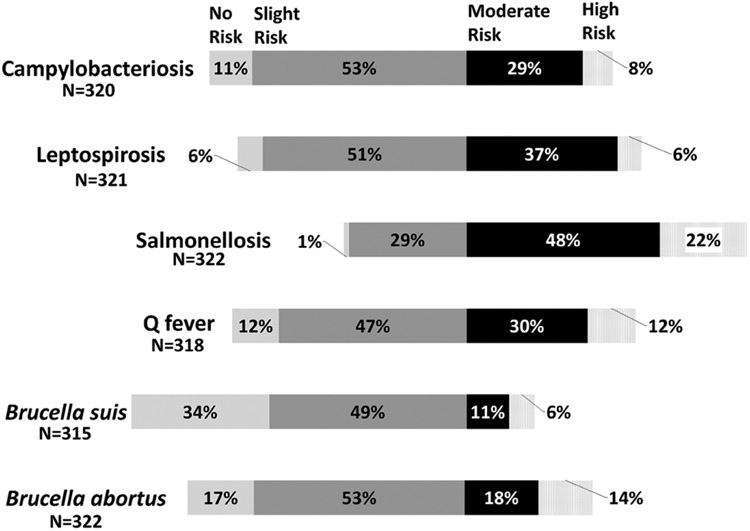
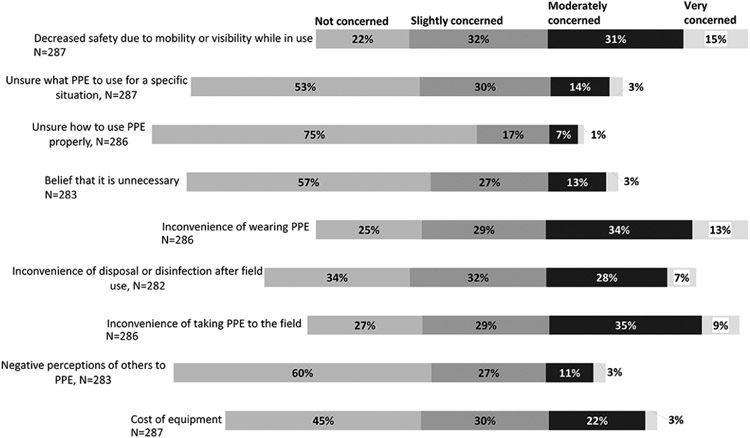
Description:Objective: To understand large animal veterinarians' knowledge of select zoonotic diseases that cause livestock abortions and identify barriers to using personal protective equipment (PPE). Sample: A convenience sample of 469 veterinarians currently working with livestock. Procedures: We sent an electronic survey invitation to large animal veterinarians through various veterinary organizations. Respondents answered questions addressing knowledge and prior experience with select abortion-associated zoonotic diseases, resources available for infection control, attitudes and barriers to PPE use, and demographics. Results: Median participant age was 49 years (range, 22 to 82 years), and 54% (235/438) were male. Half of veterinarians (185/348) were contacted 5 or fewer times per year to consult on livestock abortions. No veterinarians surveyed answered all questions on zoonotic disease transmission correctly. Personal protective equipment access varied, from 99% (289/290) having access to gloves to 20% (59/290) having access to respirators. Concerns for spreading disease to other animals (136/289 47%) and to other humans (108/287 38%) ranked as the most common reported motivators for PPE use. Reported barriers to PPE use among survey participants were the inconvenience of taking PPE into the field (101/286 35%) and the inconvenience of wearing PPE (97/286 34%). Access to PPE was not correlated with PPE use. Clinical relevance: Surveyed veterinarians had limited knowledge of transmission of select abortion-associated zoonotic diseases. Incomplete understanding might lead to inappropriate PPE selection, preventable disease exposure, or missed opportunities for client education. Inconvenience was a primary reason PPE was not used. Description provided by NIOSH
-
Subjects:
-
Keywords:
-
Source:J Am Vet Med Assoc 2022 Apr; 260(7):780-788
-
ISSN:0003-1488
-
Pubmed ID:35175930
-
Pubmed Central ID:PMC9524364
-
Document Type:
-
Funding:
-
Genre:
-
Place as Subject:
-
CIO:
-
Division:
-
Topic:
-
Location:
-
Pages in Document:20 pdf pages
-
Volume:260
-
Issue:7
-
NIOSHTIC Number:nn:20064716
-
Contact Point Address:Cara C Cherry, Rickettsial Zoonoses Branch, Division of Vector-borne Diseases, National Center for Emerging and Zoonotic Infectious Diseases, CDC, Atlanta, GA
-
Email:gpg6@cdc.gov
-
Federal Fiscal Year:2022
-
NORA Priority Area:
-
Peer Reviewed:True
-
Download URL:
-
File Type:
 [PDF - 390.43 KB]
 -
Collection(s):
-
Main Document Checksum:urn:sha-512:e1e2ca5f40b55294b50891e984e07d583f702ff572920953f8e604fd457e80e9bffb2c1e82fc193ff855d304dd113927c57e9680f51fce21d24d58168da9c89b

Supporting Files


File Language:
English
 Was this page helpful?
 Found an issue?


CDC STACKS serves as an archival repository of CDC-published products including
scientific findings, journal articles, guidelines, recommendations, or other public health information authored or
co-authored by CDC or funded partners.
As a repository, CDC STACKS retains documents in their original published format to ensure public access to scientific information.
As a repository, CDC STACKS retains documents in their original published format to ensure public access to scientific information.
You May Also Like