


Geosmin Attracts Aedes aegypti Mosquitoes to Oviposition Sites
Supporting Files

-
1 06 2020
-
File Language:
English
Details
-
Alternative Title:Curr Biol
-
Personal Author:
-
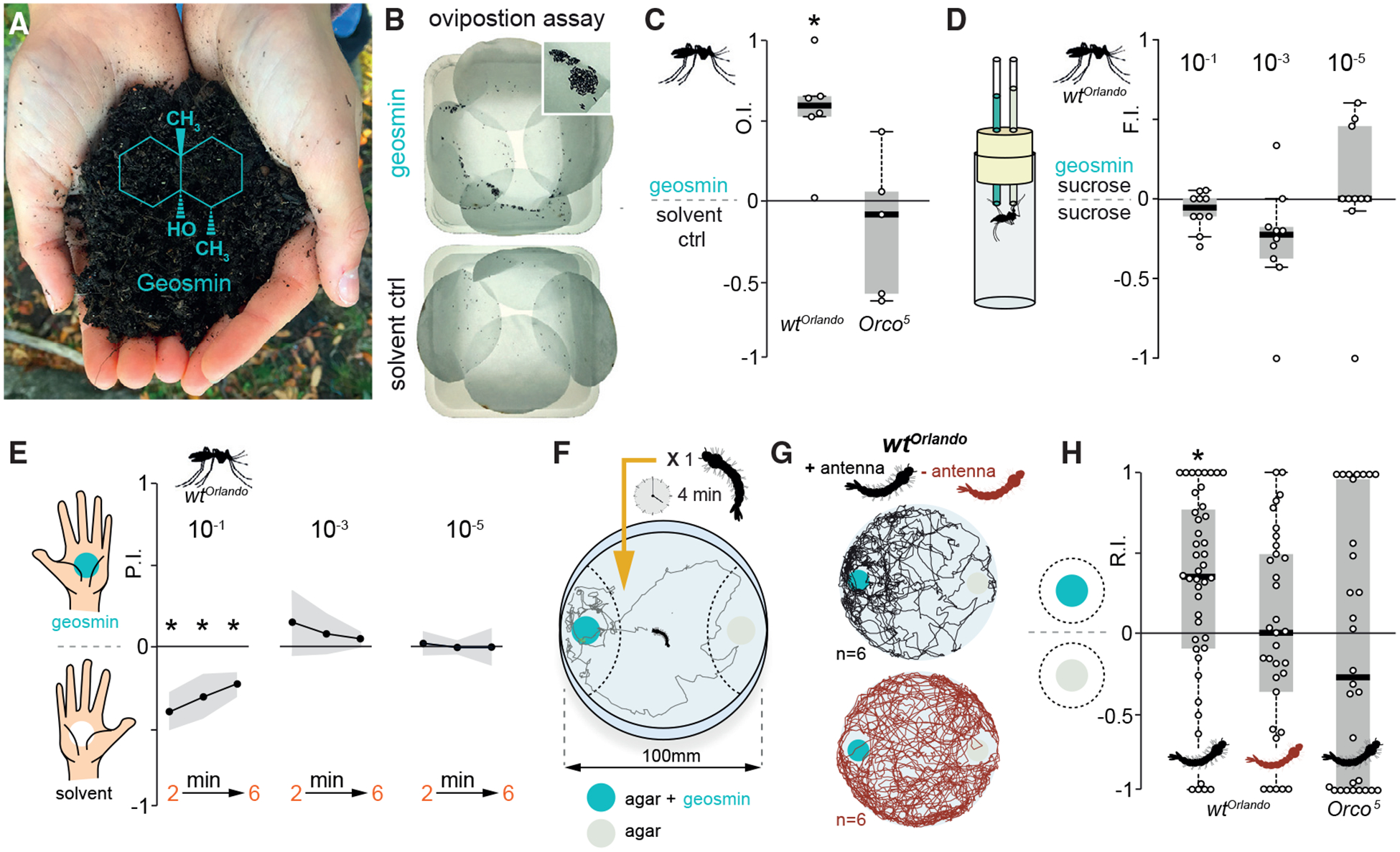
Description:Geosmin is one of the most recognizable and common microbial smells on the planet. Some insects, like mosquitoes, require microbial-rich environments for their progeny, whereas for other insects such microbes may prove dangerous. In the vinegar fly Drosophila melanogaster, geosmin is decoded in a remarkably precise fashion and induces aversion, presumably signaling the presence of harmful microbes [1]. We have here investigated the effect of geosmin on the behavior of the yellow fever mosquito Aedes aegypti. In contrast to flies, geosmin is not aversive but mediates egg-laying site selection. Female mosquitoes likely associate geosmin with microbes, including cyanobacteria consumed by larvae [2], who also find geosmin-as well as geosmin-producing cyanobacteria-attractive. Using in vivo multiphoton calcium imaging from transgenic PUb-GCaMP6s mosquitoes, we show that Ae. aegypti code geosmin in a qualitatively similar fashion to flies, i.e., through a single olfactory channel with a high degree of sensitivity for this volatile. We further demonstrate that geosmin can be used as bait under field conditions, and finally, we show that geosmin, which is both expensive and difficult to obtain, can be substituted by beetroot peel extract, providing a cheap and viable potential mean for mosquito control and surveillance in developing countries.
-
Subjects:
-
Source:Curr Biol. 30(1):127-134.e5
-
Pubmed ID:31839454
-
Pubmed Central ID:PMC7144812
-
Document Type:
-
Funding:
-
Volume:30
-
Issue:1
-
Collection(s):
-
Main Document Checksum:urn:sha256:322f338c3435759d8d58fa55526724252576a247fd8b13a72e1e00b1a9970da3
-
Download URL:
-
File Type:
 [PDF
- 1.74 MB
]
[PDF
- 1.74 MB
]
Supporting Files


File Language:
English
ON THIS PAGE







CDC STACKS serves as an archival repository of CDC-published products including
scientific findings,
journal articles, guidelines, recommendations, or other public health information authored or
co-authored by CDC or funded partners.
As a repository, CDC STACKS retains documents in their original published format to ensure public access to scientific information.
As a repository, CDC STACKS retains documents in their original published format to ensure public access to scientific information.
You May Also Like
COLLECTION
CDC Public Access