



Urban–Rural Differences in Health Care Utilization and COVID-19 Outcomes in Patients With Type 2 Diabetes
Supporting Files

-
7 21 2022
File Language:
English
Details
-
Journal Article:Preventing Chronic Disease (PCD)
-
Personal Author:
-
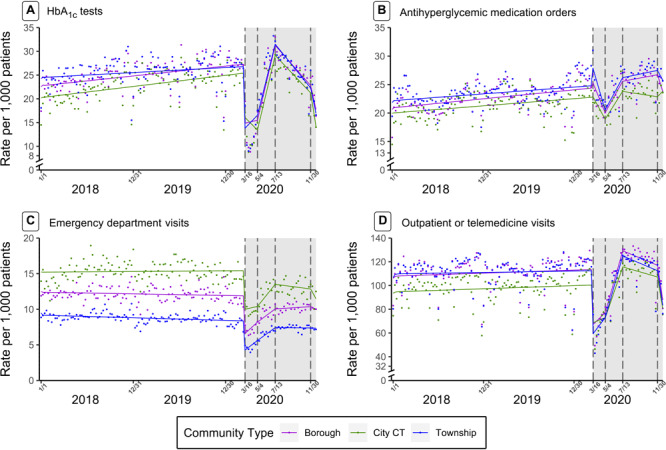
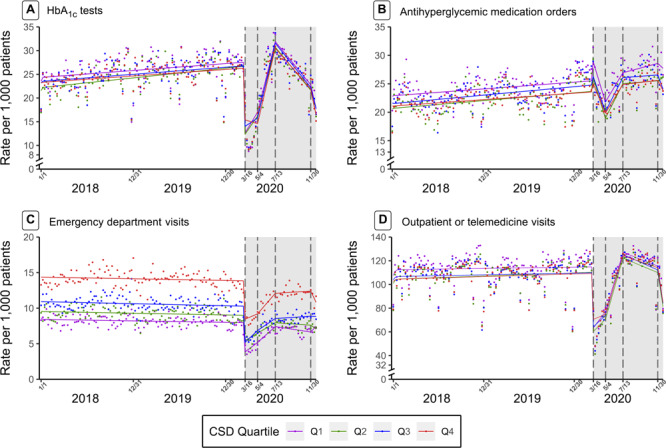
Description:Introduction ; Two studies in Pennsylvania aimed to determine whether community type and community socioeconomic deprivation (CSD) 1) modified associations between type 2 diabetes (hereinafter, diabetes) and COVID-19 hospitalization outcomes, and 2) influenced health care utilization among individuals with diabetes during the COVID-19 pandemic. ; Methods ; The hospitalization study evaluated a retrospective cohort of patients hospitalized with COVID-19 through 2020 for COVID-19 outcomes: death, intensive care unit (ICU) admission, mechanical ventilation, elevated D-dimer, and elevated troponin level. We used adjusted logistic regression models, adding interaction terms to evaluate effect modification by community type (township, borough, or city census tract) and CSD. The utilization study included patients with diabetes and a clinical encounter between 2017 and 2020. Autoregressive integrated moving average time-series models evaluated changes in weekly rates of emergency department and outpatient visits, hemoglobin A1c (HbA1c) laboratory tests, and antihyperglycemic medication orders from 2018 to 2020. ; Results ; In the hospitalization study, of 2,751 patients hospitalized for COVID-19, 1,020 had diabetes, which was associated with ICU admission and elevated troponin. Associations did not differ by community type or CSD. In the utilization study, among 93,401 patients with diabetes, utilization measures decreased in March 2020. Utilization increased in July, and then began to stabilize or decline through the end of 2020. Changes in HbA1c tests and medication order trends during the pandemic differed by community type and CSD. ; Conclusion ; Diabetes was associated with selected outcomes among individuals hospitalized for COVID-19, but these did not differ by community features. Utilization trajectories among individuals with diabetes during the pandemic were influenced by community type and CSD and could be used to identify individuals at risk of gaps in diabetes care.
-
Subjects:
-
Source:Prev Chronic Dis. 2022; 19
-
DOI:
-
ISSN:1545-1151
-
Pubmed ID:35862512
-
Pubmed Central ID:PMC9336194
-
Document Type:
-
Funding:
-
Volume:19
-
Download URL:
-
File Type:
 [PDF - 617.31 KB]
 -
Collection(s):
-
Main Document Checksum:urn:sha-512:d04ab761dab41d09068eef144da999b795f3596c38bd730bbc3c99975a13a8db053109a554132136ca6a5b290269b8443bb50166a574c5cd82b3ff1223325a92
Supporting Files


File Language:
English
 Was this page helpful?
 Found an issue?

CDC STACKS serves as an archival repository of CDC-published products including
scientific findings, journal articles, guidelines, recommendations, or other public health information authored or
co-authored by CDC or funded partners.
As a repository, CDC STACKS retains documents in their original published format to ensure public access to scientific information.
As a repository, CDC STACKS retains documents in their original published format to ensure public access to scientific information.
You May Also Like
COLLECTION
Preventing Chronic Disease