


Mobile tablets for real-time data collection for hospital-based birth defects surveillance in Kampala, Uganda: Lessons learned
Supporting Files

-
06/24/2022
-

File Language:
English
Details
-
Alternative Title:PLOS Glob Public Health
-
Personal Author:Kalibbala, Dennis
 ;
Kakande, Ayoub
;
Serunjogi, Robert
;
Williamson, Dhelia
;
Mumpe-Mwanja, Daniel
;
Namale-Matovu, Joyce
;
Valencia, Diana
;
Nalwoga, Beatrice
;
Namirembe, Christine
;
Seyionga, Joan
;
Nanfuka, Margaret
;
Nakimuli, Sophia
;
Achom, Margaret Okwero
;
Mwambi, Kenneth
;
Musoke, Philippa
;
Barlow-Mosha, Linda
;
Kakande, Ayoub
;
Serunjogi, Robert
;
Williamson, Dhelia
;
Mumpe-Mwanja, Daniel
;
Namale-Matovu, Joyce
;
Valencia, Diana
;
Nalwoga, Beatrice
;
Namirembe, Christine
;
Seyionga, Joan
;
Nanfuka, Margaret
;
Nakimuli, Sophia
;
Achom, Margaret Okwero
;
Mwambi, Kenneth
;
Musoke, Philippa
;
Barlow-Mosha, Linda
-
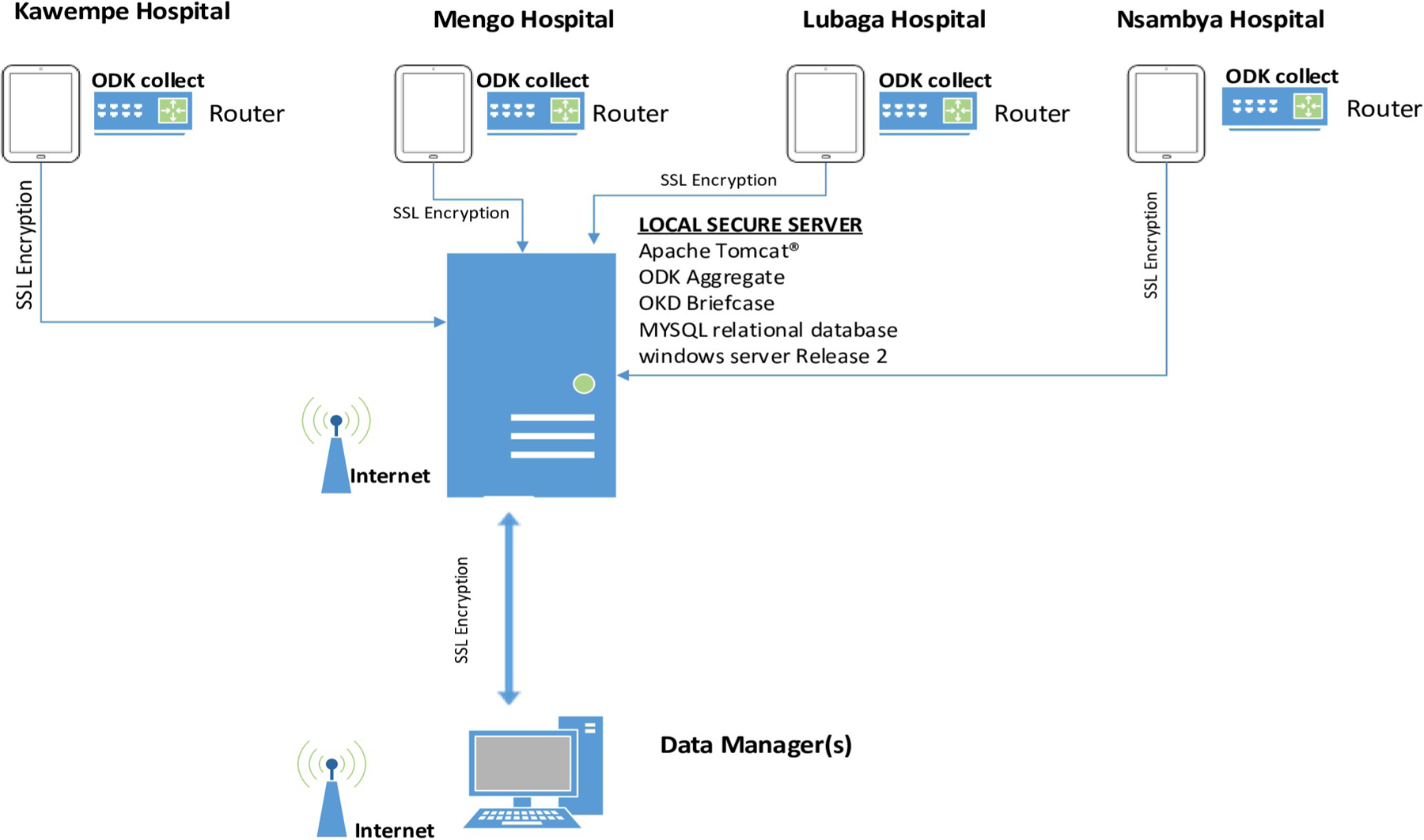
Description:Sustainable birth defects surveillance systems provide countries with estimates of the prevalence of birth defects to guide prevention, care activities, and evaluate interventions. We used free and open-source software (Open Data Kit) to implement an electronic system to collect data for a hospital-based birth defects surveillance system at four major hospitals in Kampala, Uganda. We describe the establishment, successes, challenges, and lessons learned from using mobile tablets to capture data and photographs. After intensive training, surveillance midwives collected data using Android tablets with inbuilt logic checks; another surveillance midwife checked the quality of the data in real-time before data were securely uploaded onto a local server. Paper forms were used when needed as a backup for the electronic system. We experienced several challenges implementing the surveillance system, including forgotten passwords, unstable network, reduced tablet speed and freezing, loss of touch-screen sensitivity, decreased battery strength, and repetitive extensive retraining. We addressed these challenges by backing up and removing all photos from the tablet, uninstalling irrelevant applications to the study to increase storage space and speed, and monitoring and updating the system based mainly on feedback from the midwives. From August 2015 to December 2018, surveillance midwives documented information on 110,752 births at the participating hospitals. Of these, 110,573 (99.8%) were directly entered into the electronic data system and 179 (0.2%) were captured on paper forms. The use of mobile tablets for real-time data collection was successful in a hospital-based birth defects surveillance system in a resource-limited setting. Extensive training and follow-up can overcome challenges and are key to preparing staff for a successful data collection system.
-
Subjects:
-
Source:PLOS Glob Public Health. 2(6)
-
Pubmed ID:35910484
-
Pubmed Central ID:PMC9335296
-
Document Type:
-
Funding:
-
Place as Subject:
-
Volume:2
-
Issue:6
-
Collection(s):
-
Main Document Checksum:urn:sha256:14e0696e2d6db5c163af60fcbf6e595574c0015c0042e0dd95fed657b0156228
-
Download URL:
-
File Type:
 [PDF
- 236.52 KB
]
[PDF
- 236.52 KB
]
Supporting Files


File Language:
English
ON THIS PAGE


CDC STACKS serves as an archival repository of CDC-published products including
scientific findings,
journal articles, guidelines, recommendations, or other public health information authored or
co-authored by CDC or funded partners.
As a repository, CDC STACKS retains documents in their original published format to ensure public access to scientific information.
As a repository, CDC STACKS retains documents in their original published format to ensure public access to scientific information.
You May Also Like
COLLECTION
CDC Public Access