



The Necessity for Improved Hand and Finger Protection in Mining
Supporting Files

-
4 2022 ; 4-2022
-
Available in CDC Stacks on 2022-07-13T00:00:00Z
File Language:
English
Details
-
Alternative Title:Min Metall Explor
-
Personal Author:
-
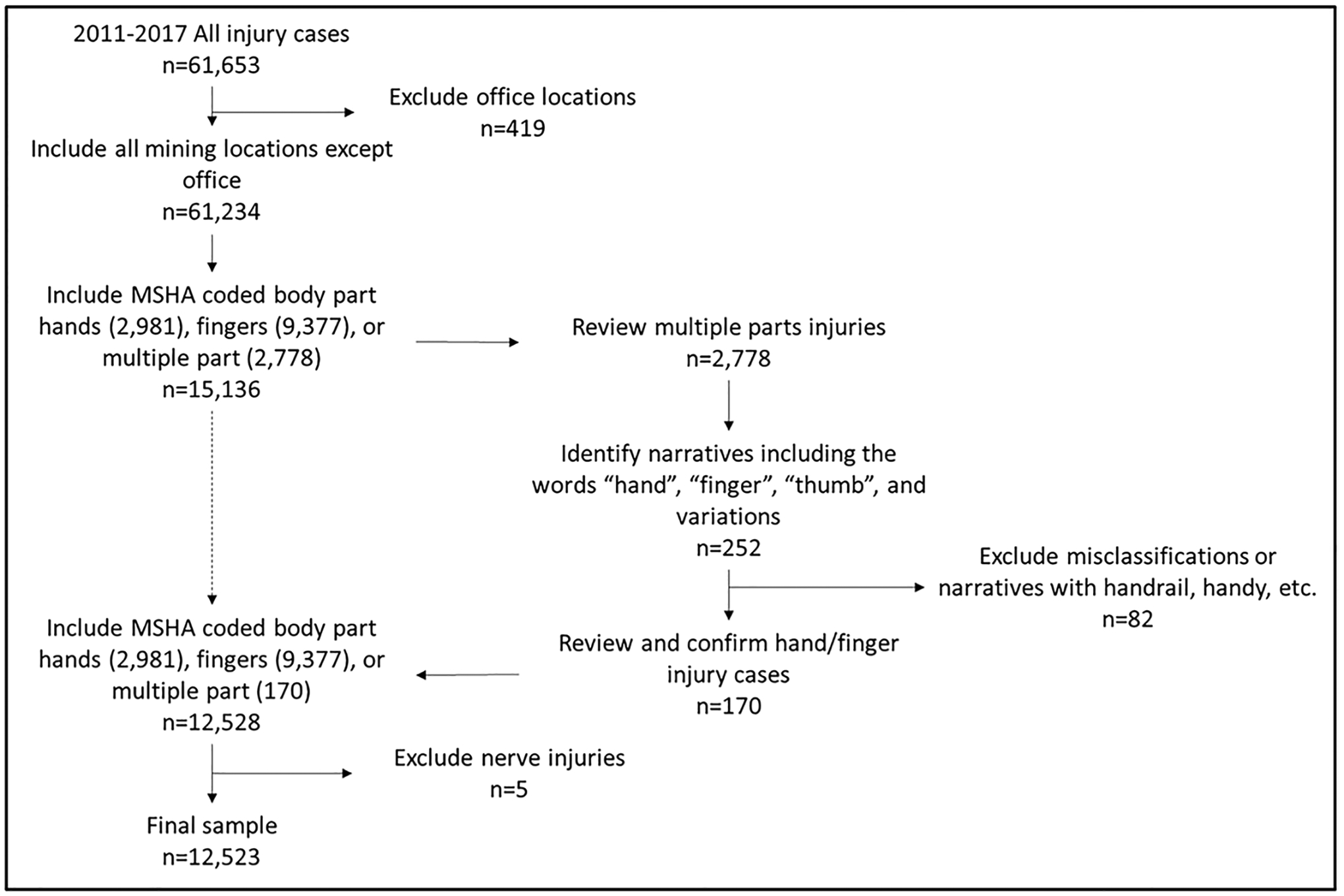
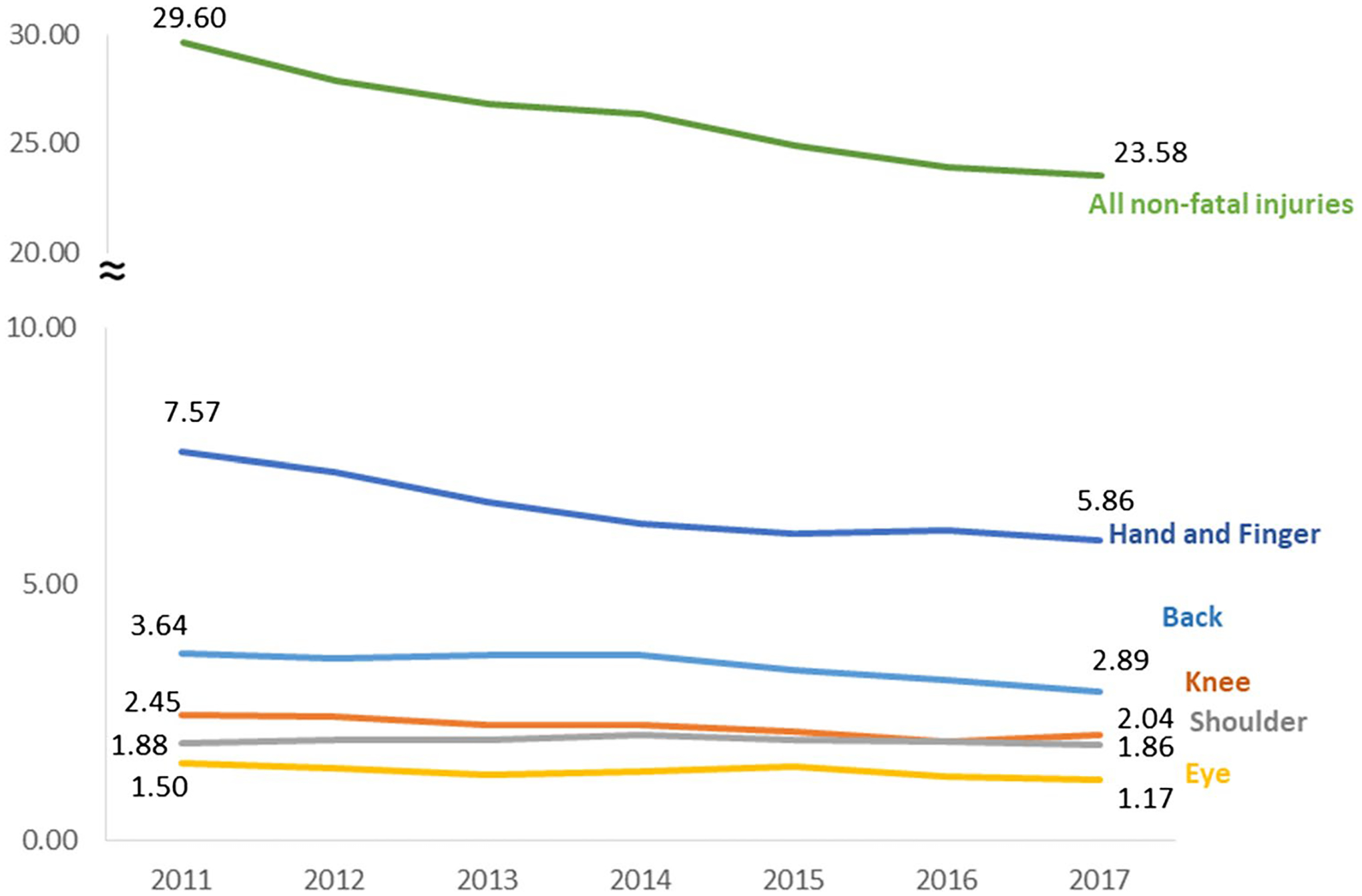
Description:Injuries associated with hands and fingers are highly prevalent in mining and identifying factors associated with these injuries are critical in developing prevention efforts. This study identifies nonfatal injury incidence rates, nature of injury, work activities, glove usage, and sources of hand and finger injuries in the U.S. mining industry, as reported to the Mine Safety and Health Administration (MSHA) from 2011 - 2017. Hand and finger injuries occur at a rate of 6.53 per 1000 full-time employees, which is nearly double the rate of the next highest affected body part, the back. Most of the hand and finger injuries were classified as cuts/lacerations/punctures (53%) followed by bone fractures/chips (26%). Materials handling and maintenance/repair were common activities at the time of the incident with miscellaneous metals (pipe, wire, guarding) and hand tools as the primary sources of hand and finger injury. Although the information on glove use was limited, leather gloves were most often worn when an injury occurred. When worn, gloves were found to contribute to 20% of the injuries, indicating their potential to protect the hands, but also potentially put the hands at risk. Further research is necessary to determine performance requirements for gloves used in mining operations, specifically those offering cut and puncture resistance.
-
Subjects:
-
Source:Min Metall Explor. 39(2):507-520
-
Pubmed ID:35836426
-
Pubmed Central ID:PMC9277776
-
Document Type:
-
Funding:
-
Volume:39
-
Issue:2
-
Download URL:
-
File Type:
 [PDF - 683.52 KB]
 -
Collection(s):
-
Main Document Checksum:urn:sha256:c768190364581c153907ce049742bf6ca2868c0e3ce648f14ffca815a6c45621
Supporting Files


File Language:
English
 Was this page helpful?
 Found an issue?

CDC STACKS serves as an archival repository of CDC-published products including
scientific findings, journal articles, guidelines, recommendations, or other public health information authored or
co-authored by CDC or funded partners.
As a repository, CDC STACKS retains documents in their original published format to ensure public access to scientific information.
As a repository, CDC STACKS retains documents in their original published format to ensure public access to scientific information.
You May Also Like
COLLECTION
CDC Public Access