


Increases in prescription opioid injection abuse among treatment admissions in the United States, 2004–2013
Supporting Files

-
7 01 2017
File Language:
English
Details
-
Alternative Title:Drug Alcohol Depend
-
Personal Author:
-
Description:Background:
The 2015 HIV outbreak in Indiana associated with prescription opioid injection coupled with rising rates of hepatitis C, especially in areas with long-standing opioid abuse, have raised concerns about prescription opioid injection. However, research on this topic is limited. We assessed trends in treatment admissions reporting injection, smoking, and inhalation abuse of prescription opioids and examined characteristics associated with non-oral routes of prescription opioid abuse in the U.S.
Methods:
Prescription opioid abuse treatment admissions in the 2004–2013 Treatment Episode Data Set were used to calculate counts and percentages of prescription opioid treatment admissions reporting oral, injection, or smoking/inhalation abuse overall, by sex, age, and race/ethnicity. Multivariable multinomial logistic regression was used to identify demographic and substance use characteristics associated with injection or smoking/inhalation abuse.
Results:
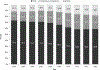
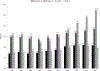
From 2004–2013, oral abuse decreased from 73.1% to 58.9%; injection abuse increased from 11.7% to 18.1%; and smoking/inhalation abuse increased from 15.3% of admissions to 23.0%. Among treatment admissions, the following were associated with injection abuse: male sex, 18–54 year-olds, non-Hispanic whites, non-Hispanic other, homeless or dependent living, less than full-time work, living in the Midwest or South, ≥1 prior treatment episodes, younger age of first opioid use, and reporting use of cocaine/crack, marijuana, heroin, or methamphetamine.
Conclusions:
The proportion of treatment admissions reporting prescription opioid injection and smoking/inhalation abuse increased significantly in the U.S. between 2004 and 2013. Expanding prevention efforts as well as access to medication-assisted treatment and risk reduction services for people who inject drugs is urgently needed.
-
Subjects:
-
Source:Drug Alcohol Depend. 176:89-95
-
Pubmed ID:28531769
-
Pubmed Central ID:PMC9244861
-
Document Type:
-
Funding:
-
Place as Subject:
-
Volume:176
-
Collection(s):
-
Main Document Checksum:urn:sha256:1ab463b5feeccbe72e0508d20526f9bf22dd4d877464082da34563233496b632
-
Download URL:
-
File Type:
 [PDF
- 790.36 KB
]
[PDF
- 790.36 KB
]
Supporting Files


File Language:
English
ON THIS PAGE



CDC STACKS serves as an archival repository of CDC-published products including
scientific findings,
journal articles, guidelines, recommendations, or other public health information authored or
co-authored by CDC or funded partners.
As a repository, CDC STACKS retains documents in their original published format to ensure public access to scientific information.
As a repository, CDC STACKS retains documents in their original published format to ensure public access to scientific information.
You May Also Like
COLLECTION
CDC Public Access