


Dimethyl Malonate Slows Succinate Accumulation and Preserves Cardiac Function in a Swine Model of Hemorrhagic Shock
Supporting Files

-
7 01 2022
-
File Language:
English
Details
-
Alternative Title:J Trauma Acute Care Surg
-
Personal Author:
-
Description:Background:
Succinate (SI) is a citric acid cycle metabolite that accumulates in tissues during hemorrhagic shock (HS) due to electron transport chain uncoupling. Dimethyl malonate (DMM) is a competitive inhibitor of succinate dehydrogenase, which has been shown to reduce SI accumulation and protect against reperfusion injury. Whether DMM can be therapeutic after severe HS is unknown. We hypothesized that DMM would prevent SI buildup during resuscitation in a swine model of hemorrhagic shock, leading to better physiological recovery after resuscitation (RES).
Methods:
The carotid arteries of Yorkshire pigs were cannulated with a 5-French catheter. After placement of a Swan-Ganz catheter and femoral arterial line, the carotid catheters were opened and the animals were exsanguinated to a mean arterial pressure (MAP) of 45 mm. After 30 minutes in the shock state, the animals were resuscitated to a MAP of 60 mm using lactated ringers. A MAP above 60 mm was maintained throughout RES. One group received 10 mg/kg of DMM (n=6) while the control received sham injections (n=6). The primary end-point was SI levels. Secondary end-points included cardiac function and lactate.
Results:
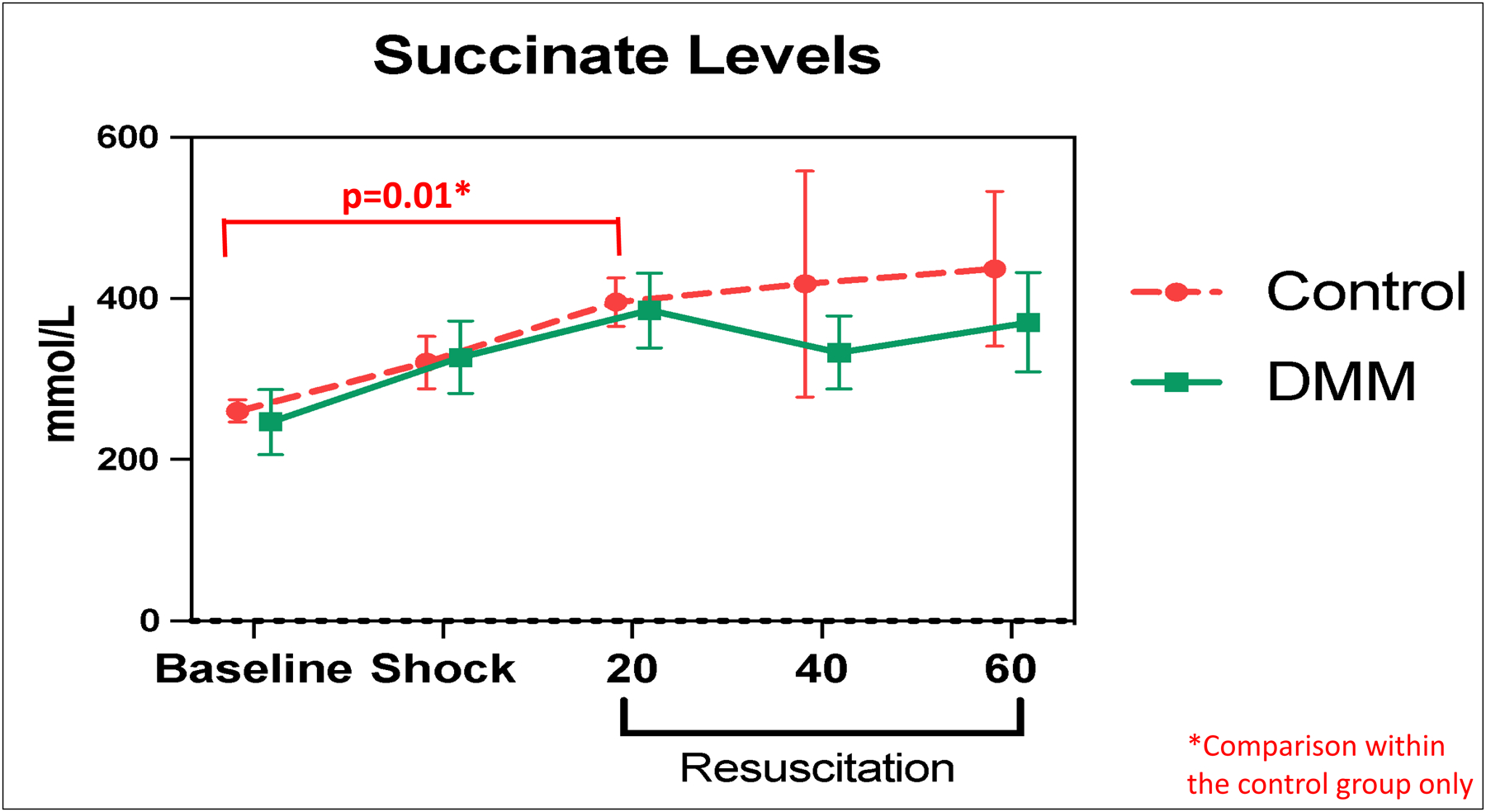
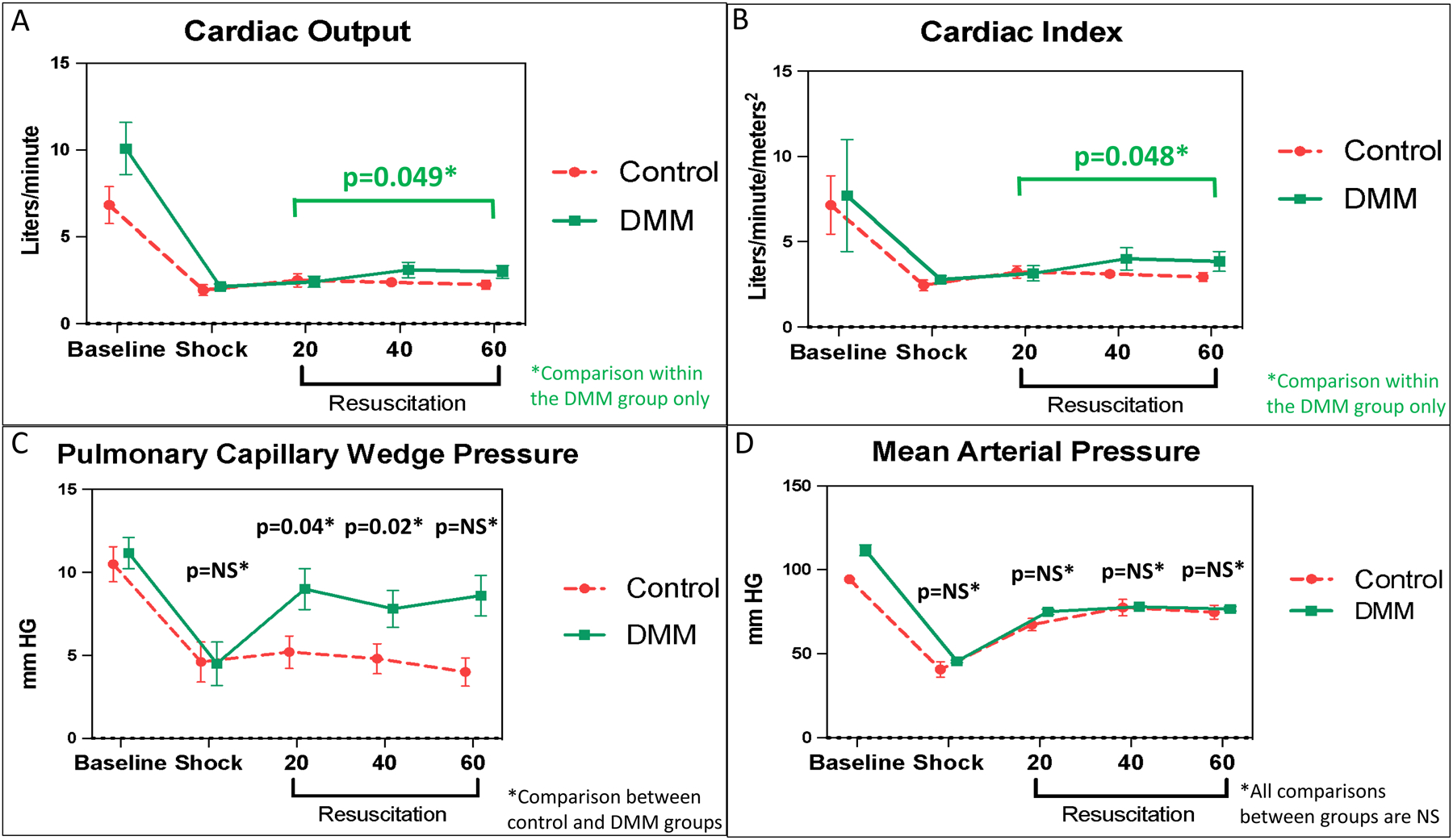
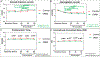
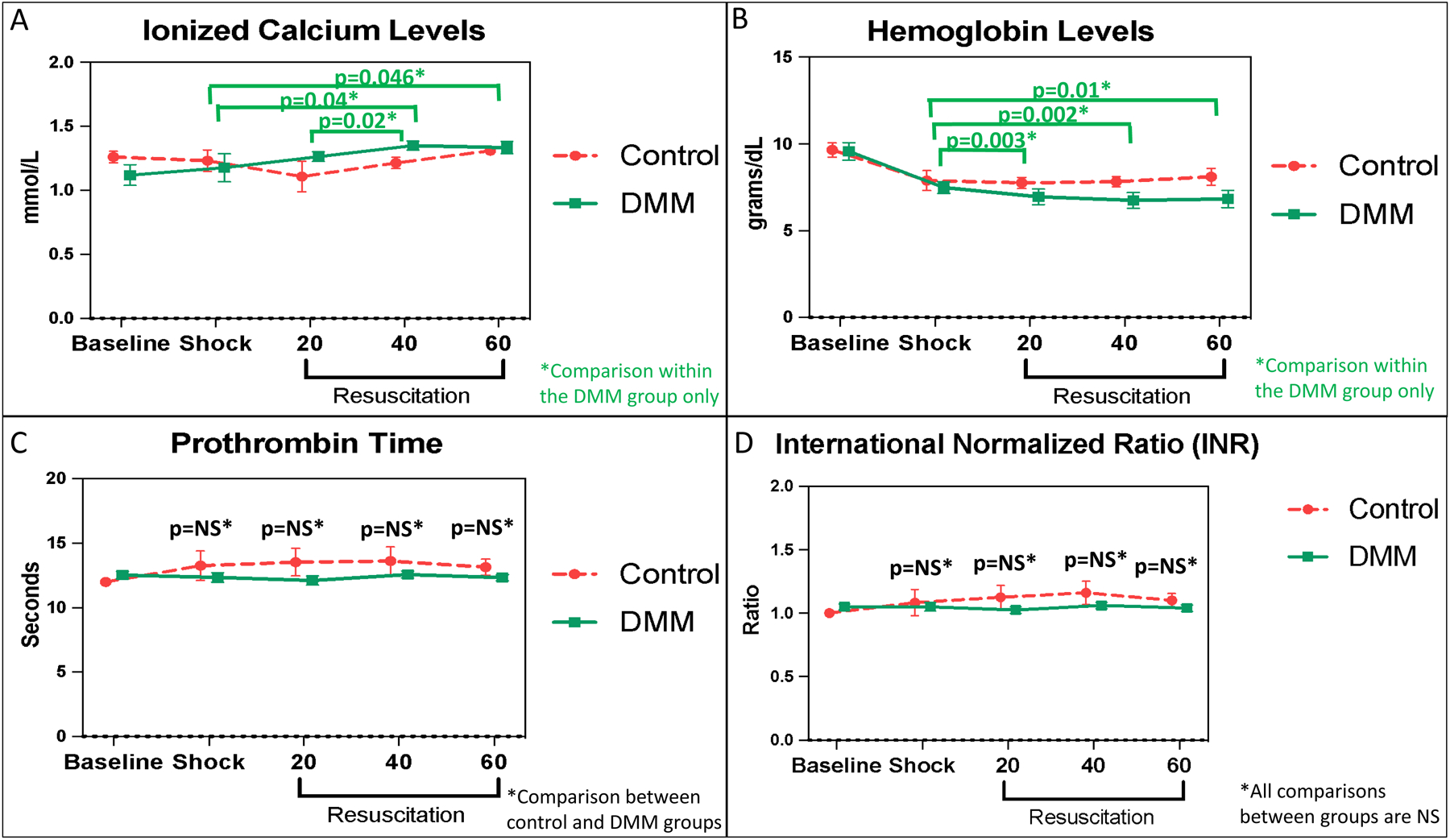
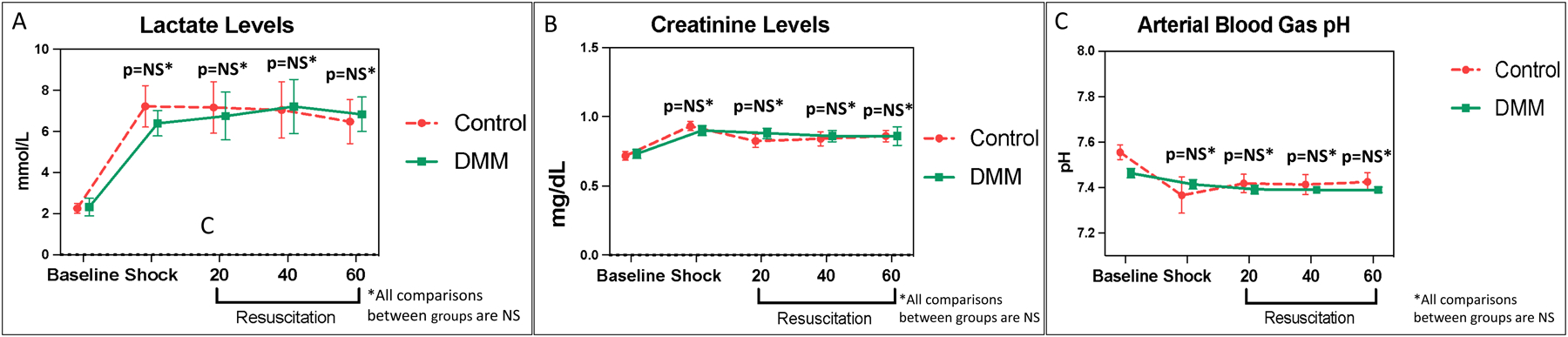
SI levels increased from baseline to the 20-minute RES point in control, while the DMM cohort remained unchanged. The DMM group required less IV fluid to maintain a MAP above 60 (450.0 vs. 229.0 mL, p=0.01). The DMM group had higher pulmonary capillary wedge pressure at the 20 and 40-minute RES points. The DMM group had better recovery of cardiac output and index during RES, while the control had no improvement. While lactate levels were similar, DMM may lead to increased ionized calcium levels.
Discussion:
DMM slows SI accumulation during HS and helps preserve cardiac filling pressures and function during RES. In addition, DMM may protect against depletion of ionized calcium. DMM may have therapeutic potential during HS.
Study Type:
Basic science paper
-
Subjects:
-
Source:J Trauma Acute Care Surg. 93(1):13-20
-
Pubmed ID:35234713
-
Pubmed Central ID:PMC9232889
-
Document Type:
-
Funding:
-
Volume:93
-
Issue:1
-
Collection(s):
-
Main Document Checksum:urn:sha256:406bdec6efc69da9776fed165cb2372b123d4d34d05e96b2765afddf3e3efee6
-
Download URL:
-
File Type:
 [PDF
- 1.42 MB
]
[PDF
- 1.42 MB
]
Supporting Files


File Language:
English
ON THIS PAGE


CDC STACKS serves as an archival repository of CDC-published products including
scientific findings,
journal articles, guidelines, recommendations, or other public health information authored or
co-authored by CDC or funded partners.
As a repository, CDC STACKS retains documents in their original published format to ensure public access to scientific information.
As a repository, CDC STACKS retains documents in their original published format to ensure public access to scientific information.
You May Also Like
COLLECTION
CDC Public Access