



Exploring Estimates and Reasons for Lost to Follow Up among People Living with HIV on Antiretroviral Therapy in Kisumu County, Kenya
Supporting Files

-
6 01 2022
-
Available in CDC Stacks on 2023-06-01T00:00:00Z
File Language:
English
Details
-
Alternative Title:J Acquir Immune Defic Syndr
-
Personal Author:
-
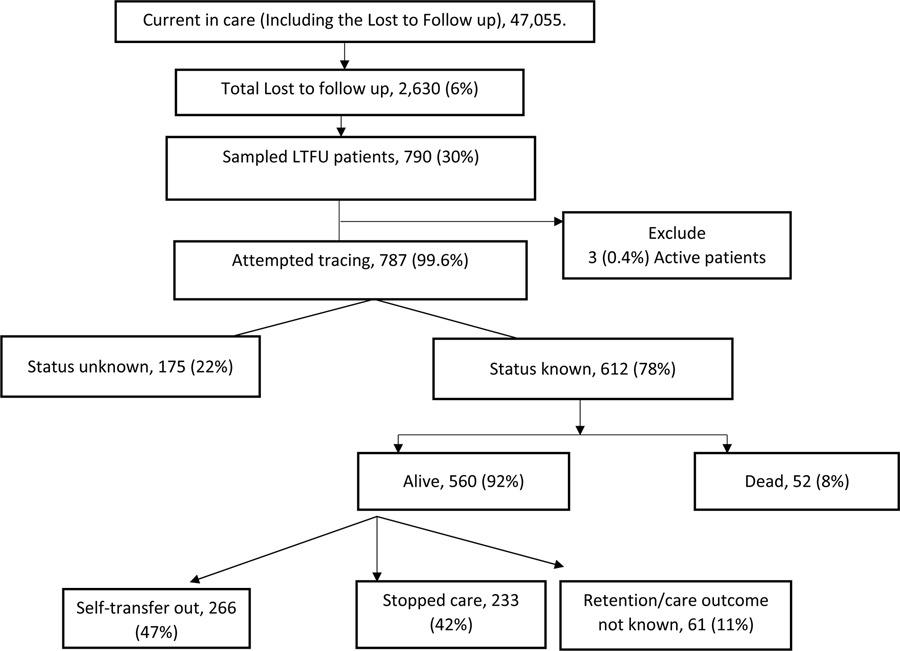
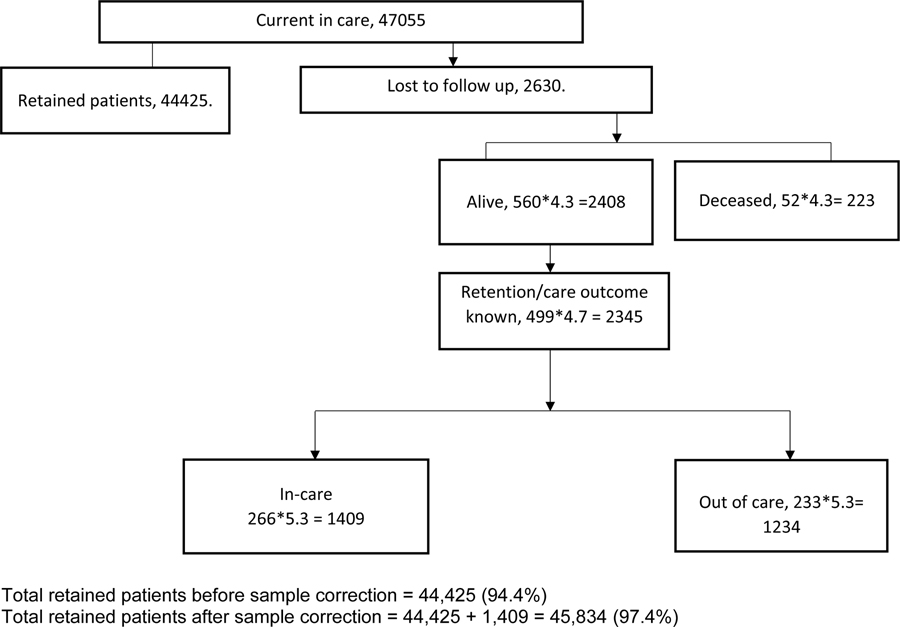
Description:Background: ; A better understanding why people living with HIV (PLHIV) become lost to follow up (LTFU) and determining who is LTFU in a program setting is needed to attain HIV epidemic control. ; Setting: ; This retrospective cross-sectional study used an evidence-sampling approach to select health facilities and LTFU patients from a large HIV program supporting 61 health facilities in Kisumu County, Kenya. ; Methods: ; Eligible PLHIV included adults ≥18 years with at least one clinic visit between 1st September 2016 and 31st August 2018 and were LTFU (no clinical contact for ≥90 days after their last expected clinic visit). From March to June 2019, demographic and clinical variables were collected from a sample of LTFU patient files at 12 health facilities. Patient care status and retention outcomes were determined through program tracing. ; Results: ; Of 787 LTFU patients selected and traced, 36% were male, median age was 30.5 years (IQR: 24.6–38.0), and 78% had their vital status confirmed with 560 (92%) alive and 52 (8%) deceased. Among 499 (89.0%) with a retention outcome, 233 (46.7%) had stopped care while 266 (53.3%) had self-transferred to another facility. Among those who had stopped care, psychosocial reasons were most common (65.2% 95% CI, 58.9%–71.1%) followed by structural reasons (29.6% 95% CI, 24.1%–35.8%) and clinic-based reasons (3.0% 95% CI, 1.4%–6.2). ; Conclusion: ; We found that over half of patients LTFU were receiving HIV care elsewhere, leading to a higher overall patient retention rate than routinely reported. Similar strategies could be considered to improve the accuracy of reporting retention in HIV care.
-
Subjects:
-
Source:J Acquir Immune Defic Syndr. 90(2):146-153
-
Pubmed ID:35213856
-
Pubmed Central ID:PMC9203903
-
Document Type:
-
Funding:
-
Place as Subject:
-
Volume:90
-
Issue:2
-
Download URL:
-
File Type:
 [PDF - 299.78 KB]
 -
Collection(s):
-
Main Document Checksum:urn:sha256:130fd376f3c4143c61c22f3866a0e6b1f6ce9a0209bc9a94035e687e976e9943
Supporting Files


File Language:
English
 Was this page helpful?
 Found an issue?

CDC STACKS serves as an archival repository of CDC-published products including
scientific findings, journal articles, guidelines, recommendations, or other public health information authored or
co-authored by CDC or funded partners.
As a repository, CDC STACKS retains documents in their original published format to ensure public access to scientific information.
As a repository, CDC STACKS retains documents in their original published format to ensure public access to scientific information.
You May Also Like
COLLECTION
CDC Public Access