


Evaluation and Test Methods of Industrial Exoskeletons In Vitro, In Vivo, and In Silico: A Critical Review
Supporting Files

-
2021/01/01
-

File Language:
English
Details
-
Journal Article:Critical Reviews in Biomedical Engineering
-
Personal Author:
-
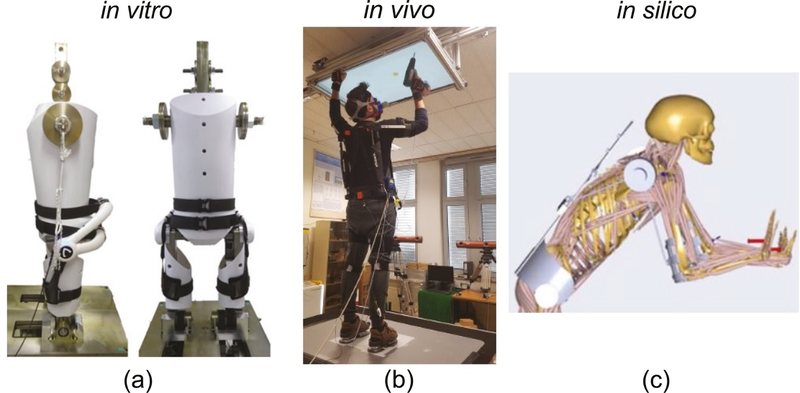
Description:Industrial exoskeletons have been used to assist workers during occupational activities, such as overhead work, tool-use, mobility, stooping/squatting, and/or load carrying in various industries. Despite the promise of reducing the risk of work-related musculoskeletal disorders, there is a lack of sufficient evidence to support the safe and effective use of industrial exoskeletons. To assess the merits and residual risks of various types of exoskeletons in different work settings, more comprehensive evaluation procedures are needed. This review study aims to provide an overview of the existing viable and promising methods for evaluating the effectiveness of industrial exoskeletons. The different evaluation methods are organized into three categories-in vitro, in vivo, and in silico studies. The limitations and challenges in different types of evaluation approaches are also discussed. In summary, this review sheds light on choosing appropriate evaluation approaches and may help with decision-making during the development, evaluation, and application of industrial exoskeletons. [Description provided by NIOSH]
-
Subjects:
-
Keywords:
-
Source:Crit Rev Biomed Eng 2021 Jul; 49(4):1-13
-
ISSN:0278-940X
-
Pubmed ID:35695600
-
Pubmed Central ID:PMC9199587
-
Document Type:
-
Funding:
-
Genre:
-
Place as Subject:
-
CIO:
-
Division:
-
Topic:
-
Location:
-
Pages in Document:15 pdf pages
-
Volume:49
-
Issue:4
-
NIOSHTIC Number:nn:20064865
-
Contact Point Address:Liying Zheng, Health Effects Laboratory Division, National Institute for Occupational Safety and Health, Morgantown, WV
-
Email:lzheng2@cdc.gov
-
Federal Fiscal Year:2021
-
Peer Reviewed:True
-
Collection(s):
-
Main Document Checksum:urn:sha-512:49007f76a0f1c94846787e6c814160ac37895d794df33983734b13acfc8918c10a5ba08f3cadb87f994288e6f9573b1220c585869db14b337f4a2590dd8e18fd
-
Download URL:
-
File Type:
 [PDF
- 243.11 KB
]
[PDF
- 243.11 KB
]

Supporting Files


File Language:
English
ON THIS PAGE


CDC STACKS serves as an archival repository of CDC-published products including
scientific findings,
journal articles, guidelines, recommendations, or other public health information authored or
co-authored by CDC or funded partners.
As a repository, CDC STACKS retains documents in their original published format to ensure public access to scientific information.
As a repository, CDC STACKS retains documents in their original published format to ensure public access to scientific information.
You May Also Like