


Paradox of serial interferon-gamma release assays: variability width more important than specificity size
Supporting Files

-
5 01 2018
-
File Language:
English
Details
-
Alternative Title:Int J Tuberc Lung Dis
-
Personal Author:
-
Corporate Authors:
-
Description:SETTING:
Serial screening for latent tuberculous infection (LTBI) is commonly performed in certain populations, such as health care workers. The high apparent conversion rate in some studies of interferon-gamma release assays is puzzling given the claimed high specificity of these tests.
OBJECTIVE:
To understand how test-retest variability, specificity, and underlying LTBI prevalence affect observed outcomes of repeated testing for LTBI.
DESIGN:
Mathematical model assuming constant test sensitivity and specificity over time and no new infections.
RESULTS:
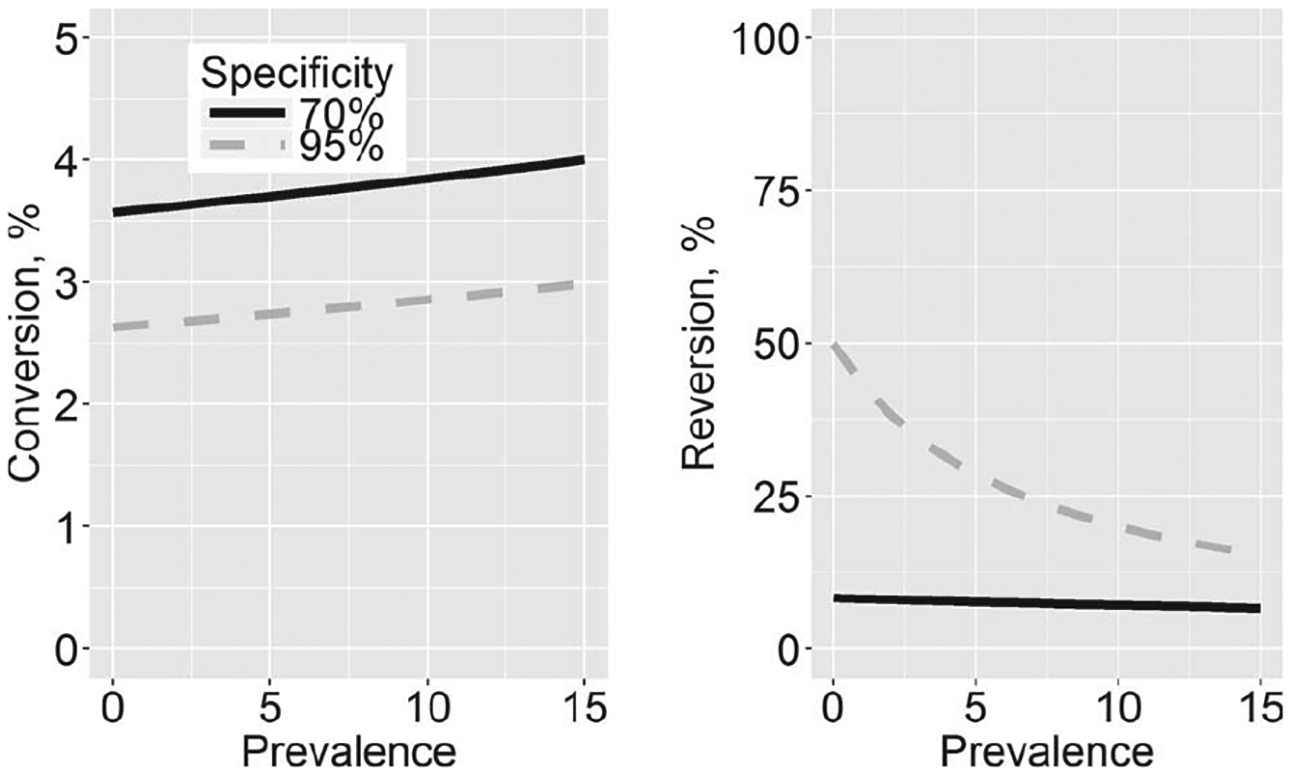
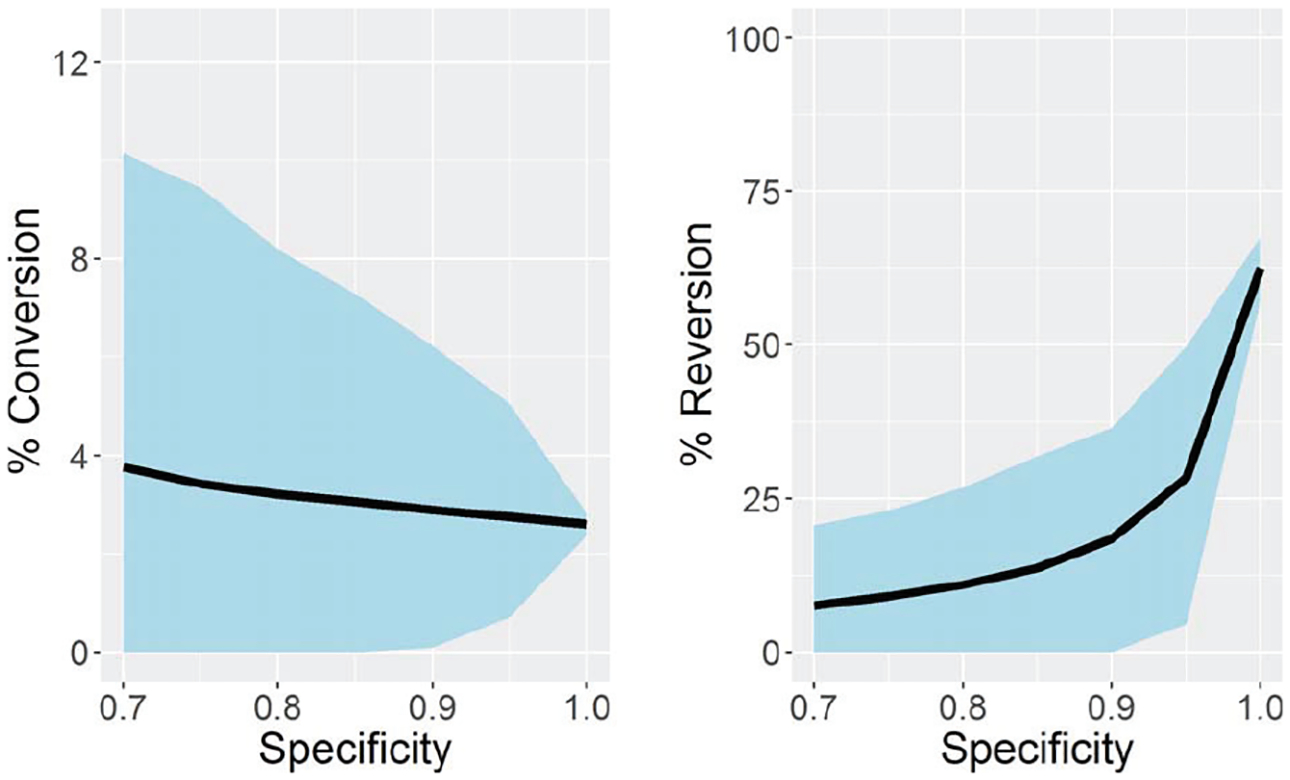
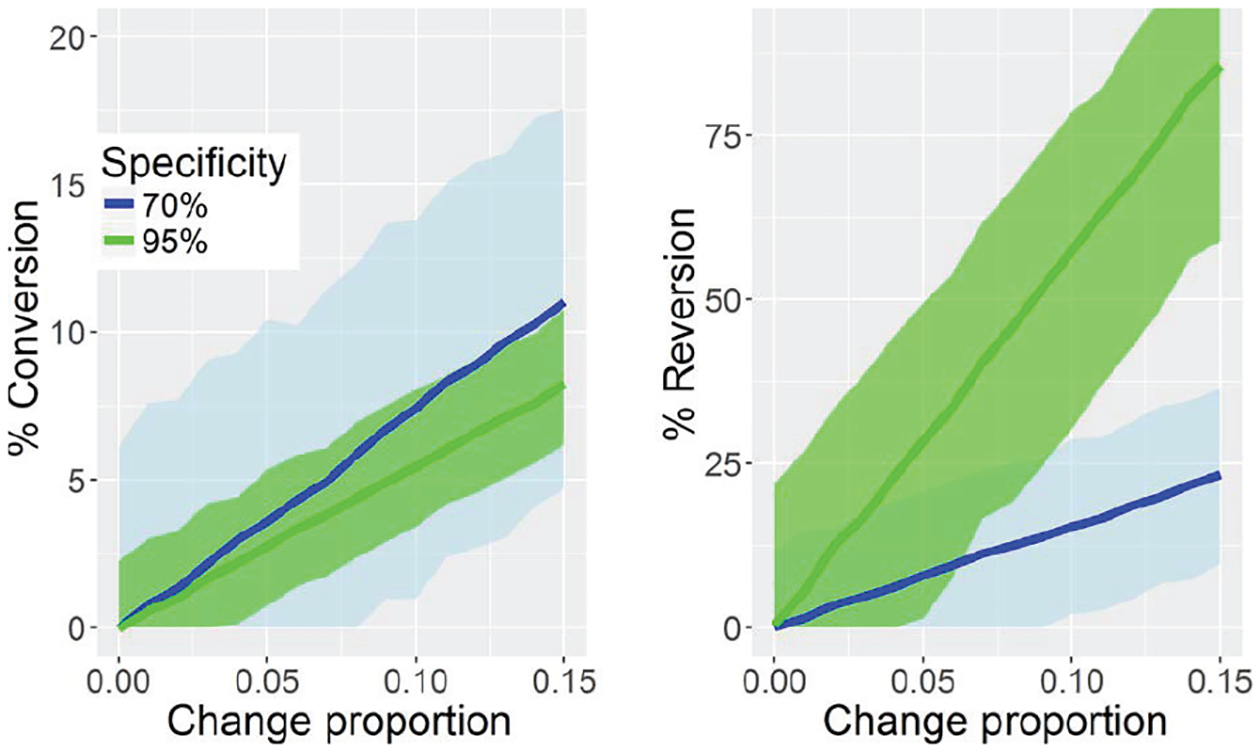
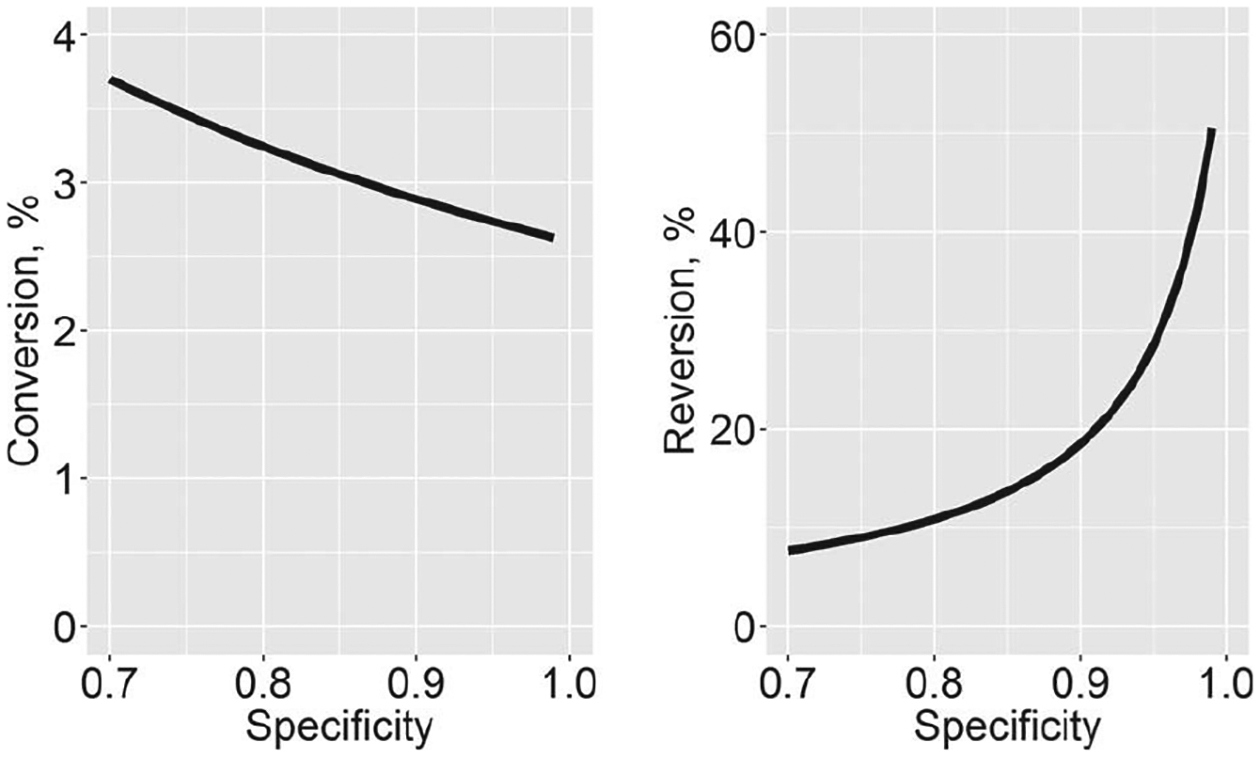
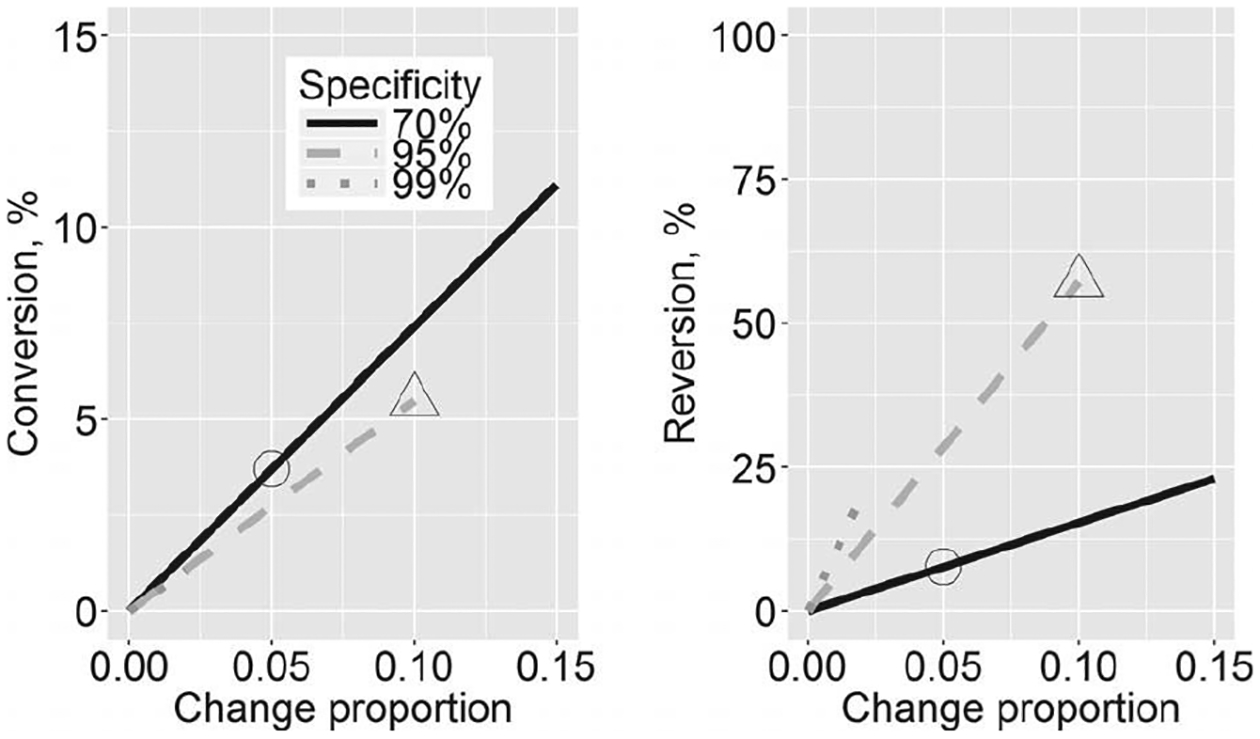
Test-retest variability had a large effect on the observed proportion of conversions (initial negative test, followed by a positive test) and reversions (initial positive test, followed by a negative test). For example, a test with 70% specificity and 5% test-retest variability would be associated with a conversion rate of 3.7% and a reversion rate of 7.7%, while a test with 95% specificity but 10% test-retest variability would be associated with a conversion rate of 5.5% and a reversion rate of 57%, assuming that both tests are 80% sensitive and underlying LTBI prevalence was 5%.
CONCLUSION:
Test-retest variability is a key parameter that should be reported for tests used for serial screening for LTBI. Reducing test-retest variability can reduce false-positive and false-negative results.
-
Subjects:
-
Source:Int J Tuberc Lung Dis. 22(5):518-523
-
Pubmed ID:29663956
-
Pubmed Central ID:PMC9132738
-
Document Type:
-
Funding:
-
Volume:22
-
Issue:5
-
Collection(s):
-
Main Document Checksum:urn:sha256:15235a0c1297de8385493d11bed29c5aa8ca8196be8d009d4cee688f63e1f467
-
Download URL:
-
File Type:
 [PDF
- 730.24 KB
]
[PDF
- 730.24 KB
]
Supporting Files


File Language:
English
ON THIS PAGE

CDC STACKS serves as an archival repository of CDC-published products including
scientific findings,
journal articles, guidelines, recommendations, or other public health information authored or
co-authored by CDC or funded partners.
As a repository, CDC STACKS retains documents in their original published format to ensure public access to scientific information.
As a repository, CDC STACKS retains documents in their original published format to ensure public access to scientific information.
You May Also Like
COLLECTION
CDC Public Access