


Inherited Variants in SCARB1 Cause Severe Early-Onset Coronary Artery Disease
Supporting Files

-
7 09 2021
-
File Language:
English
Details
-
Alternative Title:Circ Res
-
Personal Author:Koenig, Sara N. ; Sucharski, Holly C. ; Jose, Elizabeth M. ; Dudley, Emma K. ; Madiai, Francesca ; Cavus, Omer ; Argall, Aaron D. ; Williams, Jordan L. ; Murphy, Nathaniel P. ; Keith, Caullin B. R. ; Refaey, Mona El ; Gumina, Richard J. ; Boudoulas, Konstantinos D. ; Milks, M. Wesley ; Sofowora, Gbemiga ; Smith, Sakima A. ; Hund, Thomas J. ; Wright, Nathan T. ; Bradley, Elisa A. ; Zareba, Karolina M. ; Wold, Loren E. ; Mazzaferri, Ernest L. ; Mohler, Peter J.
-
Description:Rationale:
Coronary artery disease (CAD) is a pervasive and critical healthcare problem. Elevated high density lipoprotein-associated cholesterol (HDL-C) is associated with improved atherosclerotic cardiovascular disease (ASCVD) outcomes on a population level, but clinical trials aimed at HDL-C elevation have not succeeded in improving ASCVD event risk. Nevertheless, human variants in the HDL receptor, encoded by SCARB1, are associated with dyslipidemia, suggesting that HDL metabolism, not HDL-C, is a suitable target for therapy. However, variants in SCARB1 have never been directly attributed to CAD by Mendelian inheritance.
Objective:
To determine if compound heterozygous variants in SCARB1 cause disease in two brothers with severe, early-onset CAD.
Methods and Results:
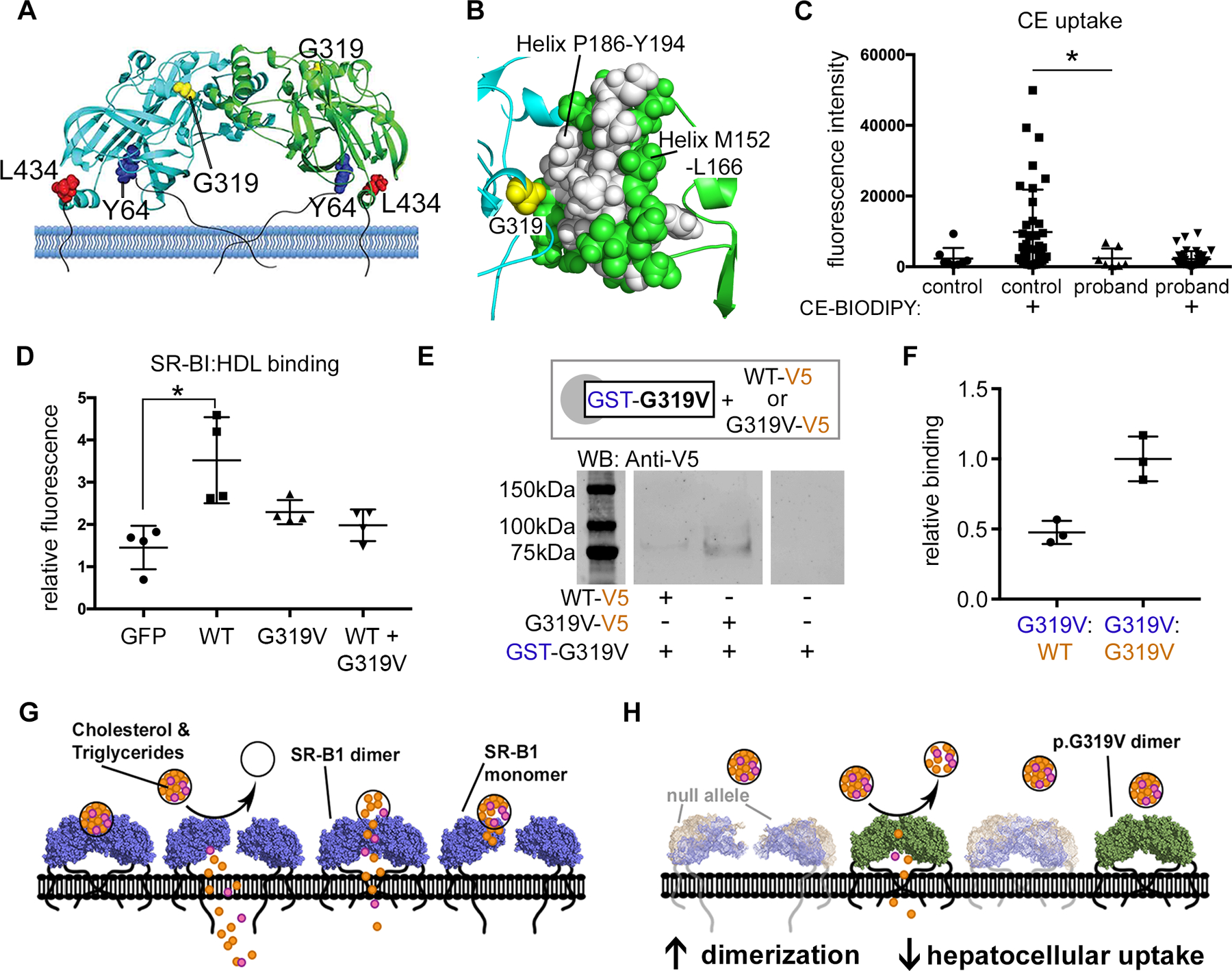
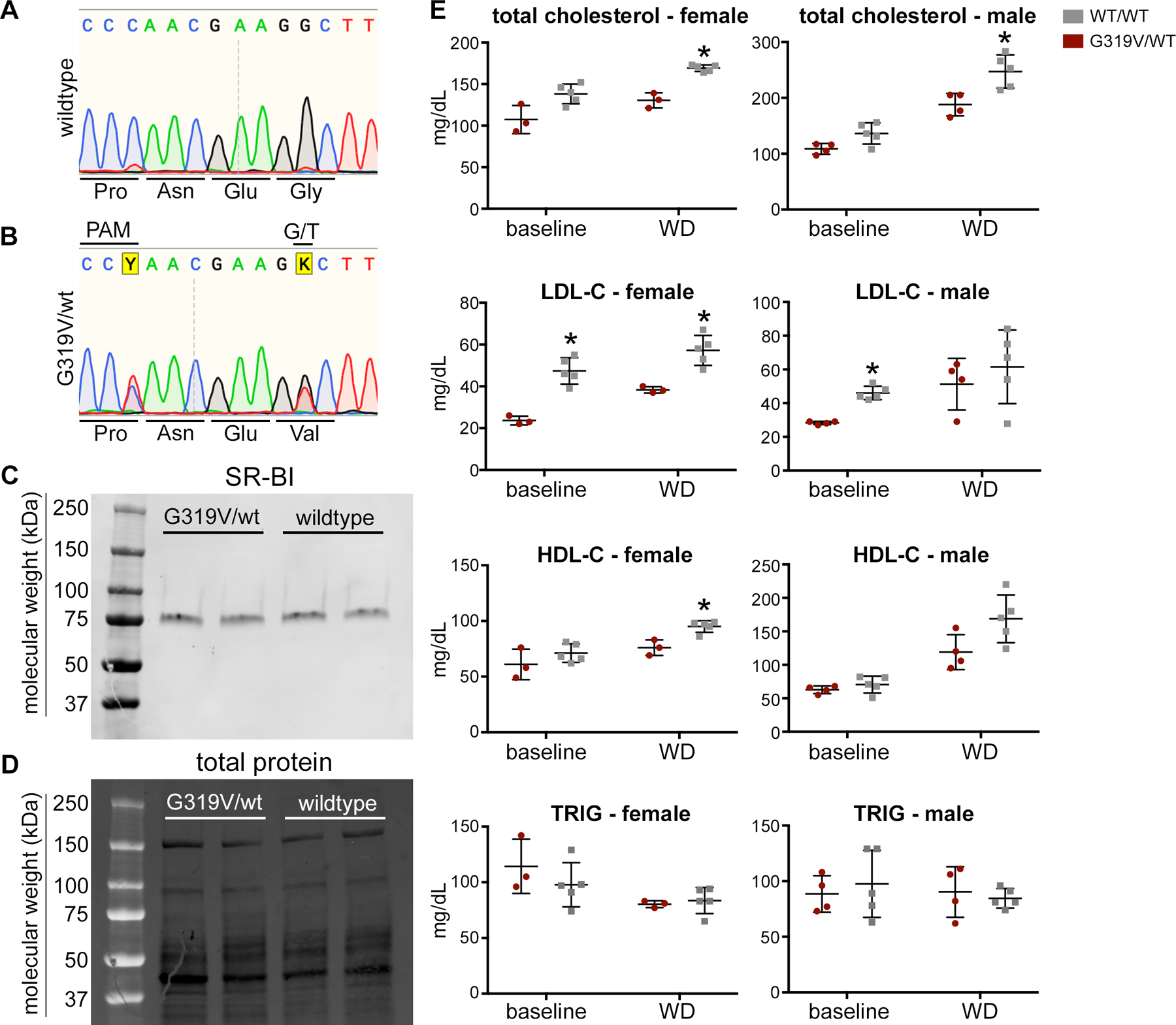
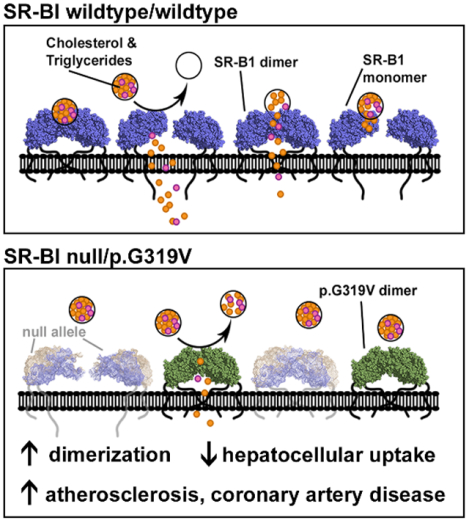
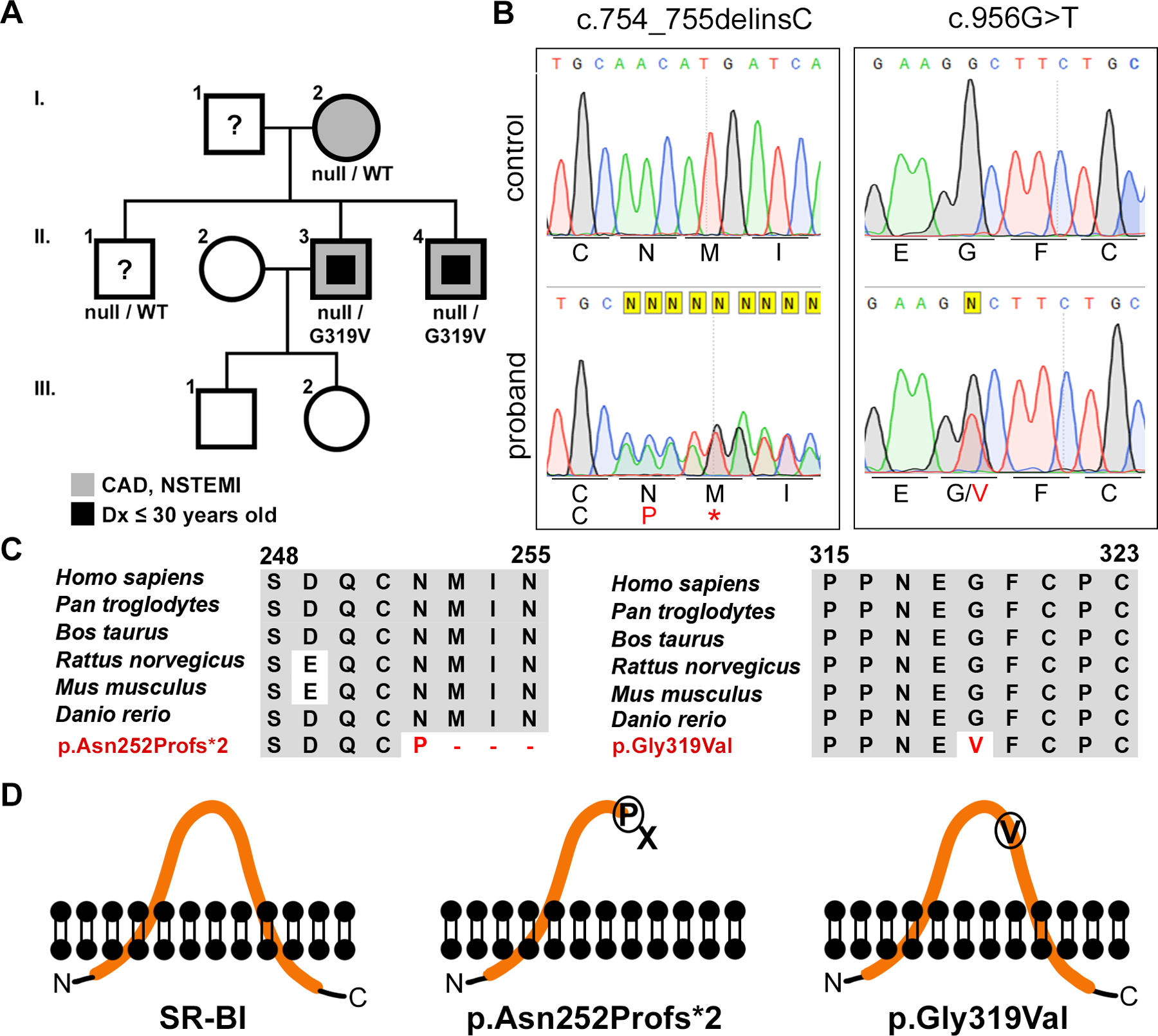
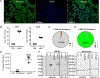
Using whole exome sequencing, we have identified rare, compound heterozygous variants in SCARB1 that segregate with severe, premature CAD, following patterns of Mendelian inheritance. Using induced pluripotent stem cell-derived hepatocyte-like cells (iPSC-HLCs) from the proband, we discovered the maternal variant (c.754_755delinsC) to be the first identified SCARB1 null allele, characterized by the absence of RNA and protein expression. Further, we demonstrate that the variant on the paternal allele (c.956G>T (p.G319V)) results in decreased cholesterol uptake, decreased SR-BI:HDL binding, and increased affinity for SR-BI dimerization. Finally, we generated a p.G319V knock-in mouse model that displays nearly 100% homozygous lethality and elevated plasma cholesterol in heterozygous animals, confirming pathogenicity of this variant.
Conclusions:
In summary, our data provide the first molecular mechanism to show the Mendelian inheritance of CAD as a result of human SCARB1 variants. The rarity of these variants supports pathogenicity in this family. Furthermore, SR-BI p.G319V, which has previously been reported benign in the context of heterozygosity, was uniquely presented alongside a null allele, demonstrating the disease-contributing capability of loss-of-function SCARB1 variants within the population.
-
Subjects:
-
Keywords:
-
Source:Circ Res. 129(2):296-307
-
Pubmed ID:33975440
-
Pubmed Central ID:PMC8273129
-
Document Type:
-
Funding:U01 OH012056/OH/NIOSH CDC HHSUnited States/ ; R01 HL127442/HL/NHLBI NIH HHSUnited States/ ; K08 HL135437/HL/NHLBI NIH HHSUnited States/ ; R00 HL146969/HL/NHLBI NIH HHSUnited States/ ; K08 HL148701/HL/NHLBI NIH HHSUnited States/ ; P30 CA016058/CA/NCI NIH HHSUnited States/ ; R01 HL135096/HL/NHLBI NIH HHSUnited States/ ; R01 MD011307/MD/NIMHD NIH HHSUnited States/ ; R01 HL114893/HL/NHLBI NIH HHSUnited States/ ; R01 HL134824/HL/NHLBI NIH HHSUnited States/ ; T32 GM139779/GM/NIGMS NIH HHSUnited States/ ; R35 HL135754/HL/NHLBI NIH HHSUnited States/ ; R01 AG057046/AG/NIA NIH HHSUnited States/ ; F30 HL137325/HL/NHLBI NIH HHSUnited States/ ; T32 GM136536/GM/NIGMS NIH HHSUnited States/ ; T32 HL098039/HL/NHLBI NIH HHSUnited States/ ; R01 HL139348/HL/NHLBI NIH HHSUnited States/ ; R13 HL154524/HL/NHLBI NIH HHSUnited States/ ; K99 HL146969/HL/NHLBI NIH HHSUnited States/
-
Volume:129
-
Issue:2
-
Collection(s):
-
Main Document Checksum:urn:sha-512:86c8cd61d4b2bb85f4b5abf6bfee0ef4a9bfb9688a30531a5cb077d550b28b4ae5a04ab7e3aef135f6a87388531988788838a53a34fd258407ff8e2be6e465a3
-
Download URL:
-
File Type:
 [PDF
- 2.06 MB
]
[PDF
- 2.06 MB
]
Supporting Files


File Language:
English
ON THIS PAGE

CDC STACKS serves as an archival repository of CDC-published products including
scientific findings,
journal articles, guidelines, recommendations, or other public health information authored or
co-authored by CDC or funded partners.
As a repository, CDC STACKS retains documents in their original published format to ensure public access to scientific information.
As a repository, CDC STACKS retains documents in their original published format to ensure public access to scientific information.
You May Also Like
COLLECTION
CDC Public Access