



Corticosterone Primes the Neuroinflammatory Response to Gulf-War Illness-Relevant Organophosphates Independently of Acetylcholinesterase Inhibition
Supporting Files
Public Domain
Peer Reviewed

-
2017/08/01
File Language:
English
Details
-
Journal Article:Journal of Neurochemistry
-
Personal Author:
-
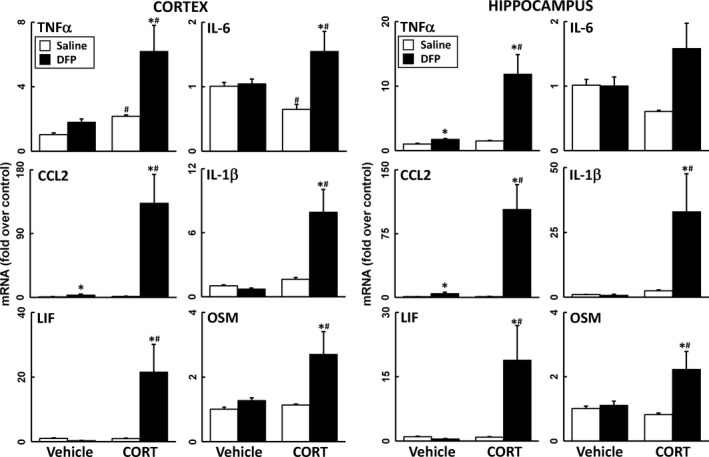
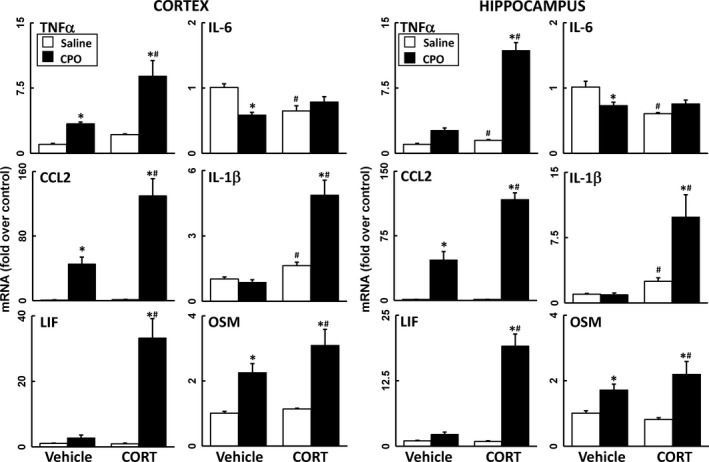
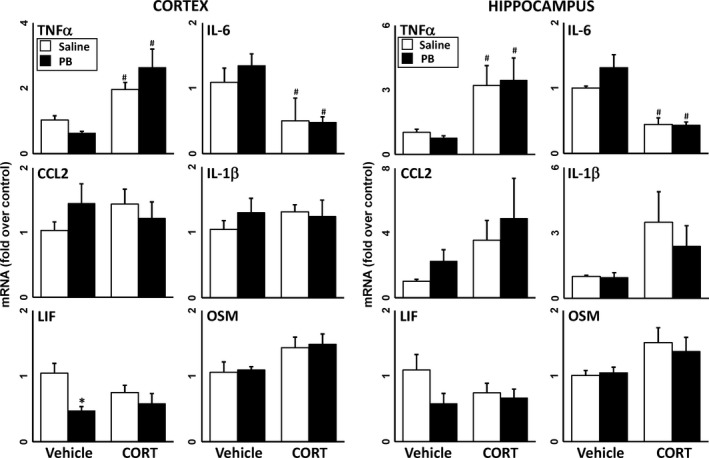
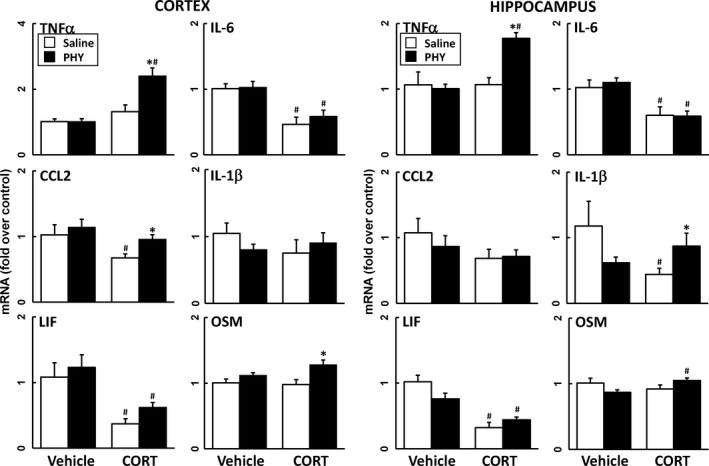
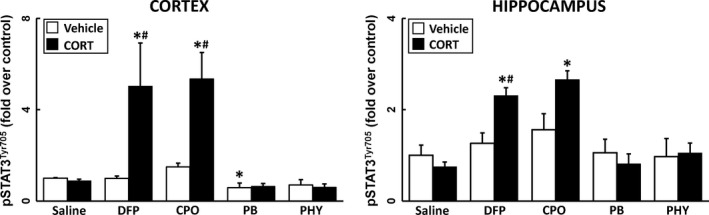
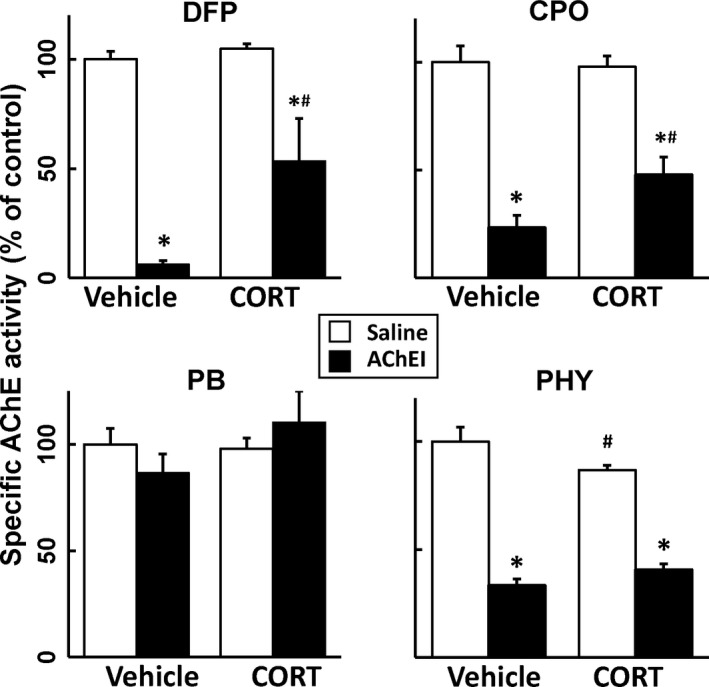
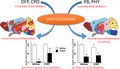
Description:Gulf War Illness (GWI) is a chronic multi-symptom disorder affecting veterans of the 1991 Gulf War. Among the symptoms of GWI are those associated with sickness behavior, observations suggestive of underlying neuroinflammation. We have shown that exposure of mice to the stress hormone, corticosterone (CORT), and to diisopropyl fluorophosphate (DFP), as a nerve agent mimic, results in marked neuroinflammation, findings consistent with a stress/neuroimmune basis of GWI. Here, we examined the contribution of irreversible and reversible acetylcholinesterase (AChE) inhibitors to neuroinflammation in our mouse model of GWI. Male C57BL/6J mice received four days of CORT (400 mg/L) in the drinking water followed by a single dose of chlorpyrifos (CPO; 8 mg/kg, i.p.), DFP (4 mg/kg, i.p.), pyridostigmine (PB; 3 mg/kg, i.p.), or physostigmine (PHY; 0.5 mg/kg, i.p.). CPO and DFP alone caused cortical and hippocampal neuroinflammation assessed by qPCR of TNF-a, IL-6, C-C chemokine ligand 2 (CCL2), IL-1B, leukemia inhibitory factor (LIF) and oncostatin M (OSM); CORT pretreatment markedly augmented these effects. Additionally, CORT exposure prior to DFP or CPO enhanced activation of the neuroinflammation signal transducer, STAT3. In contrast, PHY or PB alone or with CORT pretreatment did not produce neuroinflammation or STAT3 activation. While all of the CNS-acting AChE inhibitors (DFP, CPO, and PHY) decreased brain AChE activity, CORT pretreatment abrogated these effects for the irreversible inhibitors. Taken together, these findings suggest that irreversible AChE inhibitor-induced neuroinflammation and particularly its exacerbation by CORT, result from non-cholinergic effects of these compounds, pointing potentially to organophosphorylation of other neuroimmune targets. Description provided by NIOSH
-
Subjects:
-
Keywords:
-
Source:J Neurochem 2017 Aug; 142(3):444-455
-
ISSN:0022-3042
-
Pubmed ID:28500787
-
Pubmed Central ID:PMC5575502
-
Document Type:
-
Genre:
-
Place as Subject:
-
CIO:
-
Division:
-
Topic:
-
Location:
-
Pages in Document:12 pdf pages
-
Volume:142
-
Issue:3
-
NIOSHTIC Number:nn:20049836
-
Contact Point Address:James P. O'Callaghan, Ph.D., Centers for Disease Control and Prevention, National Institute for Occupational Safety and Health, 1095 Willowdale Road, Mailstop L-3014, Morgantown, WV 26505
-
Email:jdo5@cdc.gov
-
CAS Registry Number:
-
Federal Fiscal Year:2017
-
Peer Reviewed:True
-
Download URL:
-
File Type:
 [PDF - 844.05 KB]
 -
Collection(s):
-
Main Document Checksum:urn:sha-512:58cc641f3aa0918f6e3c26b3d95d35cb521d1bbd60edbaa8fd64597ab90e08b68355fd526fcbb14862f49d4b271eb39c37216a4ce6bca424d29ec23f228bde9e
Supporting Files


File Language:
English
 Was this page helpful?
 Found an issue?

CDC STACKS serves as an archival repository of CDC-published products including
scientific findings, journal articles, guidelines, recommendations, or other public health information authored or
co-authored by CDC or funded partners.
As a repository, CDC STACKS retains documents in their original published format to ensure public access to scientific information.
As a repository, CDC STACKS retains documents in their original published format to ensure public access to scientific information.
You May Also Like