



Rhode Island’s Opioid Overdose Hospital Standards and Emergency Department Naloxone Distribution, Behavioral Counseling, and Referral to Treatment
Supporting Files

-
7 2021
-
Available in CDC Stacks on 2022-07-01T00:00:00Z
File Language:
English
Details
-
Alternative Title:Ann Emerg Med
-
Personal Author:
-
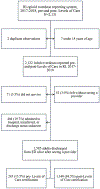
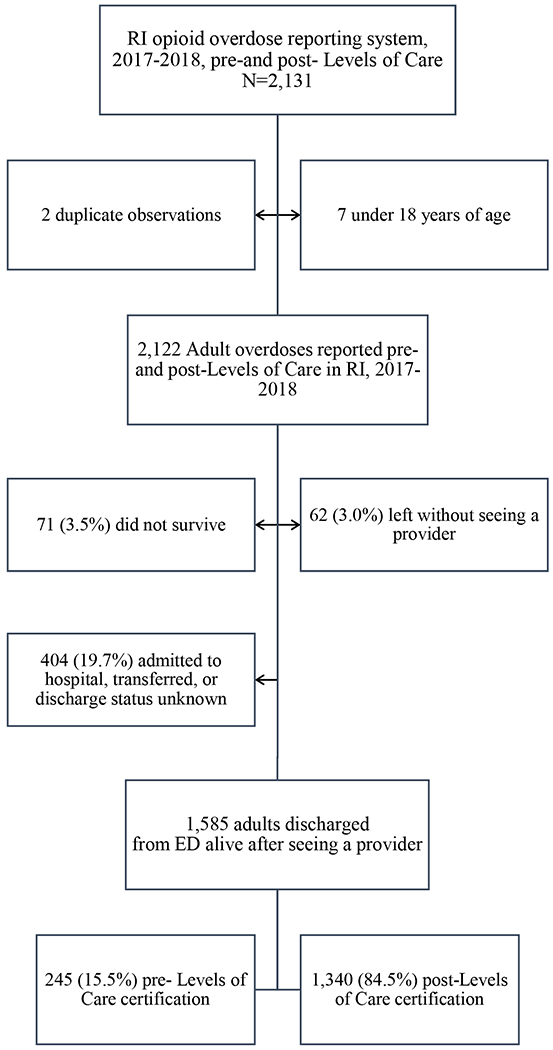
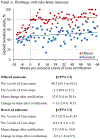
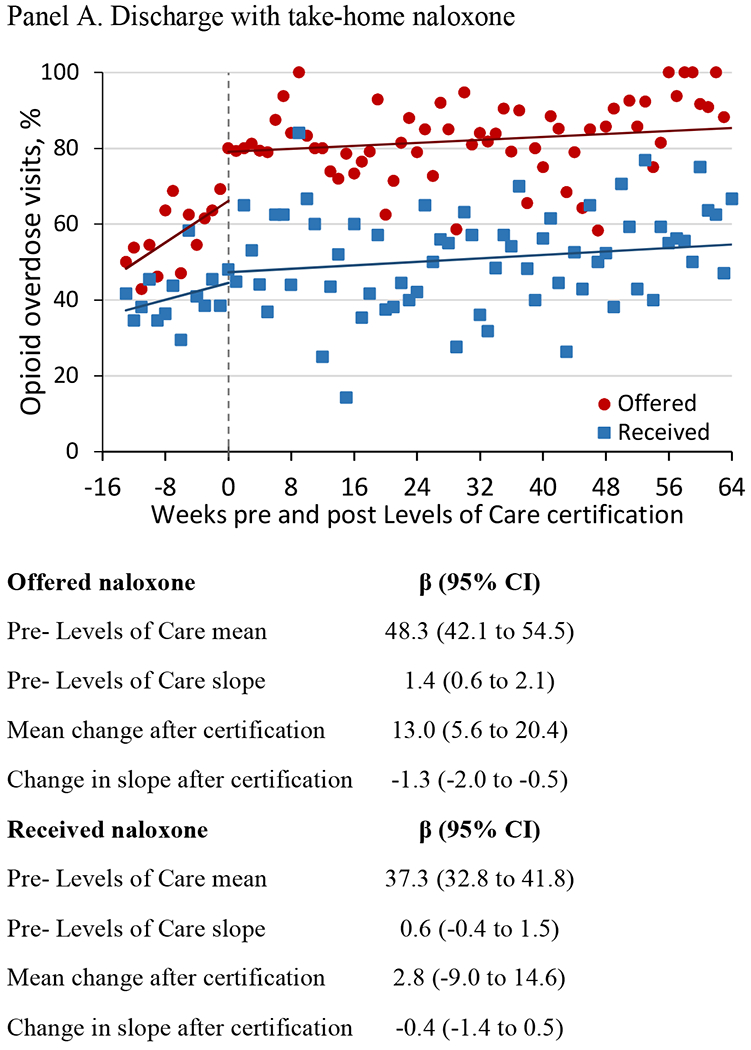
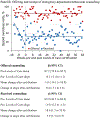
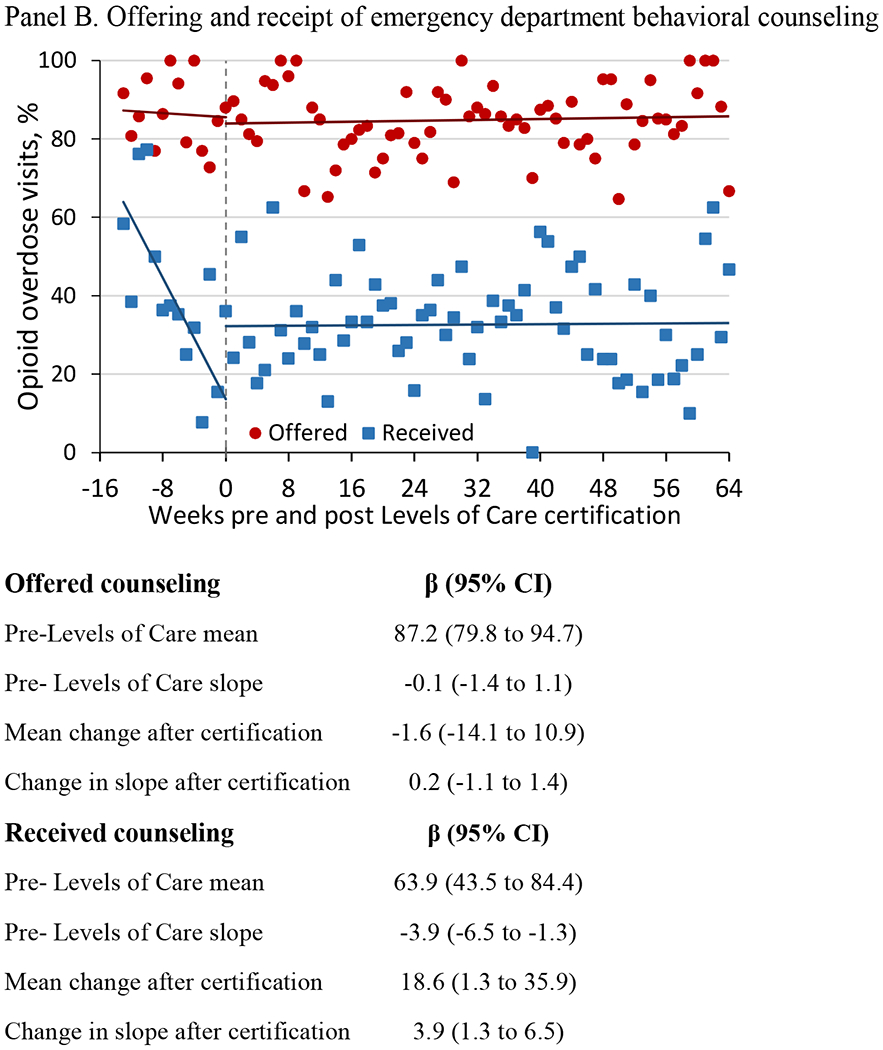
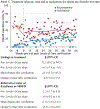
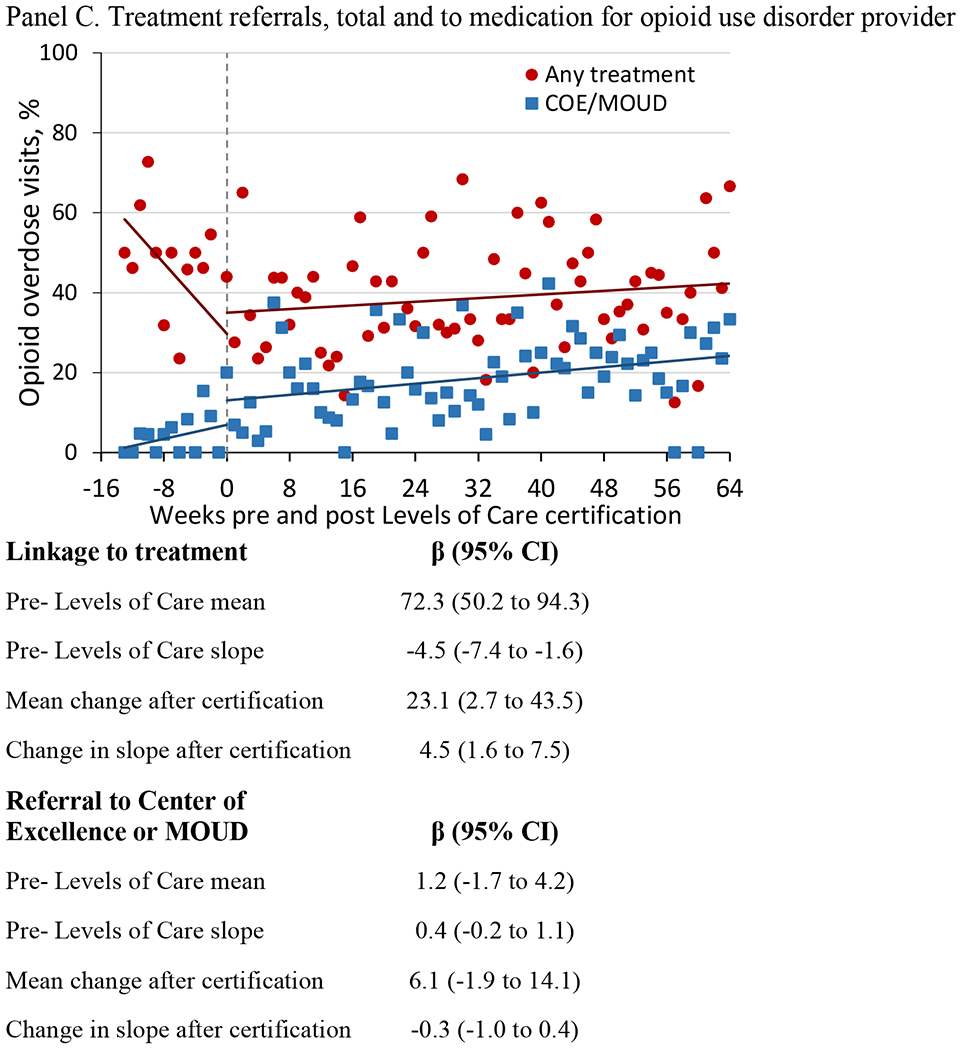
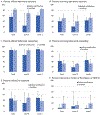
Description:Objective: ; We sought to determine the influence of the Levels of Care for Rhode Island Emergency Departments and Hospitals for Treating Overdose and Opioid Use Disorder (Levels of Care) on emergency department (ED) provision of take-home naloxone, behavioral counseling, and referral to treatment. ; Methods: ; A retrospective analysis of Rhode Island ED visits for opioid overdose from 2017 to 2018 was performed using data from a statewide opioid overdose surveillance system. Changes in provision of take-home naloxone, behavioral counseling, and referral to treatment before and after Levels of Care implementation were assessed using interrupted time series analysis. We compared outcomes by hospital type using multivariable modified Poisson regression models with generalized estimating equation estimation to account for hospital-level variation. ; Results: ; We analyzed 238 overdose visits prior to Levels of Care implementation (January to March 2017) and 1,299 overdose post-implementation (hospital certification to December 2018). After implementation, the proportion of patients offered naloxone increased on average by 13% (95% CI 5.6%, 20.4%). Prior to implementation, the proportion of patients receiving behavioral counseling and treatment referral was declining. After implementation, this decline slowed, stabilized, and on average 18.6% more patients received behavioral counseling (95% CI 1.3%, 35.9%) and 23.1% more patients received referral to treatment (95% CI 2.7%, 43.5%). Multivariate analysis showed that after implementation, there was a significant increase in the likelihood of being offered naloxone at Level 1 (aRR 1.31 95% CI 1.06, 1.61) and Level 3 (aRR 3.13 95% CI 1.08, 9.06) hospitals and an increase in referrals for medication for opioid use disorder (2.5% to 17.8%) at Level 1 hospitals (RR 7.73 95% CI 3.22, 18.55. Despite these increases, less than half of patients treated for an opioid overdose received behavioral counseling or referral to treatment ; Conclusion: ; Establishment of ED policies for treatment and services after opioid overdose improved naloxone distribution, behavioral counseling, and referral to treatment at hospitals without previously established opioid overdose services. Future investigations are needed to better characterize implementation barriers and evaluate policy impact on patient outcomes.
-
Subjects:
-
Source:Ann Emerg Med. 78(1):68-79
-
Pubmed ID:33865617
-
Pubmed Central ID:PMC9119858
-
Document Type:
-
Funding:
-
Place as Subject:
-
Volume:78
-
Issue:1
-
Download URL:
-
File Type:
 [PDF - 711.38 KB]
 -
Collection(s):
-
Main Document Checksum:urn:sha256:f1dc2af1dc6eadc44d0df93d1d28b4c7126f6931ca2d5a43f818d11e8c750110
Supporting Files


File Language:
English
 Was this page helpful?
 Found an issue?


CDC STACKS serves as an archival repository of CDC-published products including
scientific findings, journal articles, guidelines, recommendations, or other public health information authored or
co-authored by CDC or funded partners.
As a repository, CDC STACKS retains documents in their original published format to ensure public access to scientific information.
As a repository, CDC STACKS retains documents in their original published format to ensure public access to scientific information.
You May Also Like
COLLECTION
CDC Public Access