


Examining the associations of gender minority stressors with sleep health in gender minority individuals
Supporting Files

-
4 2022
-
File Language:
English
Details
-
Alternative Title:Sleep Health
-
Personal Author:
-
Description:Objectives:
Investigate the associations of gender minority stressors (including stigma consciousness [SC] and gender-related discrimination [GRD]) with sleep health in gender minority individuals.
Design:
Cohort.
Participants:
279 gender minority individuals.
Measurements:
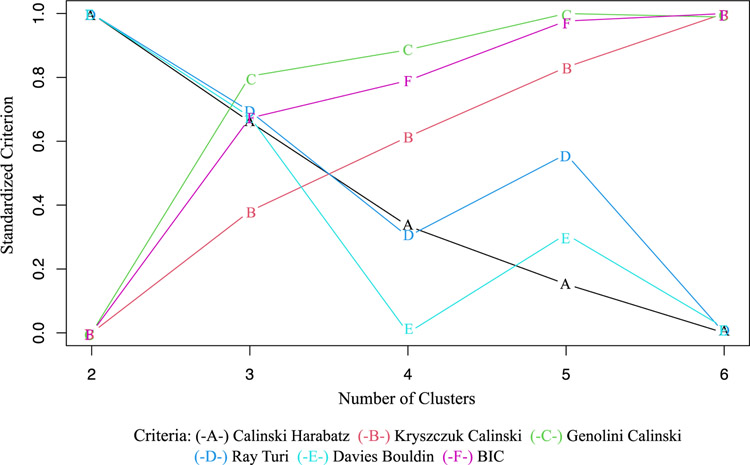
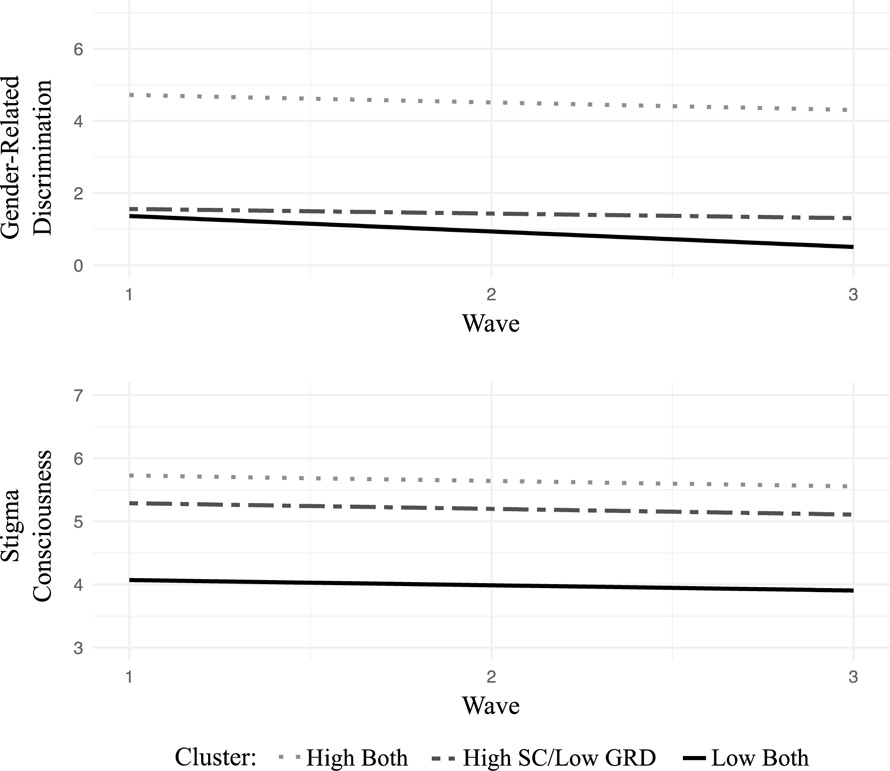
SC and GRD were measured using the Stigma Consciousness and Everyday Discrimination scales, respectively. Sleep disturbance was assessed using the PROMIS Sleep Disturbance measure. Subjective short sleep duration (< 7 hours) was assessed. We used k-means longitudinal clustering to identify minority stress (including SC and GRD scores) clusters. Linear and logistic regression models were used to examine the associations of these clusters with sleep disturbance and sleep duration, respectively, adjusted for demographic characteristics.
Results:
Mean age was 36.9±13.6 years; most were non-White (54.5%), 52.5% were transmasculine, and 22.6% were heterosexual. Mean sleep disturbance score was 17.2±6.1 (range 6–30) and 52% reported short sleep duration. We identified three minority stress clusters. Compared to participants with low SC/low GRD, those with high SC/low GRD (B 3.33, 95% CI = 1.64, 5.01) and high SC/high GRD (B 4.51, 95% CI = 2.63, 6.39) had worse sleep disturbance scores. Participants in the high SC/high GRD cluster were more likely to report short sleep duration relative to the low SC/low GRD cluster (AOR 2.17; 95% CI = 1.11–4.26).
Conclusions:
Participants with both high SC and high GRD had worse sleep health. Future longitudinal studies should examine factors that drive the link between gender minority stress and sleep health in gender minority individuals to inform sleep health interventions tailored for this population.
-
Subjects:
-
Source:Sleep Health. 8(2):153-160
-
Pubmed ID:34922858
-
Pubmed Central ID:PMC8995317
-
Document Type:
-
Funding:R01 MD013554/MD/NIMHD NIH HHSUnited States/ ; R01 HD079603/HD/NICHD NIH HHSUnited States/ ; R25 HL105444/HL/NHLBI NIH HHSUnited States/ ; K01 HL146965/HL/NHLBI NIH HHSUnited States/ ; R01 MH112406/MH/NIMH NIH HHSUnited States/ ; T32 NR007969/NR/NINR NIH HHSUnited States/ ; R01 HL151559/HL/NHLBI NIH HHSUnited States/ ; U01 PS005202/PS/NCHHSTP CDC HHSUnited States/
-
Volume:8
-
Issue:2
-
Collection(s):
-
Main Document Checksum:urn:sha256:b01f33e94d76a288171493d2774444c357fce441804c93c0eb740133695c56fd
-
Download URL:
-
File Type:
 [PDF
- 309.68 KB
]
[PDF
- 309.68 KB
]
Supporting Files


File Language:
English
ON THIS PAGE


CDC STACKS serves as an archival repository of CDC-published products including
scientific findings,
journal articles, guidelines, recommendations, or other public health information authored or
co-authored by CDC or funded partners.
As a repository, CDC STACKS retains documents in their original published format to ensure public access to scientific information.
As a repository, CDC STACKS retains documents in their original published format to ensure public access to scientific information.
You May Also Like
COLLECTION
CDC Public Access