


A State-by-State Assessment of Food Service Regulations for Prevention of Norovirus Outbreaks
Supporting Files

-
9 2016
-
File Language:
English
Details
-
Alternative Title:J Food Prot
-
Personal Author:
-
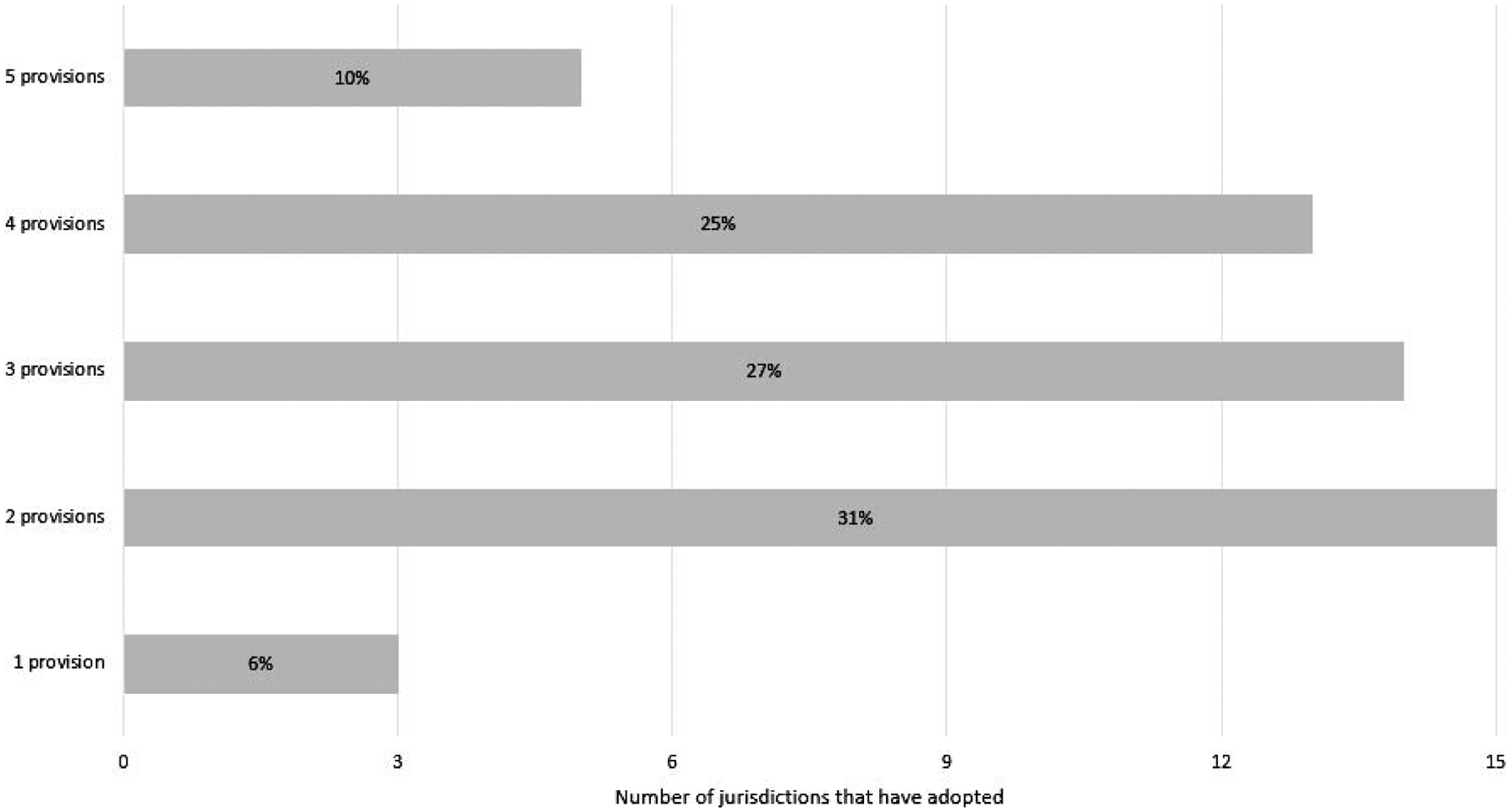
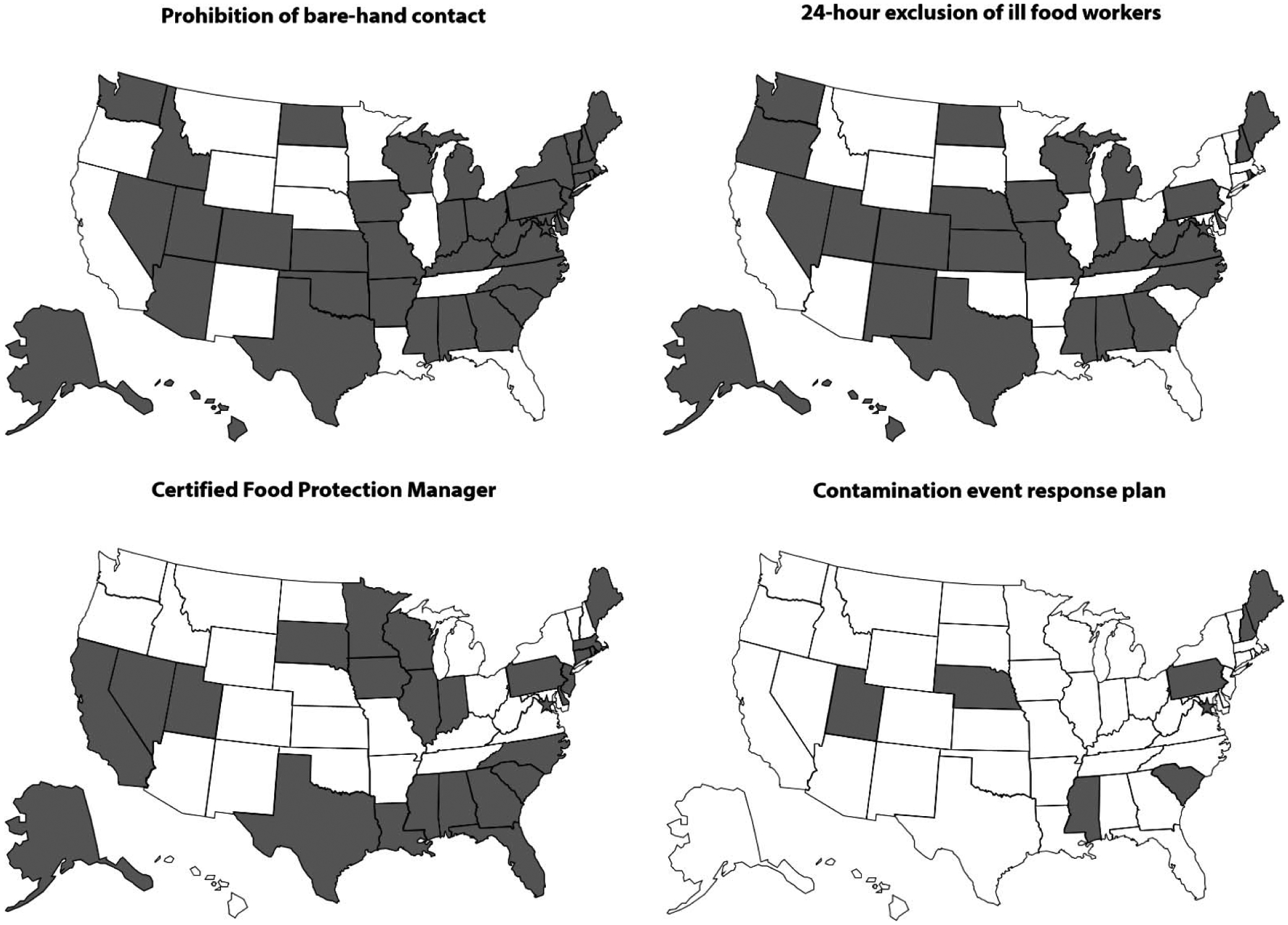
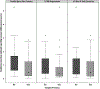
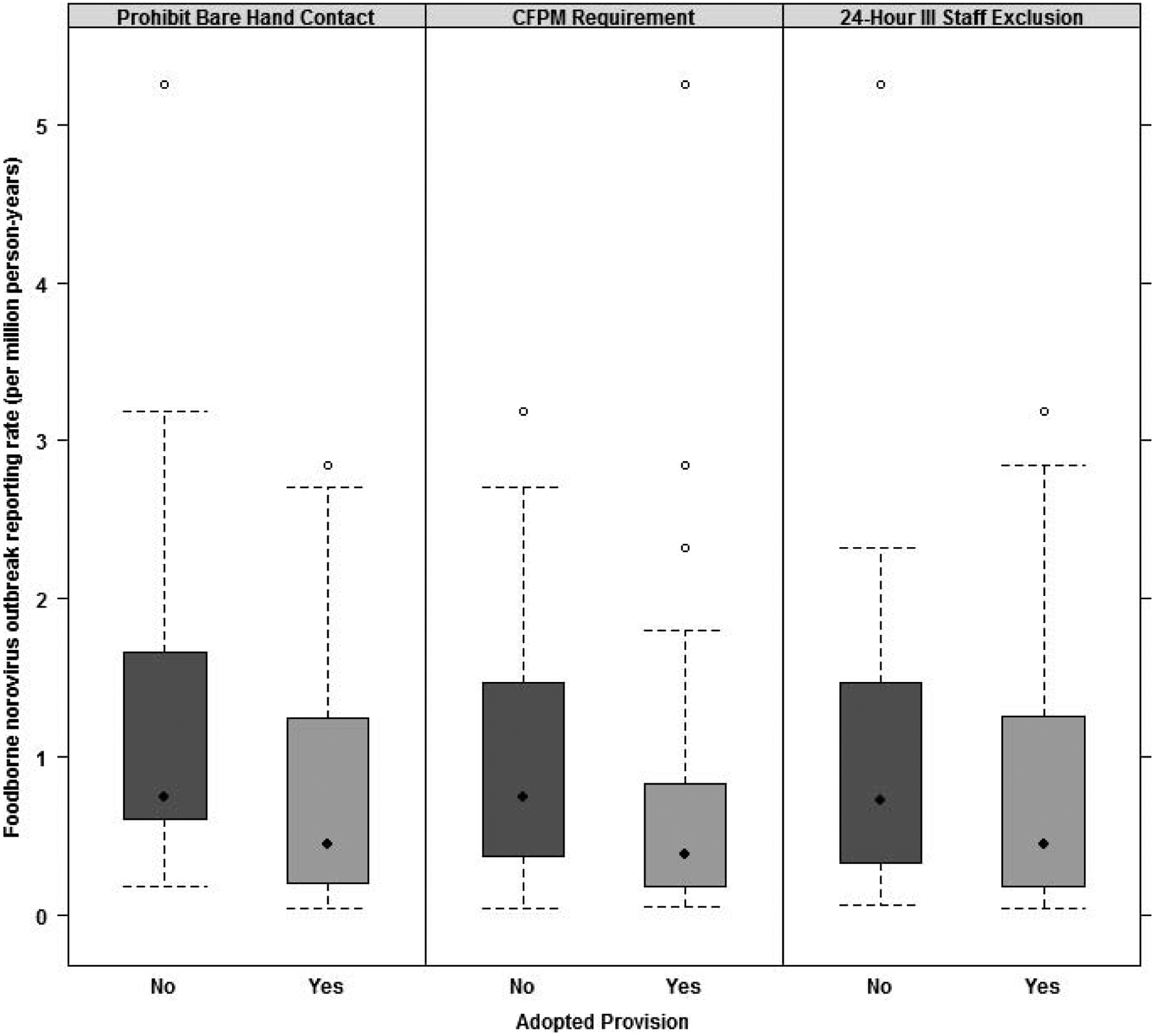
Description:Noroviruses are the leading cause of foodborne disease in the United States. Foodborne transmission of norovirus is often associated with contamination of food during preparation by an infected food worker. The U.S. Food and Drug Administration's Food Code provides model food safety regulations for preventing transmission of foodborne disease in restaurants; however, adoption of specific provisions is at the discretion of state and local governments. We analyzed the food service regulations of all 50 states and the District of Columbia (i.e., 51 states) to describe differences in adoption of norovirus-related Food Code provisions into state food service regulations. We then assessed potential correlations between adoption of these regulations and characteristics of foodborne norovirus outbreaks reported to the National Outbreak Reporting System from 2009 through 2014. Of the 51 states assessed, all (100%) required food workers to wash their hands, and 39 (76%) prohibited bare-hand contact with ready-to-eat food. Thirty states (59%) required exclusion of staff with vomiting and diarrhea until 24 h after cessation of symptoms. Provisions requiring a certified food protection manager (CFPM) and a response plan for contamination events (i.e., vomiting) were least commonly adopted; 26 states (51%) required a CFPM, and 8 (16%) required a response plan. Although not statistically significant, states that adopted the provisions prohibiting bare-hand contact (0.45 versus 0.74, P =0.07), requiring a CFPM (0.38 versus 0.75, P =0.09), and excluding ill staff for ≥24 h after symptom resolution (0.44 versus 0.73, P =0.24) each reported fewer foodborne norovirus outbreaks per million person-years than did those states without these provisions. Adoption and compliance with federal recommended food service regulations may decrease the incidence of foodborne norovirus outbreaks.
-
Subjects:
-
Source:J Food Prot. 79(9):1527-1536
-
Pubmed ID:28221948
-
Pubmed Central ID:PMC8991302
-
Document Type:
-
Funding:
-
Place as Subject:
-
Volume:79
-
Issue:9
-
Collection(s):
-
Main Document Checksum:urn:sha256:ac33ac507676ebade861b10c1bd2bfc9c527619ed30d93c8d8bfedf1449354f2
-
Download URL:
-
File Type:
 [PDF
- 723.30 KB
]
[PDF
- 723.30 KB
]
Supporting Files


File Language:
English
ON THIS PAGE


CDC STACKS serves as an archival repository of CDC-published products including
scientific findings,
journal articles, guidelines, recommendations, or other public health information authored or
co-authored by CDC or funded partners.
As a repository, CDC STACKS retains documents in their original published format to ensure public access to scientific information.
As a repository, CDC STACKS retains documents in their original published format to ensure public access to scientific information.
You May Also Like
COLLECTION
CDC Public Access