


SARS-CoV-2 Transmission Dynamics in a Sleep-Away Camp
Supporting Files

-
4 2021
-
File Language:
English
Details
-
Alternative Title:Pediatrics
-
Personal Author:Szablewski, Christine M. ; Chang, Karen T. ; McDaniel, Clinton J. ; Chu, Victoria T. ; Yousaf, Anna R. ; Schwartz, Noah G. ; Brown, Marie ; Winglee, Kathryn ; Paul, Prabasaj ; Cui, Zhaohui ; Slayton, Rachel B. ; Tong, Suxiang ; Li, Yan ; Uehara, Anna ; Zhang, Jing ; Sharkey, Sarah M. ; Kirking, Hannah L. ; Tate, Jacqueline E. ; Dirlikov, Emilio ; Fry, Alicia M. ; Hall, Aron J. ; Rose, Dale A. ; Villanueva, Julie ; Drenzek, Cherie ; Stewart, Rebekah J. ; Lanzieri, Tatiana M.
-
Corporate Authors:
-
Description:Objective:
In late June 2020, a large outbreak of COVID-19 occurred at a sleep-away youth camp in Georgia affecting primarily persons ≤ 21 years. We conducted a retrospective cohort study among campers and staff (attendees) to determine the extent of the outbreak and assess factors contributing to transmission.
Methods:
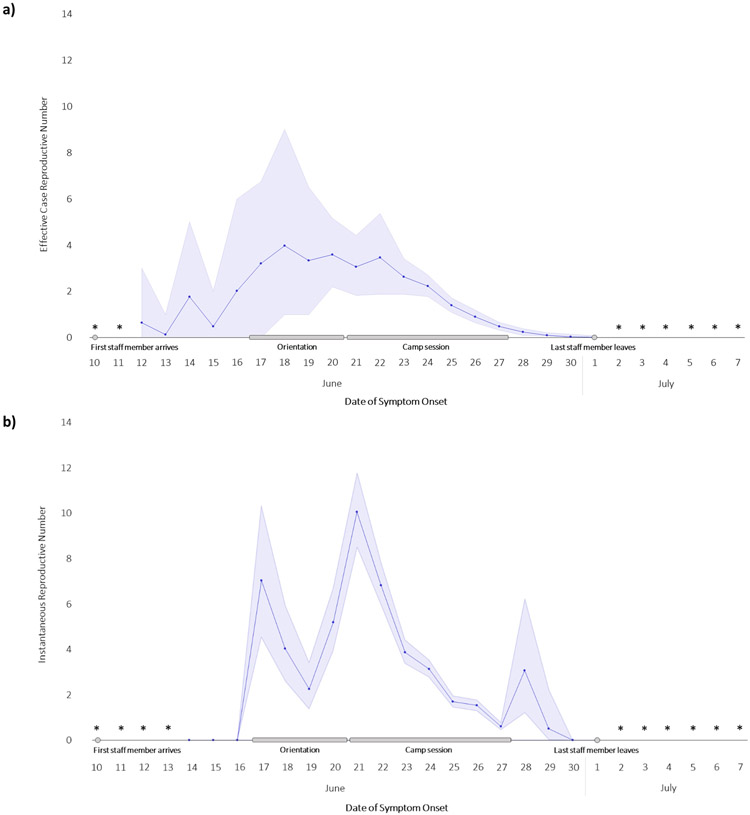
Attendees were interviewed to ascertain demographic characteristics, known exposures to cases and community exposures, and mitigation measures before, during, and after attending camp. COVID-19 case status was determined for all camp attendees based on SARS-CoV-2 test results and reported symptoms. We calculated attack rates and instantaneous reproduction numbers, and sequenced SARS-CoV-2 viral genomes from the outbreak.
Results:
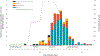
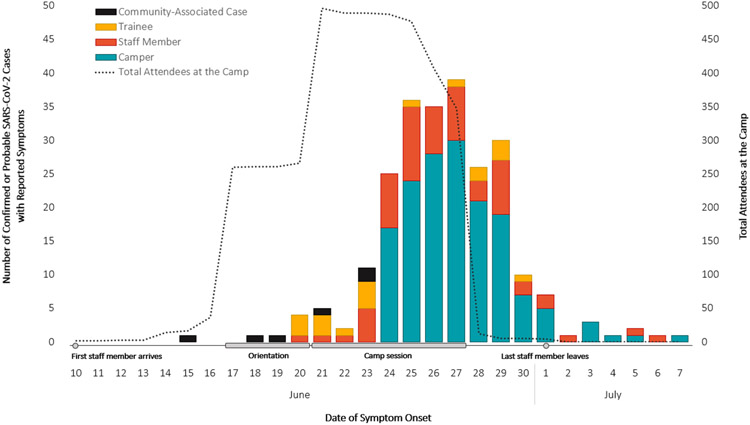
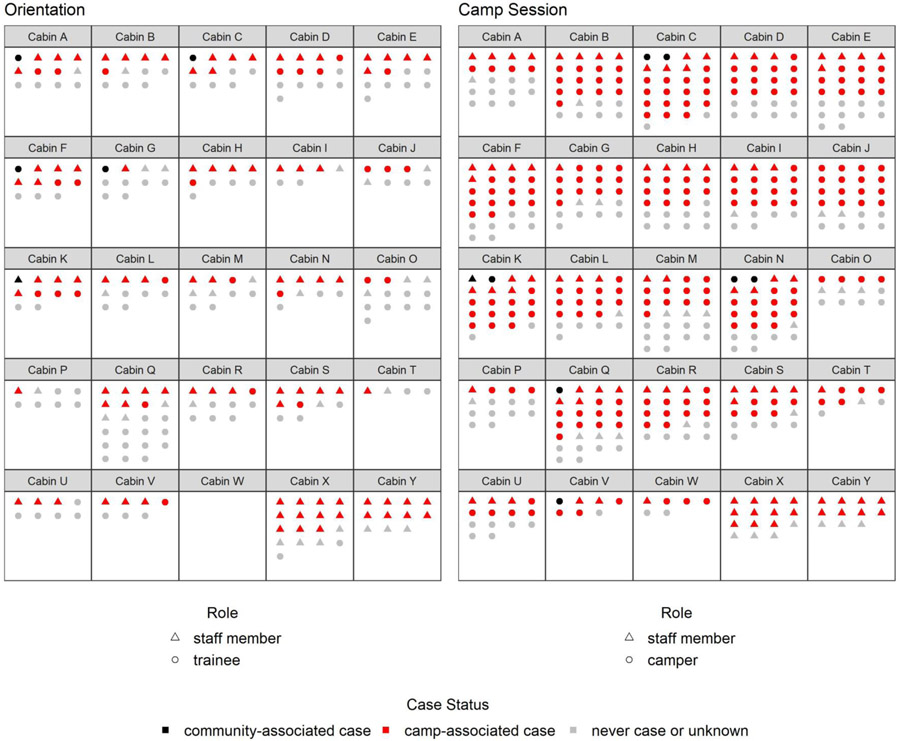
Among 627 attendees, median age was 15 years (interquartile range: 12–16 years); 56% (351/627) were female. The attack rate was 56% (351/627) among all attendees. Based on date of illness onset or first positive specimen collected, 12 cases were infected before arriving at camp, and 339 cases were camp-associated. Among 288 cases with available symptom information, 45 (16%) were asymptomatic. Despite cohorting, 50% of attendees reported direct contact with people outside their cabin cohort. On the first day of camp session, the instantaneous reproduction number was 10. Viral genomic diversity was low.
Conclusions:
Few introductions of SARS-CoV-2 into a youth congregate setting resulted in a large outbreak. Testing strategies should be combined with pre-arrival quarantine, routine symptom monitoring with appropriate isolation and quarantine, cohorting, social distancing, mask wearing, and enhanced disinfection and hand hygiene. Promotion of mitigation measures among younger populations is needed.
-
Subjects:
-
Source:Pediatrics. 147(4)
-
Pubmed ID:33504612
-
Pubmed Central ID:PMC8982574
-
Document Type:
-
Funding:
-
Place as Subject:
-
Volume:147
-
Issue:4
-
Collection(s):
-
Main Document Checksum:urn:sha256:eb061f520bb3bbf939064476119f42e5eb7c7c715f04189a74f3443fae408210
-
Download URL:
-
File Type:
 [PDF
- 681.92 KB
]
[PDF
- 681.92 KB
]
Supporting Files


File Language:
English
ON THIS PAGE

CDC STACKS serves as an archival repository of CDC-published products including
scientific findings,
journal articles, guidelines, recommendations, or other public health information authored or
co-authored by CDC or funded partners.
As a repository, CDC STACKS retains documents in their original published format to ensure public access to scientific information.
As a repository, CDC STACKS retains documents in their original published format to ensure public access to scientific information.
You May Also Like
COLLECTION
CDC Public Access