



Geospatial Transmission Hotspots of Recent HIV Infection — Malawi, October 2019–March 2020
Supporting Files
Public Domain

-
3 04 2022
File Language:
English
Details
-
Journal Article:Morbidity and Mortality Weekly Report (MMWR)
-
Personal Author:Telford, Carson T. ; Tessema, Zaena ; Msukwa, Malango ; Arons, Melissa M. ; Theu, Joe ; Bangara, Fred Fredrick ; Ernst, Alexandra ; Welty, Susie ; O’Malley, Gabrielle ; Dobbs, Trudy ; Shanmugam, Vedapuri ; Kabaghe, Alinune ; Dale, Helen ; Wadonda-Kabondo, Nellie ; Gugsa, Salem ; Kim, Andrea ; Bello, George ; Eaton, Jeffrey W. ; Jahn, Andreas ; Nyirenda, Rose ; Parekh, Bharat S. ; Shiraishi, Ray W. ; Kim, Evelyn ; Tobias, James L. ; Curran, Kathryn G. ; Payne, Danielle ; Auld, Andrew F.
-
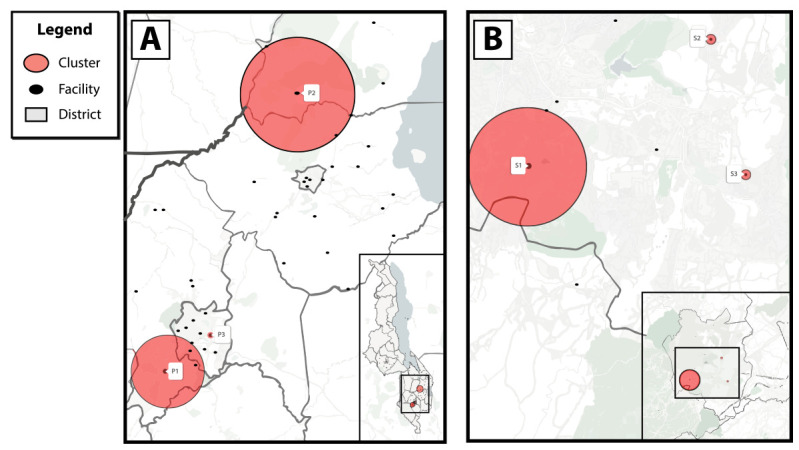
Description:Persons infected with HIV are more likely to transmit the Virus during the early stages (acute and recent) of infection, when viral load is elevated and opportunities to implement risk reduction are limited because persons are typically unaware of their status (1,2). Identifying recent HIV infections (acquired within the preceding 12 months)* is critical to understanding the factors and geographic areas associated with Transmission to strengthen program intervention, including treatment and Prevention (2). During June 2019, a novel recent infection Surveillance initiative was integrated into routine HIV tTesting services in Malawi, a landlocked country in southeastern Africa with one of the world's highest prevalences of HIV infection.| The objectives of this initiative were to collect data on new HIV diagnoses, characterize the epidemic, and guide public health response (2). New HIV diagnoses were classified as recent infections based on a tTesting algorithm that included results from the rapid test for recent infection (RTRI)| and HIV viral load tTesting (3,4). Among 9,168 persons aged ≥15 years with a new HIV Diagnosis who received tTesting across 103 facilities during October 2019-March 2020, a total of 304 (3.3%) were classified as having a recent infection. Higher proportions of recent infections were detected among females, persons aged <30 years, and clients at maternal and child health and youth clinics. Using a software application that analyzes clustering in spatially referenced data, Transmission hotspots were identified with rates of recent infection that were significantly higher than expected. These near real-time HIV Surveillance data highlighted locations across Malawi, allowing HIV program stakeholders to assess program gaps and improve access to HIV tTesting, Prevention, and treatment Services Hotspot investigation information could be used to tailor HIV tTesting, Prevention, and treatment to ultimately interrupt Transmission.
-
Subjects:
-
Source:MMWR Morbidity Mortal Weekly Rep. 71(9):329-334
-
Series:
-
DOI:
-
ISSN:0149-2195 (print) ; 1545-861X (digital)
-
Pubmed ID:35239633
-
Pubmed Central ID:PMC8893337
-
Document Type:
-
Place as Subject:
-
Pages in Document:6 pdf pages
-
Volume:71
-
Issue:9
-
Download URL:
-
File Type:
 [PDF - 1.69 MB]
 -
Collection(s):
-
Main Document Checksum:urn:sha-512:4fdb2e3a015bb13ab1831444e48869974e709727b051bb7e85741f549913327161a146cce47d7af6771fdc095c3ae4ce7bbc8b3d3d2bd206c7ad4a8ea0ac8418
Supporting Files


File Language:
English
 Was this page helpful?
 Found an issue?

CDC STACKS serves as an archival repository of CDC-published products including
scientific findings, journal articles, guidelines, recommendations, or other public health information authored or
co-authored by CDC or funded partners.
As a repository, CDC STACKS retains documents in their original published format to ensure public access to scientific information.
As a repository, CDC STACKS retains documents in their original published format to ensure public access to scientific information.
You May Also Like
COLLECTION
Morbidity and Mortality Weekly Report (MMWR)