



Intentions and Attempts to Quit JUUL E-Cigarette Use: The Role of Perceived Harm and Addiction
Supporting Files

-
2 03 2022
File Language:
English
Details
-
Journal Article:Preventing Chronic Disease (PCD)
-
Personal Author:Hobkirk, Andréa L. ; Hoglen, Brianna ; Sheng, Tianhong ; Kristich, Ava ; Yingst, Jessica M. ; Houser, Kenneth R. ; Krebs, Nicolle M. ; Allen, Sophia I. ; Bordner, Candace R. ; Livelsberger, Craig ; Foulds, Jonathan
-
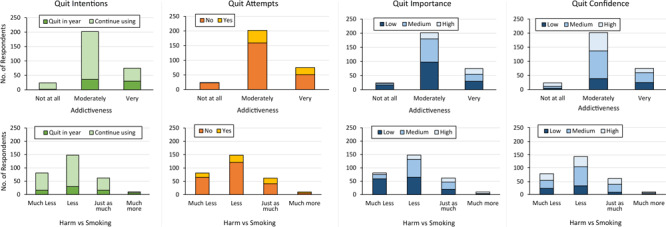
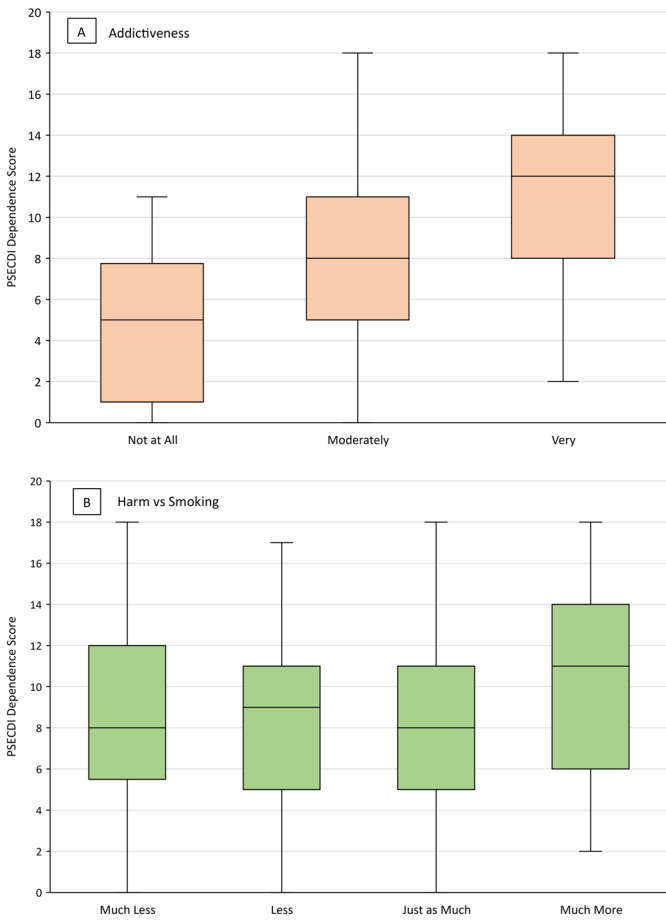
Description:Introduction ; Research on electronic cigarette (e-cigarette) quit intentions and attempts is limited despite the potential health benefits of quitting, especially for long-term users. The current study aimed to investigate perceptions of harm and addictiveness and tobacco use characteristics associated with quit variables among users of a popular e-cigarette brand, JUUL. ; Methods ; We surveyed 301 US adult JUUL users on their tobacco use characteristics, perceptions of JUUL harm and addictiveness, and quit variables at 3 time points, from July 2019 to April 2020. We used logistic regression models to assess demographic characteristics, smoking characteristics, and perceptions of JUUL harm and addictiveness as correlates of e-cigarette quit intentions, attempts, importance, and confidence. ; Results ; Twenty-three percent of the sample had intentions to quit using JUUL within the year, and 22.6% reported making a lifetime quit attempt. The average rating of quit importance was 4.1 and quit confidence was 5.8 on a Likert scale of 1 to 10. More than 90% of the sample indicated that JUUL was at least moderately addictive, whereas less than one-quarter indicated that JUUL was as harmful or more harmful than smoking. Higher levels of perceived JUUL addictiveness were associated with more quit intentions, attempts, and importance. Higher levels of perceived JUUL harm compared with smoking were associated with more quit importance. ; Conclusion ; Our findings suggest that a small proportion of adult JUUL users are interested in quitting. Self-reported perceptions of JUUL’s addiction potential may be related to more quit attempts. Findings highlight the need for evidence-based information on e-cigarette addictiveness and effective strategies for cessation.
-
Subjects:
-
Source:Prev Chronic Dis. 2022; 19
-
DOI:
-
ISSN:1545-1151
-
Pubmed ID:35113784
-
Pubmed Central ID:PMC8880109
-
Document Type:
-
Funding:
-
Volume:19
-
Download URL:
-
File Type:
 [PDF - 565.82 KB]
 -
Collection(s):
-
Main Document Checksum:urn:sha-512:b8c4b4b7f1d4dd770f257ef4615b3a7887f177523507c8feef551ddf2615df9483023eb6943a113821697a5b3c5491abc58fd1f729424be7e62ef4c8355128aa
Supporting Files


File Language:
English
 Was this page helpful?
 Found an issue?

CDC STACKS serves as an archival repository of CDC-published products including
scientific findings, journal articles, guidelines, recommendations, or other public health information authored or
co-authored by CDC or funded partners.
As a repository, CDC STACKS retains documents in their original published format to ensure public access to scientific information.
As a repository, CDC STACKS retains documents in their original published format to ensure public access to scientific information.
You May Also Like
COLLECTION
Preventing Chronic Disease