


The rising relative and absolute incidence of uterine cancer in specific populations
Supporting Files

-
5 2021
-
File Language:
English
Details
-
Alternative Title:Int J Gynaecol Obstet
-
Personal Author:
-
Description:Objective:
To assess the contemporary incidence of cancers using American Samoa as a learning set for insights into similar populations.
Methods:
A retrospective observational analysis of de-identified data held in public-access databases (2004–2014) and data on uterine cancer from a hospital, both in American Samoa (2015–2016).
Results:
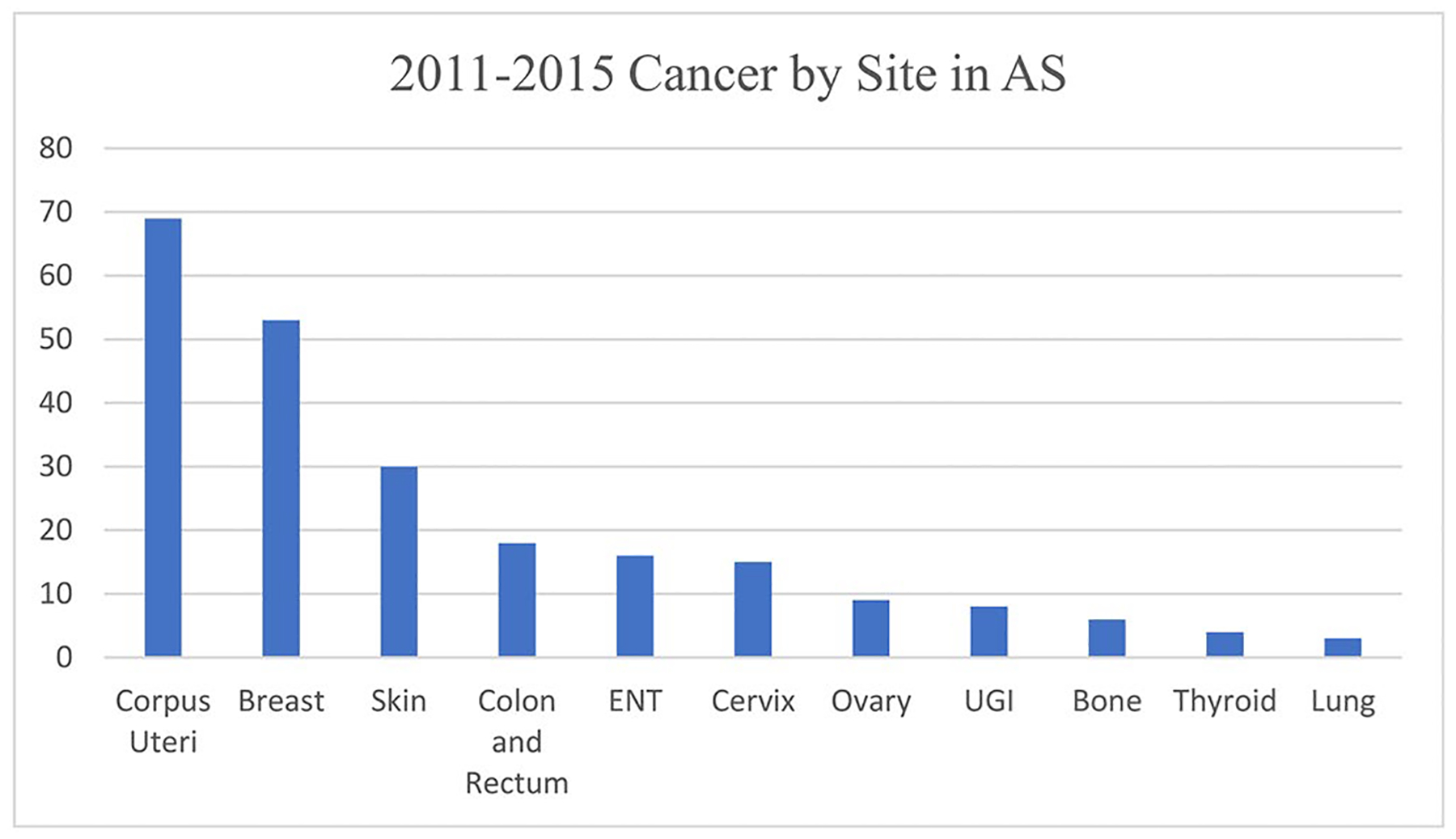
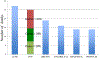
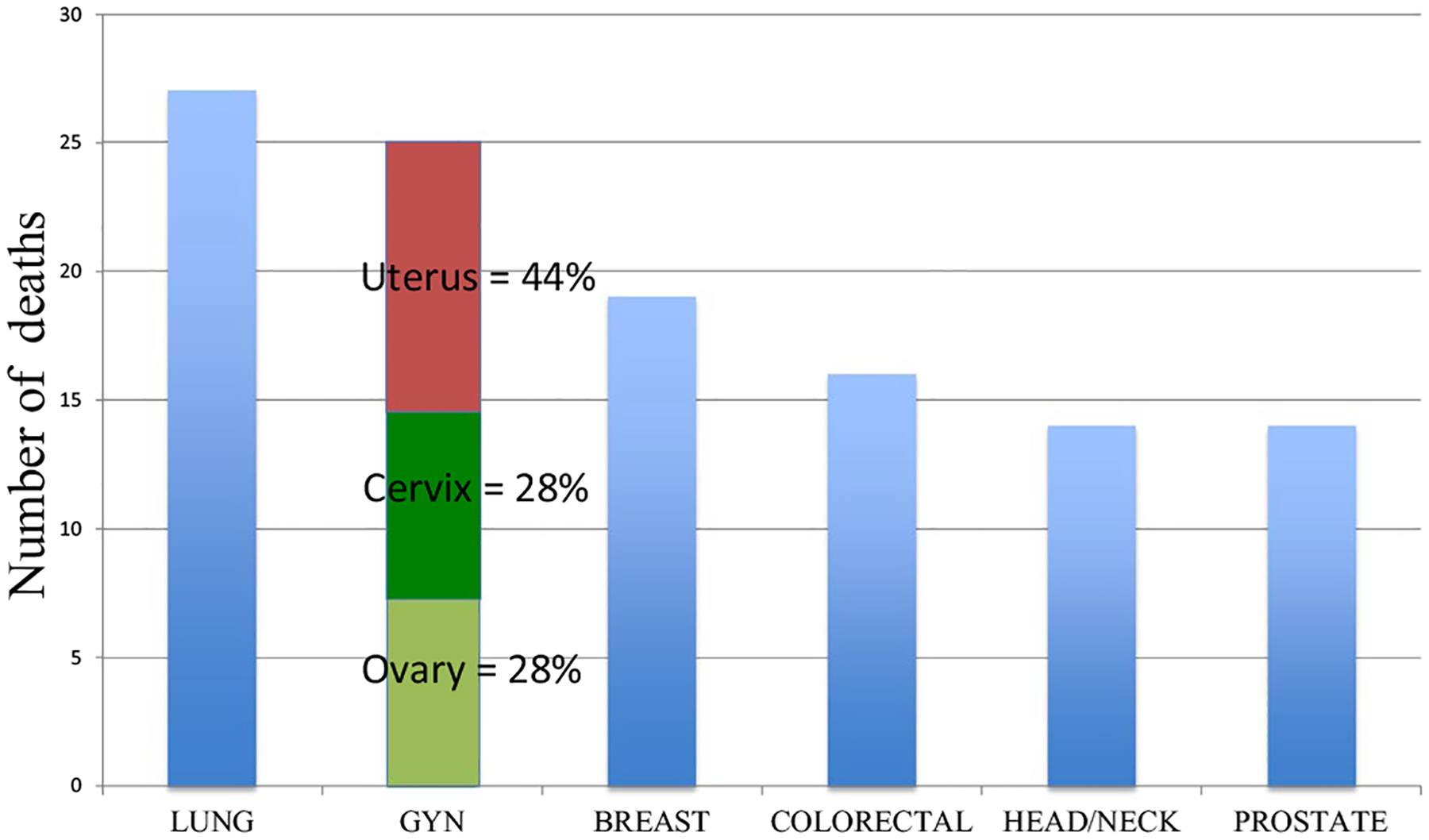
There were 341 new cases of cancer in 2004–2014 (111 per 100 000 women/year), including breast (20.2%), uterine (19.4%), and cervical (5.0%); and 287 in 2011–2015 (103 per 100 000 women/year), including uterine (24.0%), breast (18.5%), and cervical (5.2%). Uterine cancer increased from 21.4 to 60.3 per 100 000 women/year, becoming the most common cancer in American Samoa. In 2011–2015, the incidence-rate ratio of uterine cancer to other cancers in American Samoa was 1.3-, 3.8-, 4.6-, 7.7-, and 23-fold higher than breast, colon, cervical, ovarian, and lung cancer, respectively. Among the most recent cases (n=33), median age was 55 years (10 [30.3%] <50 years), median BMI was 38.2; and 11 (33.3%) cases had grade 3 histology.
Conclusion:
The pattern of cancers in American Samoa differs from that in the US mainland. The findings reflect significant changes in cancer incidence. Cancer control programs should evaluate the potential of uterine screening in accordance with their community’s needs and characteristics.
-
Subjects:
-
Source:Int J Gynaecol Obstet. 153(2):330-334
-
Pubmed ID:32112712
-
Pubmed Central ID:PMC8939081
-
Document Type:
-
Funding:
-
Place as Subject:
-
Volume:153
-
Issue:2
-
Collection(s):
-
Main Document Checksum:urn:sha256:c954f10497aaf3b41af3572dcc621ced729185580ee93b62e97a1bedf53ba7ce
-
Download URL:
-
File Type:
 [PDF
- 414.93 KB
]
[PDF
- 414.93 KB
]
Supporting Files


File Language:
English
ON THIS PAGE


CDC STACKS serves as an archival repository of CDC-published products including
scientific findings,
journal articles, guidelines, recommendations, or other public health information authored or
co-authored by CDC or funded partners.
As a repository, CDC STACKS retains documents in their original published format to ensure public access to scientific information.
As a repository, CDC STACKS retains documents in their original published format to ensure public access to scientific information.
You May Also Like
COLLECTION
CDC Public Access