



Synthetic DNA spike-ins (SDSIs) enable sample tracking and detection of inter-sample contamination in SARS-CoV-2 sequencing workflows
Supporting Files

-
1 2022 ; 1-2022
-
Available in CDC Stacks on 2022-07-01T00:00:00Z
File Language:
English
Details
-
Alternative Title:Nat Microbiol
-
Personal Author:Lagerborg, Kim A. ; Normandin, Erica ; Bauer, Matthew R. ; Adams, Gordon ; Figueroa, Katherine ; Loreth, Christine ; Gladden-Young, Adrianne ; Shaw, Bennett M. ; Pearlman, Leah R. ; Berenzy, Daniel ; Dewey, Hannah B. ; Kales, Susan ; Dobbins, Sabrina T. ; Shenoy, Erica S. ; Hooper, David ; Pierce, Virginia M. ; Zachary, Kimon C. ; Park, Daniel J. ; MacInnis, Bronwyn L. ; Tewhey, Ryan ; Lemieux, Jacob E. ; Sabeti, Pardis C. ; Reilly, Steven K ; Siddle, Katherine J.
-
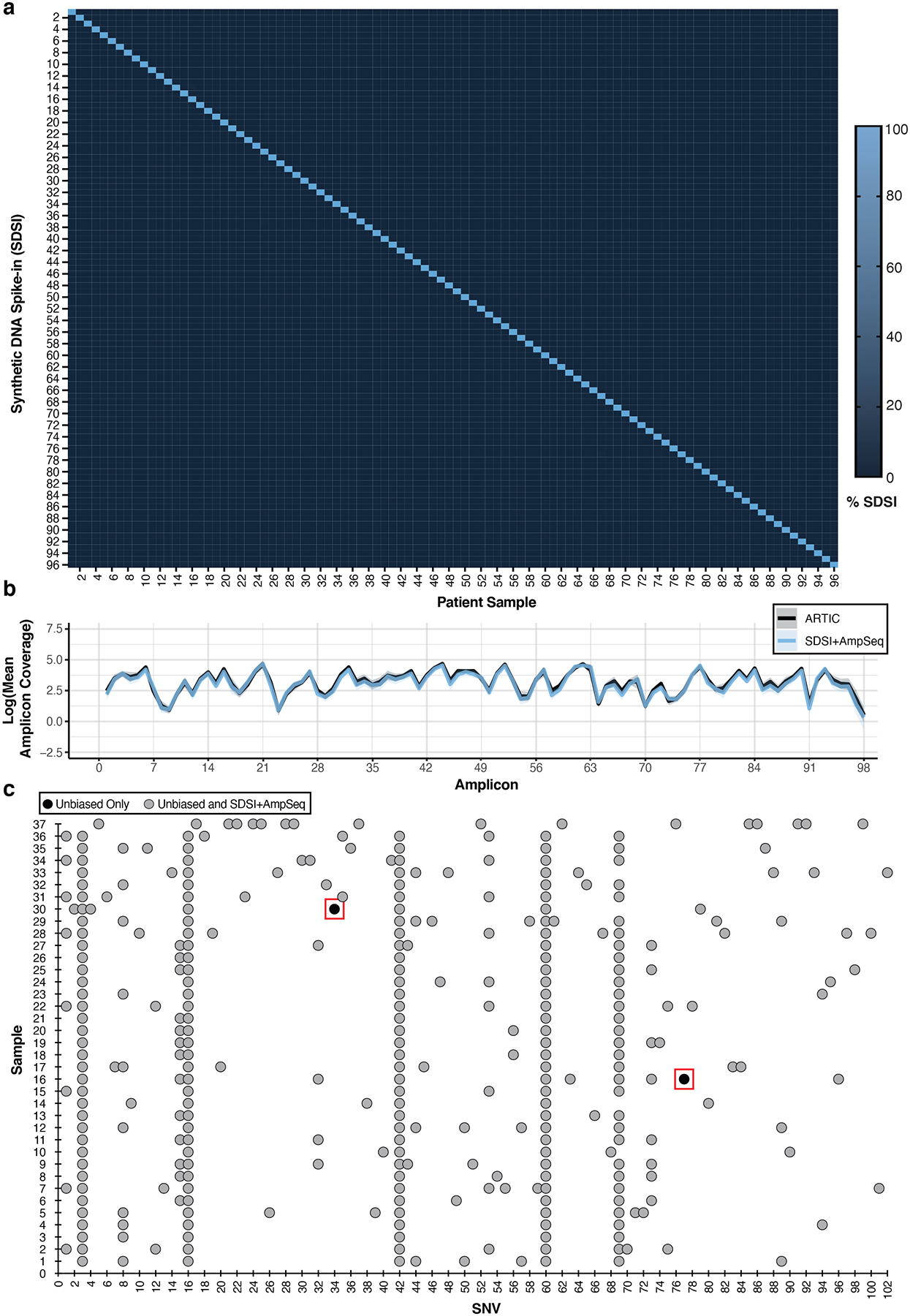
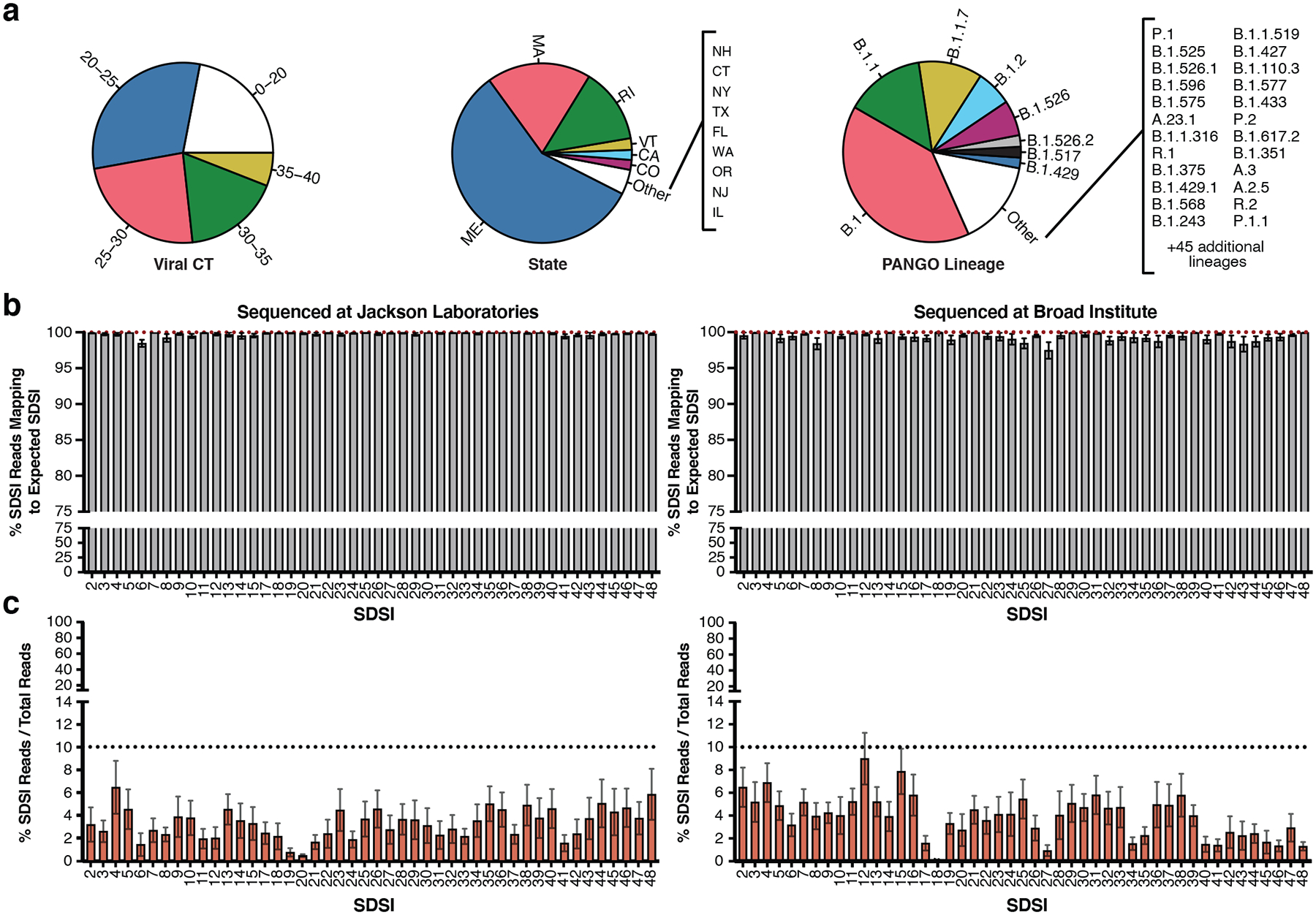
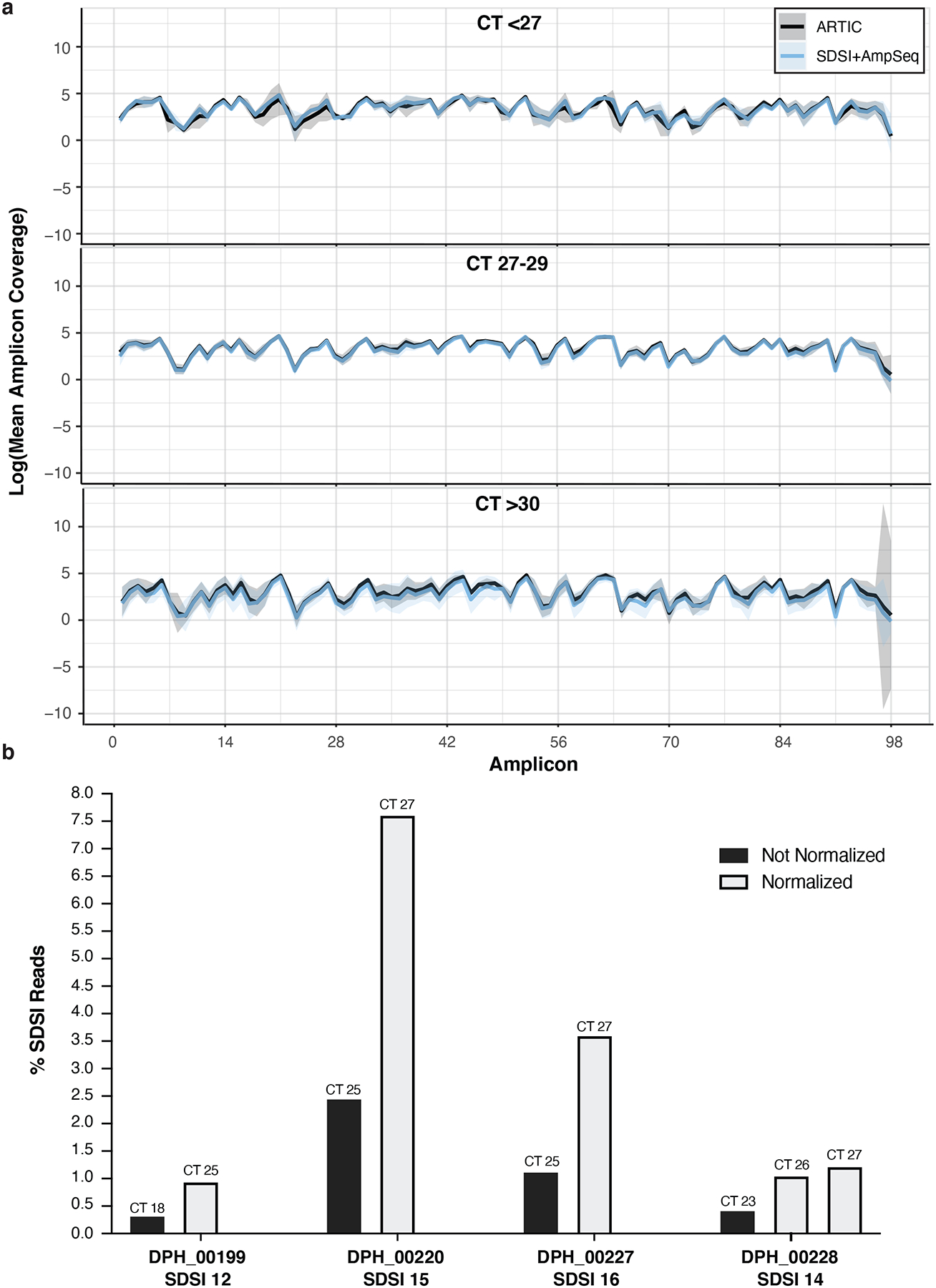
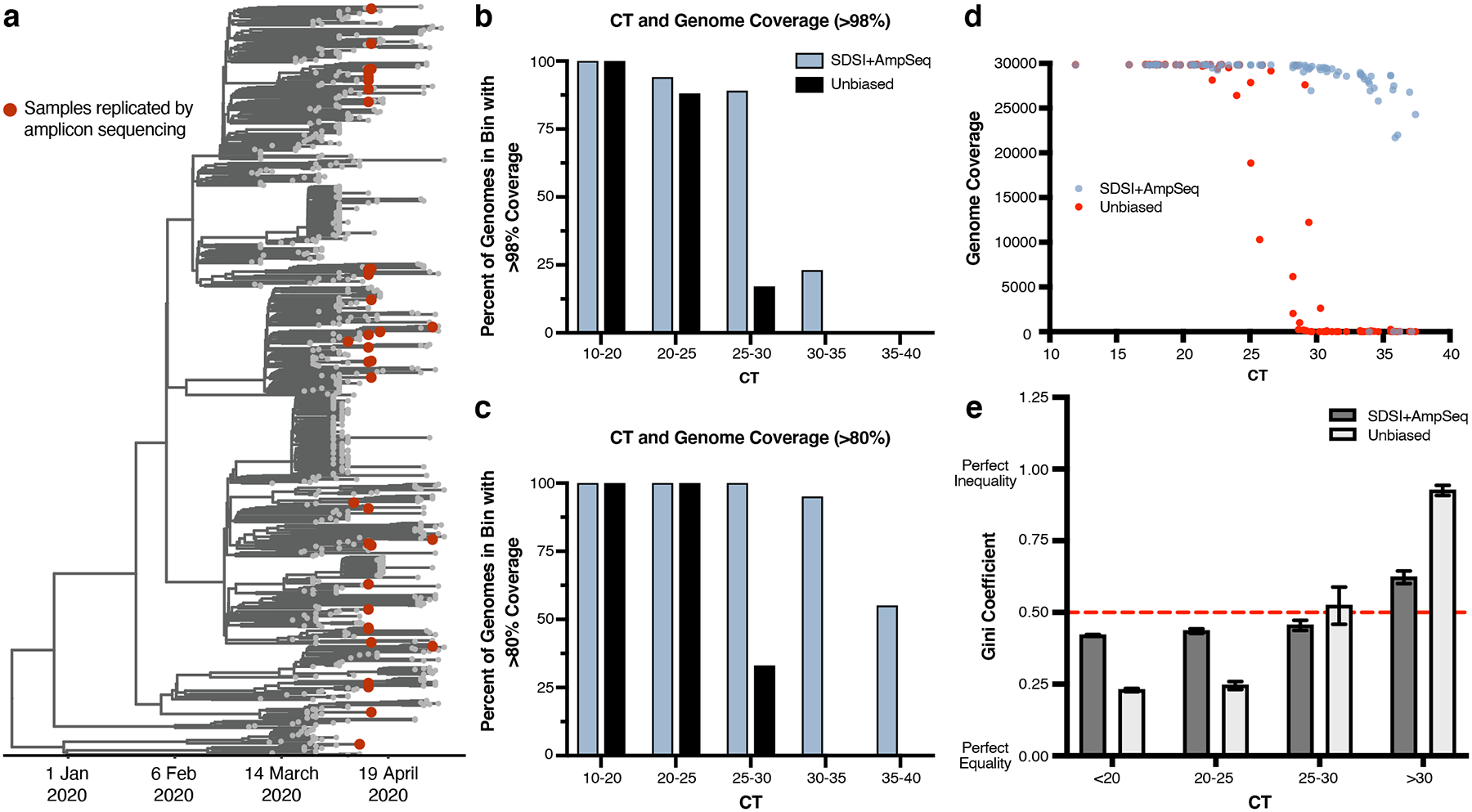
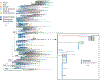
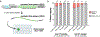
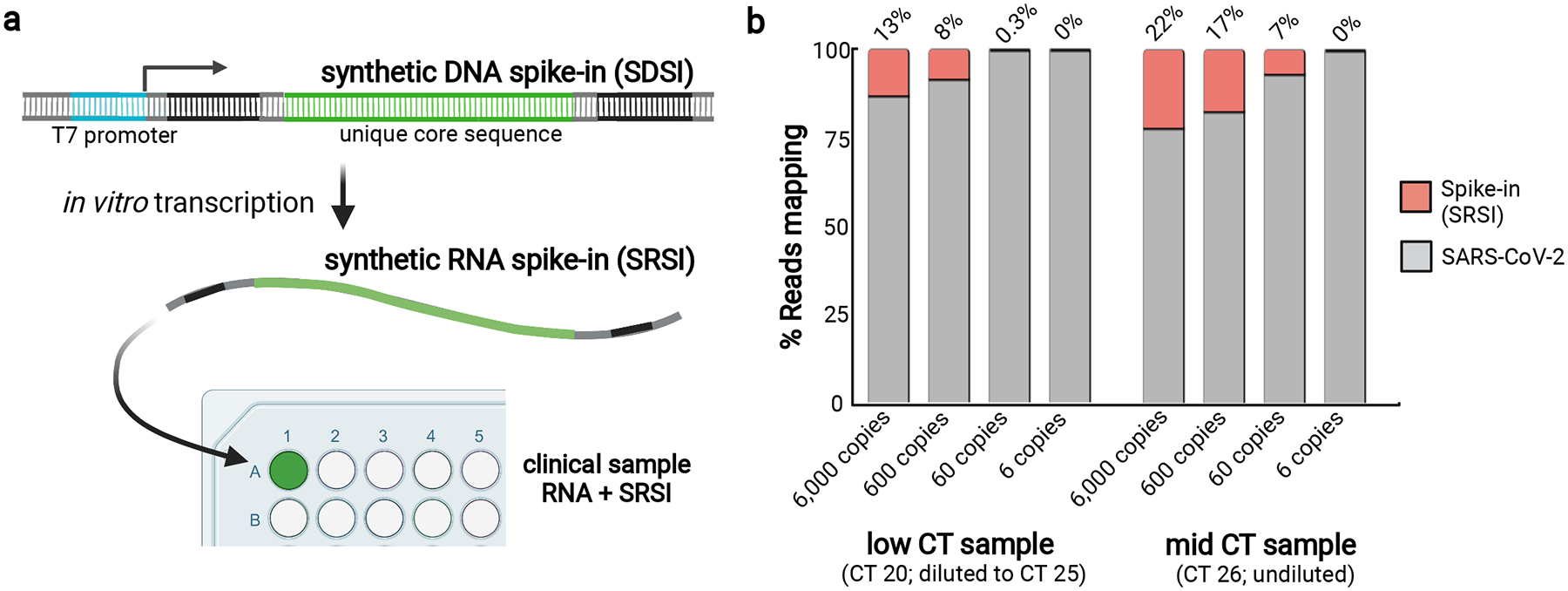
Description:The global spread and continued evolution of SARS-CoV-2 has driven an unprecedented surge in viral genomic surveillance. Amplicon-based sequencing methods provide a sensitive, low-cost and rapid approach but suffer a high potential for contamination, which can undermine laboratory processes and results. This challenge will increase with the expanding global production of sequences across a variety of laboratories for epidemiological and clinical interpretation, as well as for genomic surveillance of emerging diseases in future outbreaks. We present SDSI + AmpSeq, an approach that uses 96 synthetic DNA spike-ins (SDSIs) to track samples and detect inter-sample contamination throughout the sequencing workflow. We apply SDSIs to the ARTIC Consortium's amplicon design, demonstrate their utility and efficiency in a real-time investigation of a suspected hospital cluster of SARS-CoV-2 cases and validate them across 6,676 diagnostic samples at multiple laboratories. We establish that SDSI + AmpSeq provides increased confidence in genomic data by detecting and correcting for relatively common, yet previously unobserved modes of error, including spillover and sample swaps, without impacting genome recovery.
-
Subjects:
-
Source:Nat Microbiol. 7(1):108-119
-
Pubmed ID:34907347
-
Pubmed Central ID:PMC8923058
-
Document Type:
-
Funding:R00 HG008179/HG/NHGRI NIH HHSUnited States/ ; U19AI110818/U.S. Department of Health & Human Services ; NIH ; National Institute of Allergy and Infectious Diseases (NIAID)/ ; K99 HG010669/HG/NHGRI NIH HHSUnited States/ ; R00HG008179/U.S. Department of Health & Human Services ; NIH ; National Human Genome Research Institute (NHGRI)/ ; R43 CK000523/CK/NCEZID CDC HHSUnited States/ ; 75D30120C09605/U.S. Department of Health & Human Services ; Centers for Disease Control and Prevention (CDC)/ ; K99HG010669/U.S. Department of Health & Human Services ; NIH ; National Human Genome Research Institute (NHGRI)/ ; R00 HG010669/HG/NHGRI NIH HHSUnited States/ ; U01 AI151812/AI/NIAID NIH HHSUnited States/ ; U19 AI110818/AI/NIAID NIH HHSUnited States/
-
Volume:7
-
Issue:1
-
Download URL:
-
File Type:
 [PDF - 4.73 MB]
 -
Collection(s):
-
Main Document Checksum:urn:sha256:a47fe1484685573bdc9e0ae3e67ca845b51962570c05d1dd31d91ee414a9326c
Supporting Files


File Language:
English
 Was this page helpful?
 Found an issue?




CDC STACKS serves as an archival repository of CDC-published products including
scientific findings, journal articles, guidelines, recommendations, or other public health information authored or
co-authored by CDC or funded partners.
As a repository, CDC STACKS retains documents in their original published format to ensure public access to scientific information.
As a repository, CDC STACKS retains documents in their original published format to ensure public access to scientific information.
You May Also Like
COLLECTION
CDC Public Access