



Economic evaluation of Zika Contraception Access Network in Puerto Rico during the 2016–17 Zika virus outbreak
Supporting Files

-
3 2022
-
Available in CDC Stacks on 2022-03-05T00:00:00Z
File Language:
English
Details
-
Alternative Title:Contraception
-
Personal Author:
-
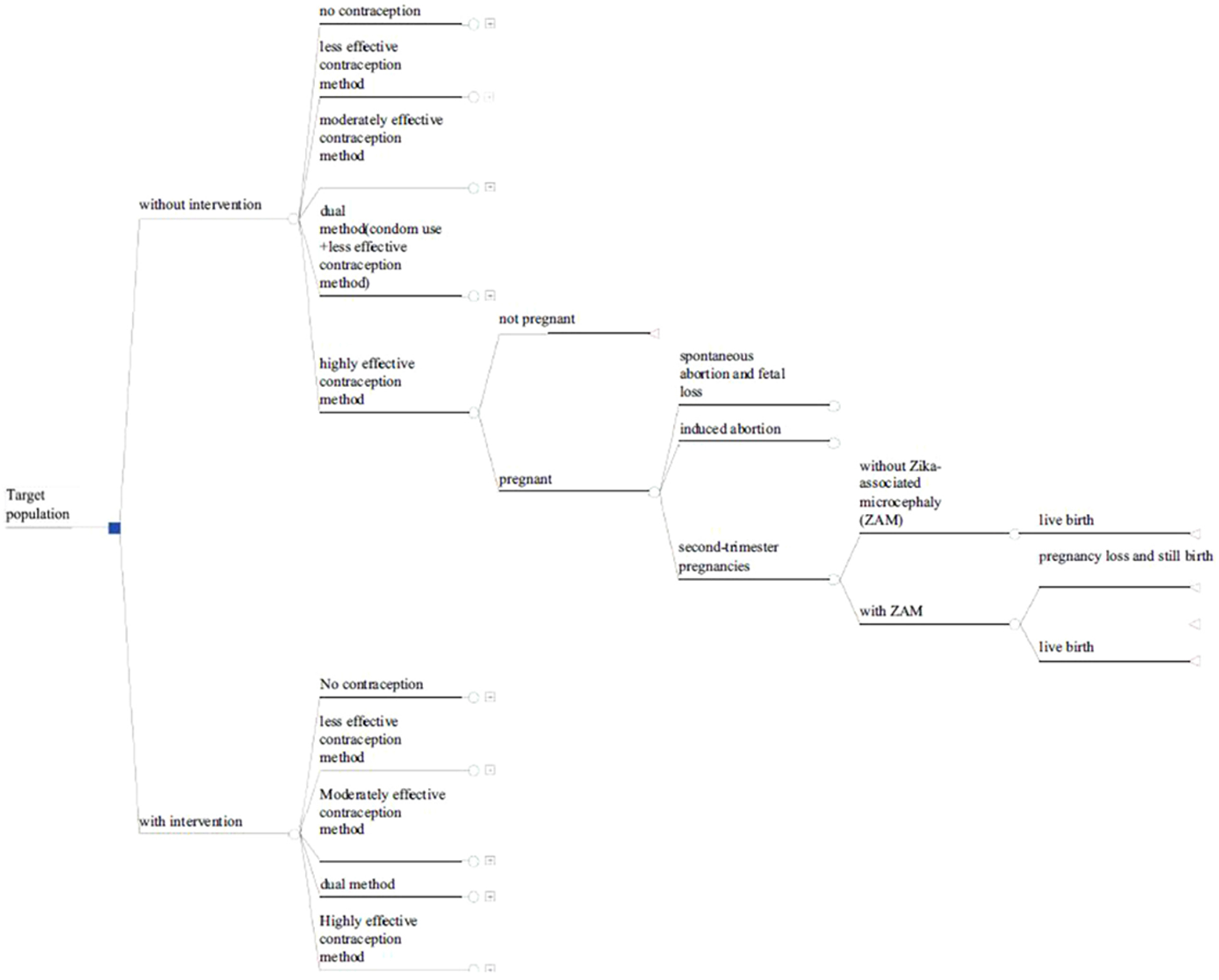
Description:Objective: ; During the 2016-2017 Zika virus (ZIKV) outbreak, the prevention of unintended pregnancies was identified as a primary strategy to prevent birth defects. This study estimated the cost-effectiveness of the Zika Contraception Access Network (Z-CAN), an emergency response intervention that provided women in Puerto Rico with access to the full range of reversible contraception at no cost and compared results with a preimplementation hypothetical cost-effectiveness analysis (CEA). ; Study Design: ; We evaluated costs and outcomes of Z-CAN from a health sector perspective compared to no intervention using a decision tree model. Number of people served, contraception methods mix, and costs under Z-CAN were from actual program data and other input parameters were from the literature. Health outcome measures included the number of Zika-associated microcephaly (ZAM) cases and unintended pregnancies. The economic benefits of the Z-CAN intervention were ZIKV-associated direct costs avoided, including lifetime medical and supportive costs associated with ZAM cases, costs of monitoring ZIKV-exposed pregnancies and infants born from Zika-virus infected mothers, and the costs of unintended pregnancies prevented during the outbreak as a result of increased contraception use through the Z-CAN intervention. ; Results: ; The Z-CAN intervention cost a total of $26.1 million, including costs for the full range of reversible contraceptive methods, contraception related services, and programmatic activities. The program is estimated to have prevented 85% of cases of estimated ZAM cases and unintended pregnancies in the absence of Z-CAN. The intervention cost was projected to have been more than offset by $79.9 million in ZIKV—associated costs avoided, 96% of which were lifetime ZAM-associated costs, as well as $137.0 million from avoided unintended pregnancies, with total net savings in one year of $216.9 million. The results were consistent with the previous CEA study. ; Conclusion: ; Z-CAN was likely cost-saving in the context of a public health emergency response setting.
-
Subjects:
-
Source:Contraception. 107:68-73
-
Pubmed ID:34748752
-
Pubmed Central ID:PMC8897811
-
Document Type:
-
Funding:
-
Place as Subject:
-
Volume:107
-
Download URL:
-
File Type:
 [PDF - 253.26 KB]
 -
Collection(s):
-
Main Document Checksum:urn:sha256:8c84313af3c6ffeebbf4b4494646b2eda4dff4641c99359a221d95efd9d5e82c
Supporting Files


File Language:
English
 Was this page helpful?
 Found an issue?

CDC STACKS serves as an archival repository of CDC-published products including
scientific findings, journal articles, guidelines, recommendations, or other public health information authored or
co-authored by CDC or funded partners.
As a repository, CDC STACKS retains documents in their original published format to ensure public access to scientific information.
As a repository, CDC STACKS retains documents in their original published format to ensure public access to scientific information.
You May Also Like
COLLECTION
CDC Public Access