



Effects of Aerosol Particle Size on the Measurement of Airborne PM2.5 with a Low-Cost Particulate Matter Sensor (LCPMS) in a Laboratory Chamber
Supporting Files

-
1 06 2022
-
Available in CDC Stacks on January 06, 2023, 12:00 AM

File Language:
English
Details
-
Alternative Title:Environ Monit Assess
-
Personal Author:
-
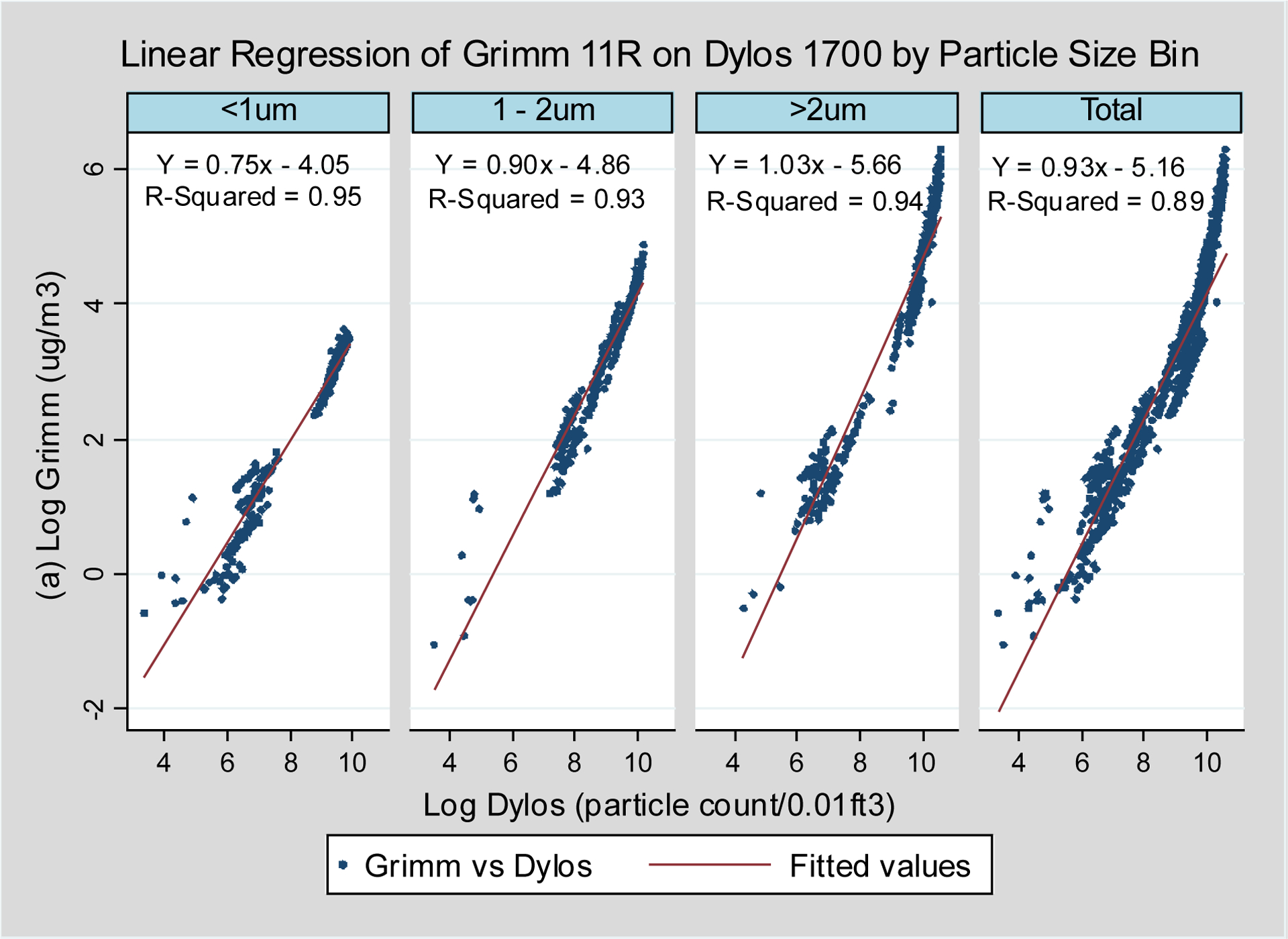
Description:Previous validation studies found a good linear correlation between the low-cost particulate matter sensors (LCPMS) and other research grade particulate matter (PM) monitors. This study aimed to determine if different particle size bins of PM would affect the linear relationship and agreement between the Dylos DC1700 (LCPMS) particle count measurements (converted to PM| mass concentrations) and the Grimm 11R (research grade instrument) mass concentration measurements. Three size groups of PM| (mass median aerodynamic diameters (MMAD): < 1 µm, 1-2 µm, and > 2 µm) were generated inside a laboratory chamber, controlled for temperature and relative humidity, by dispersing sodium chloride crystals through a nebulizer. A linear regression comparing 1-min average PM| particle counts from the Dylos DC1700 (Dylos) to the Grimm 11R (Grimm) mass concentrations was estimated by particle size group. The slope for the linear regression was found to increase as MMAD increased (< 1 µm, 0.75 (R| = 0.95); 1-2 µm, 0.90 (R| = 0.93); and > 2 µm, 1.03 (R| = 0.94). The linear slopes were used to convert Dylos counts to mass concentration, and the agreement between converted Dylos mass and Grimm mass was estimated. The absolute relative error between converted Dylos mass and the Grimm mass was smaller in the < 1 µm group (16%) and 1-2 µm group (16%) compared to the > 2 µm group (32%). Therefore, the bias between converted Dylos mass and Grimm mass varied by size group. Future studies examining particle size bins over a wider range of coarse particles (> 2.5 µm) would provide useful information for accurately converting LCPMS counts to mass concentration.
-
Keywords:
-
Source:Environ Monit Assess. 194(2):56
-
Pubmed ID:34989887
-
Pubmed Central ID:PMC8842881
-
Document Type:
-
Funding:R21 ES031795/ES/NIEHS NIH HHSUnited States/ ; P30ES030285/ES/NIEHS NIH HHSUnited States/ ; P30 ES030285/ES/NIEHS NIH HHSUnited States/ ; R21ES031795/ES/NIEHS NIH HHSUnited States/ ; T42 OH008421/OH/NIOSH CDC HHSUnited States/ ; T42OH00842/OH/NIOSH CDC HHSUnited States/ ; T42OH008421/ACL/ACL HHSUnited States/
-
Volume:194
-
Issue:2
-
Download URL:
-
File Type:
 [PDF - 947.62 KB]
 -
Collection(s):
-
Main Document Checksum:urn:sha256:e63b422ae6933662bc6642524707aed20d36aff6e6b188dc5f4a9d474562214e
Supporting Files


File Language:
English
 Was this page helpful?
 Found an issue?

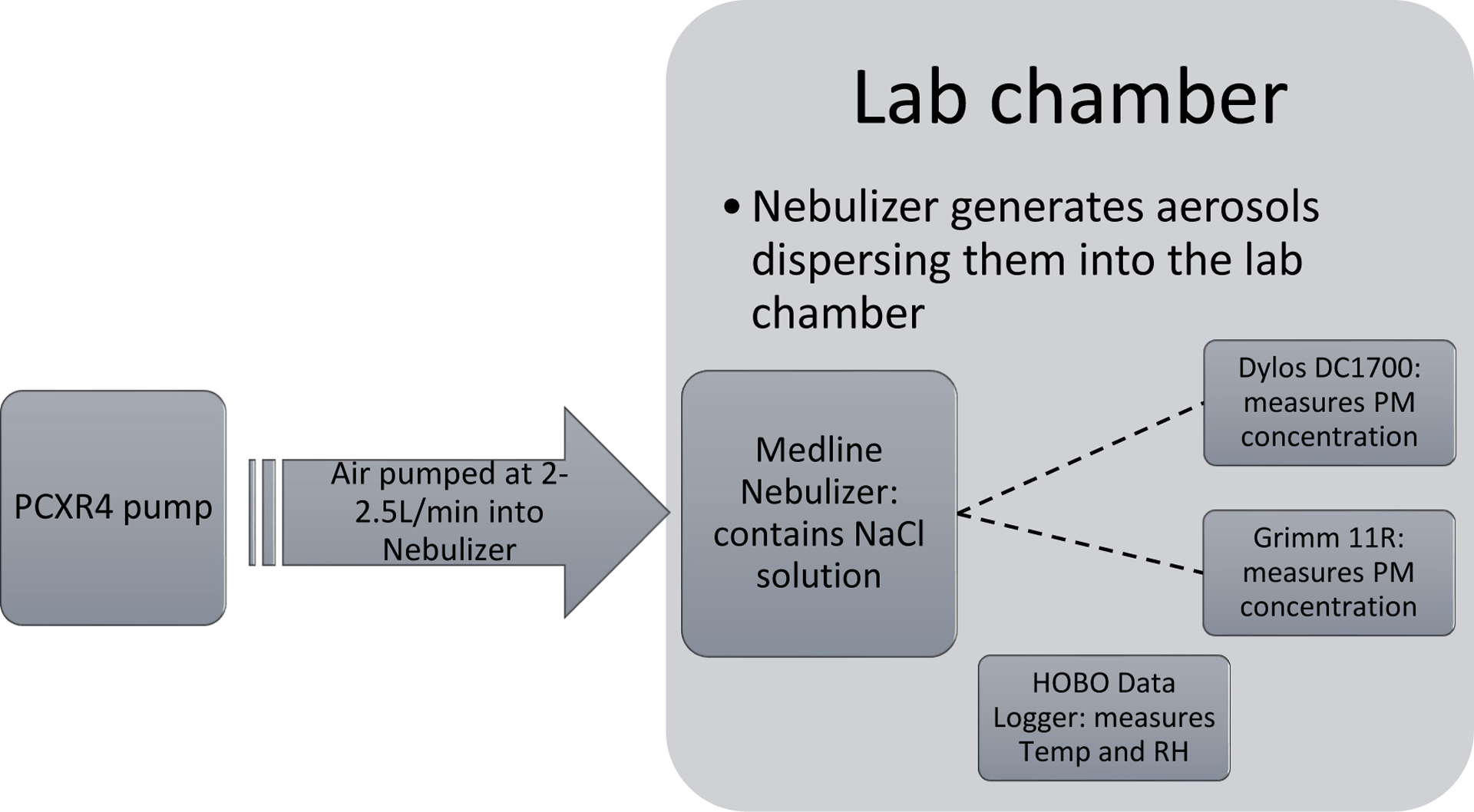
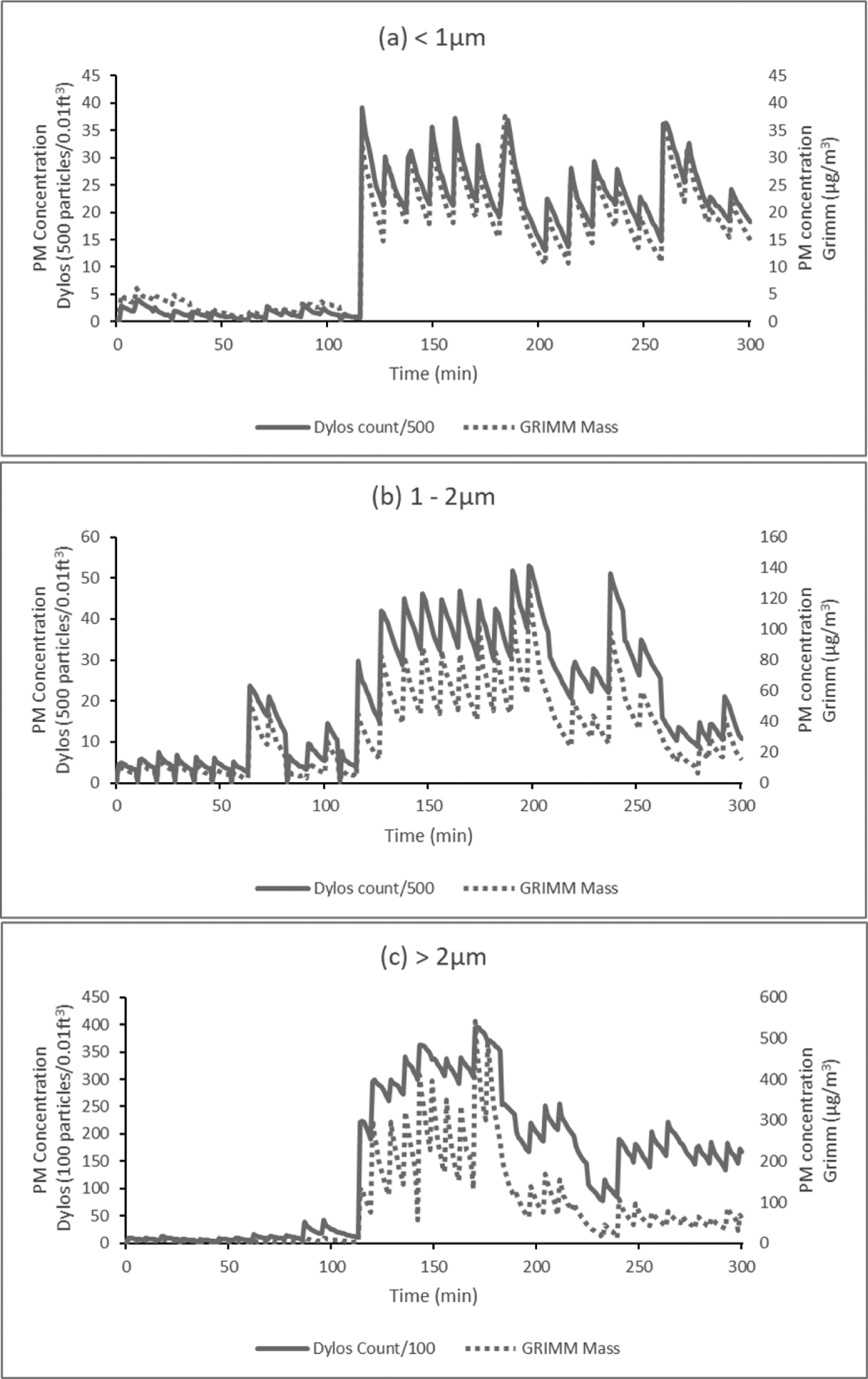
CDC STACKS serves as an archival repository of CDC-published products including
scientific findings, journal articles, guidelines, recommendations, or other public health information authored or
co-authored by CDC or funded partners.
As a repository, CDC STACKS retains documents in their original published format to ensure public access to scientific information.
As a repository, CDC STACKS retains documents in their original published format to ensure public access to scientific information.
You May Also Like
COLLECTION
CDC Public Access