



Trends in Multivitamin Use Among Women of Reproductive Age: United States, 2006–2016
Supporting Files

-
1 2019
-
File Language:
English
Details
-
Alternative Title:J Womens Health (Larchmt)
-
Personal Author:
-
Description:Background:
Women of reproductive age can consume 0.4 milligrams of folic acid daily to reduce the risk of a neural tube defect (NTD)-affected pregnancy. Multivitamins ( MVs) are one source of folic acid.
Materials and Methods:
Using HealthStyles survey data (n = 9268), we assessed change in prevalence of MV use during 2006–2016 among women by age (18–24, 25–34, and 35–44 years), race/ethnicity (non-Hispanic [NH] white, NH black, Hispanic), and pregnancy status (trying to get pregnant, not pregnant nor trying to get pregnant, and pregnant) using log-binomial regression.
Results:
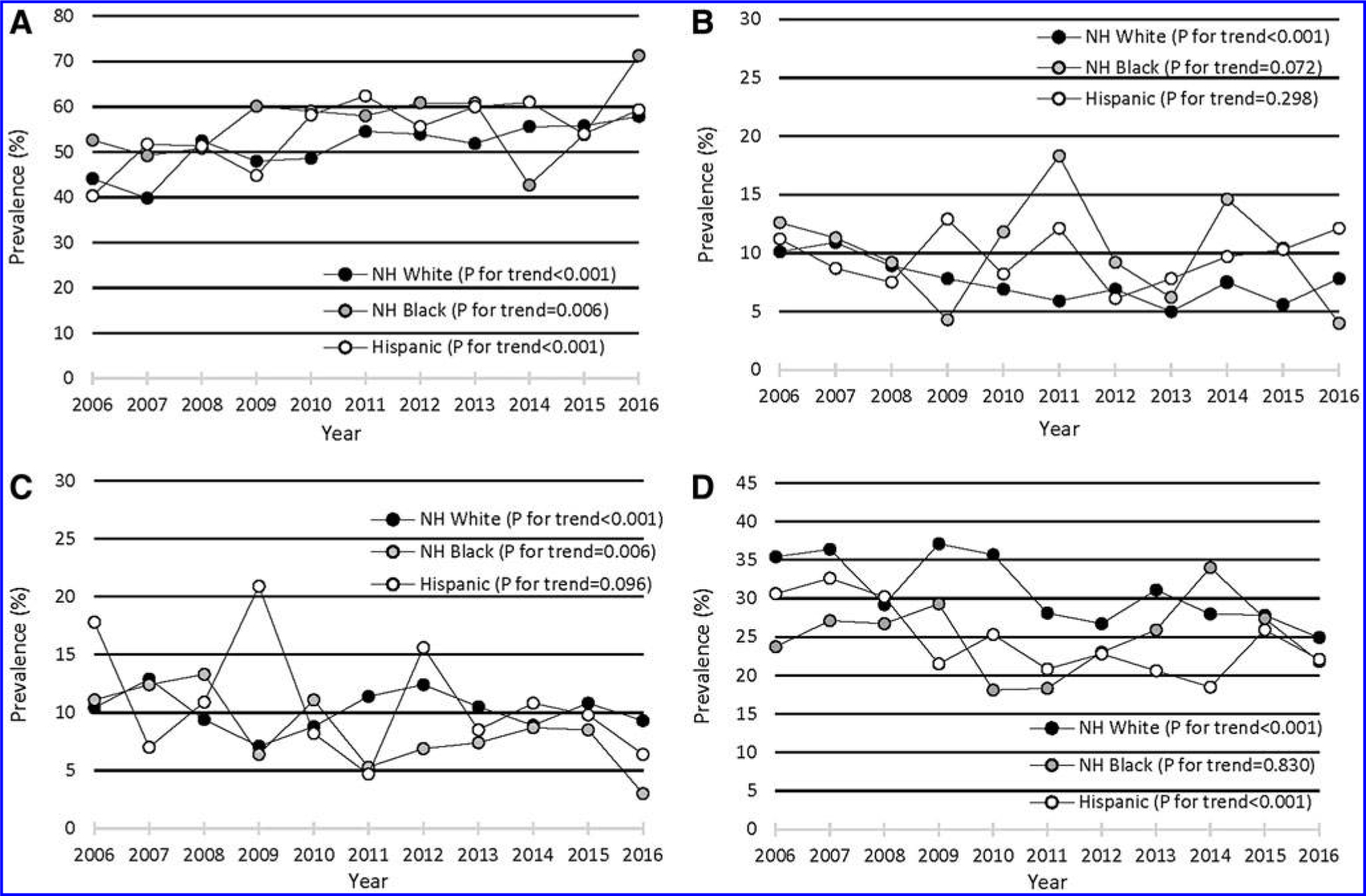
Daily MV consumption decreased overall from 32.7% to 23.6% during 2006–2016 for women aged 18–44 years ( p for trend <0.001). Age-specific decreases were seen in women aged 25–34 years (2006: 34.1%; 2016: 23.7%; p < 0.001) and 35–44 years (2006: 37.3%; 2016: 27.1%; p < 0.001). Decreases in daily MV intake were found among NH whites (2006: 35.4%; 2016: 24.9%; p < 0.001) and Hispanics (2006: 30.6%; 2016: 22.1%; p < 0.001), but remained unchanged among NH blacks (2006: 23.7%; 2016: 21.8%; p = 0.87). Daily MV intake remained unchanged for women trying to get pregnant (2006: 40.2%; 2012: 38.3%; p = 0.19), decreased for women not pregnant nor trying to get pregnant (2006: 31.3%; 2012: 21.3%; p < 0.001), and fluctuated for pregnant women (2006: 53.8%; 2012: 71.0%; p = 0.21). Prevalence of no MV consumption increased significantly across all age and race/ethnicity groups.
Conclusions:
Overall MV intake decreased for the past decade and varied by age, race/ethnicity, and pregnancy status. Innovative messaging and targeted interventions for increasing folic acid intake are needed to reduce NTDs.
-
Subjects:
-
Source:J Womens Health (Larchmt). 28(1):37-45
-
Pubmed ID:30620242
-
Pubmed Central ID:PMC8842841
-
Document Type:
-
Funding:
-
Place as Subject:
-
Volume:28
-
Issue:1
-
Collection(s):
-
Main Document Checksum:urn:sha256:5a64e74f2ed0eaa63df83ed652f2e1dd7b72f396ef34638b569677f65c268977
-
Download URL:
-
File Type:
 [PDF
- 675.89 KB
]
[PDF
- 675.89 KB
]
Supporting Files


File Language:
English
 Was this page helpful?
 Found an issue?


CDC STACKS serves as an archival repository of CDC-published products including
scientific findings,
journal articles, guidelines, recommendations, or other public health information authored or
co-authored by CDC or funded partners.
As a repository, CDC STACKS retains documents in their original published format to ensure public access to scientific information.
As a repository, CDC STACKS retains documents in their original published format to ensure public access to scientific information.
You May Also Like
COLLECTION
CDC Public Access