



Trends in Adolescent Online and Offline Victimization and Suicide Risk Factors
Supporting Files

-
9 2021
-
Available in CDC Stacks on September 01, 2022, 12:00 AM
File Language:
English
Details
-
Alternative Title:Pediatrics
-
Personal Author:
-
Description:OBJECTIVE:
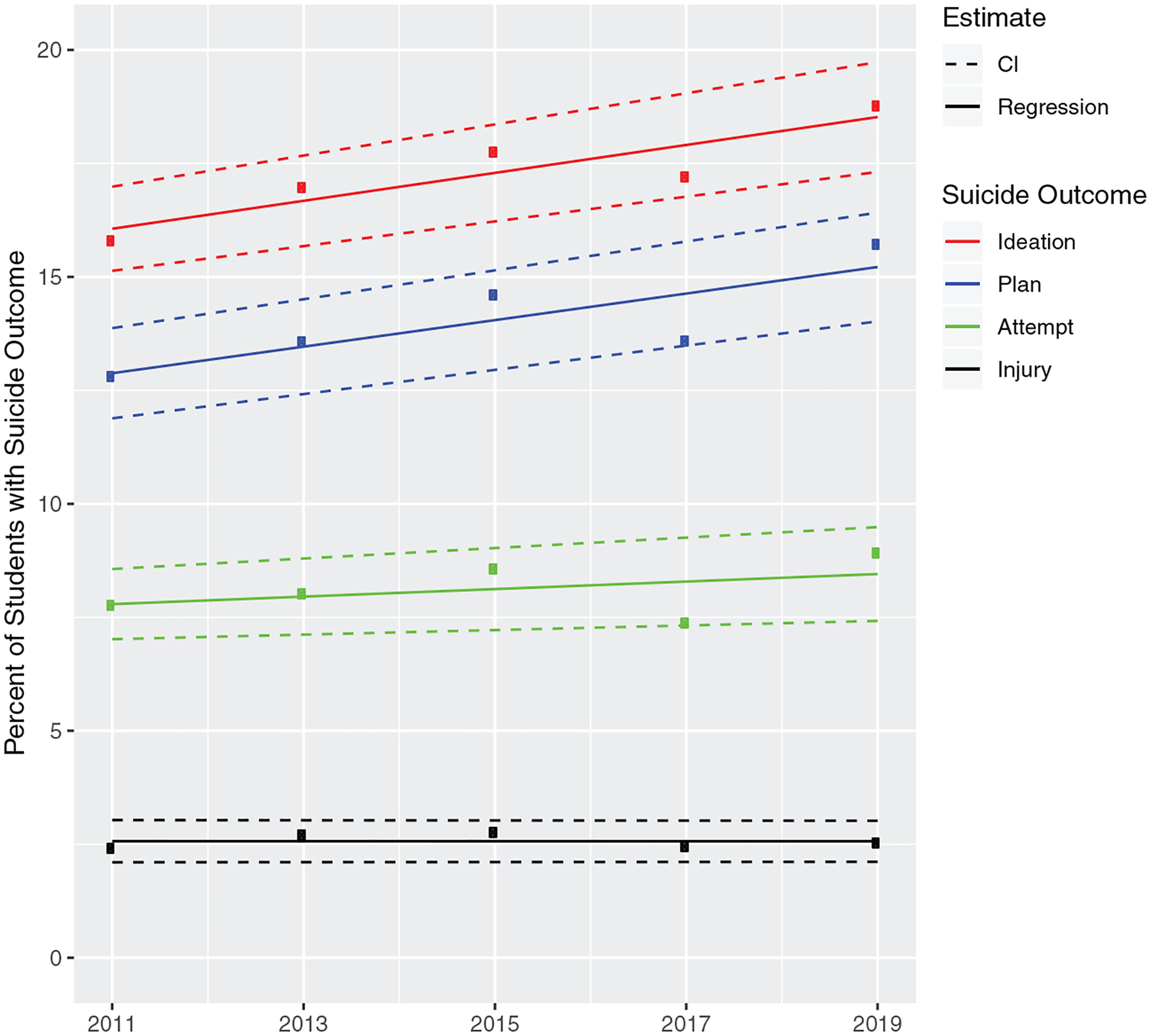
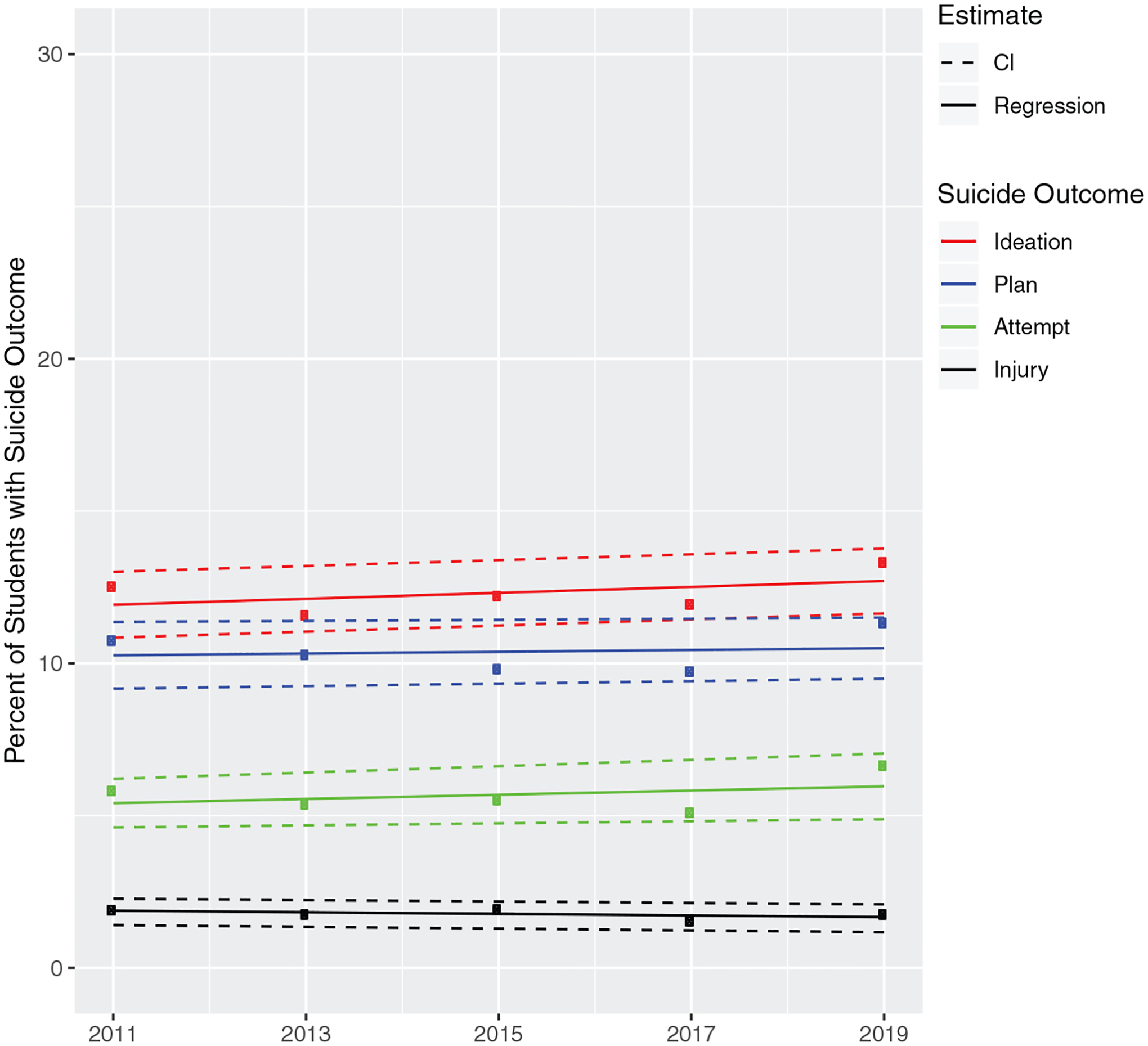
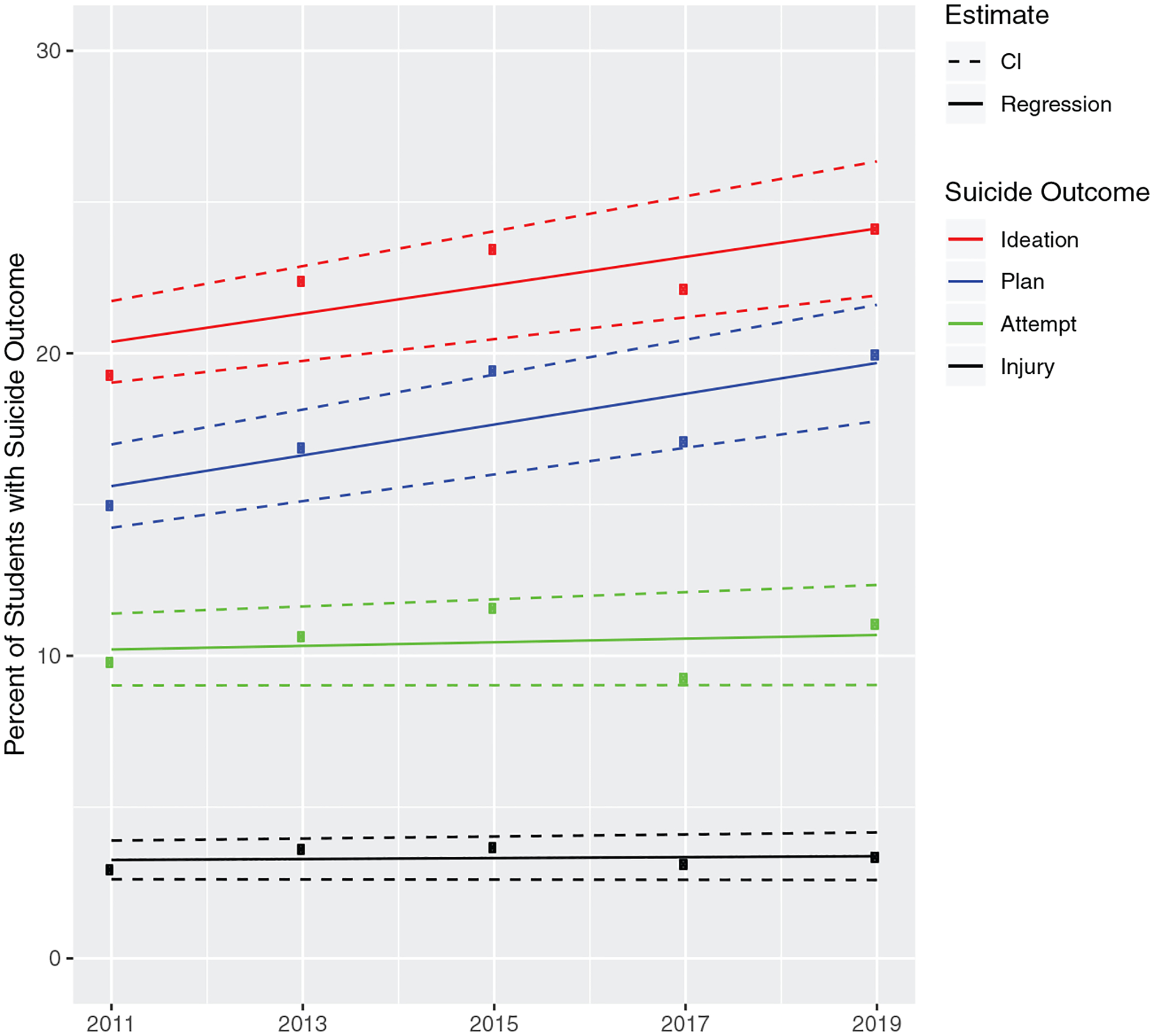
Suicidal ideation and plans are increasing among US adolescents. Changing prevalence of online victimization is frequently hypothesized as an explanation for this increase. We tested trends in online and offline victimization and whether they contribute to recent trends in adolescent suicidal outcomes.
METHODS:
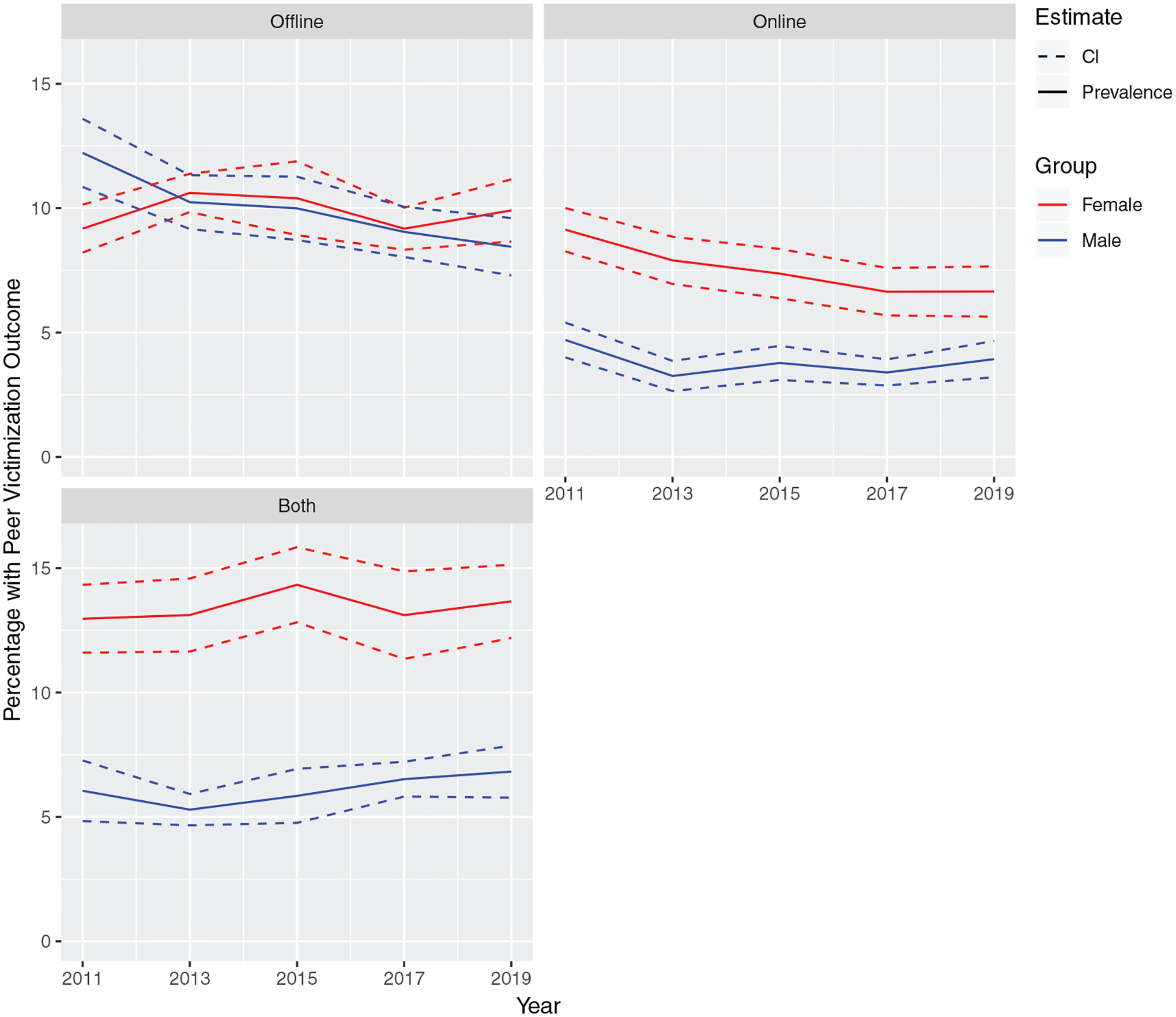
Youth Risk Behavior Survey data (2011–2019, N = 73 074) were collected biennially through national cross-sectional surveys of US school-attending adolescents. We examined trends in past-year victimization. We also examined whether the relationship between victimization and past-year suicidal ideation, plans, attempts, and injury changed over time using survey-weighted logistic regressions that adjusted for sex and race and ethnicity. We also sex-stratified results to examine sex differences.
RESULTS:
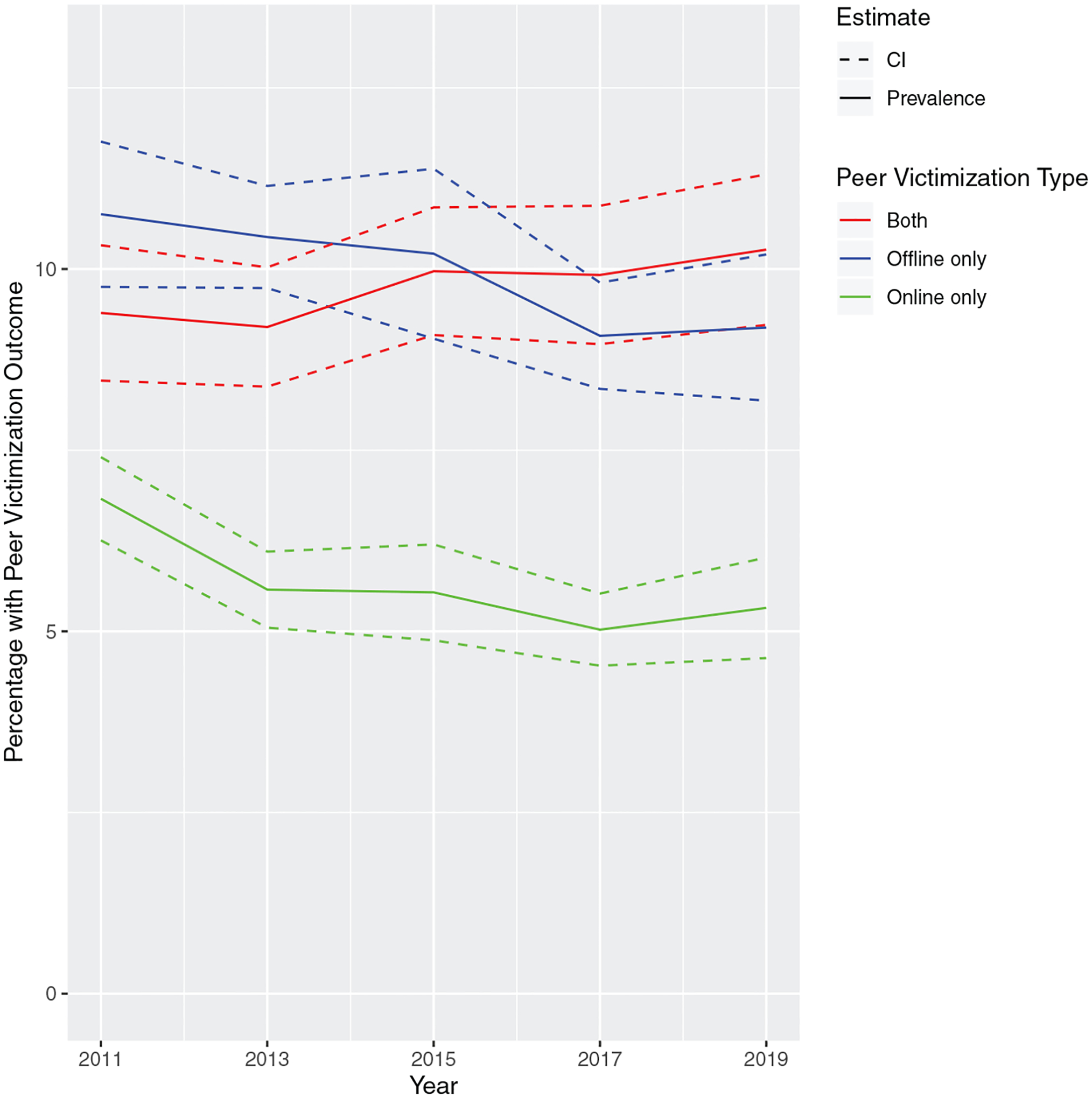
Although suicidal ideation and plans increased among US adolescents (mainly girls), online and offline victimization prevalence did not increase over time (offline: 20.0% in 2011, 19.5% in 2019; online: 16.2% in 2011, 15.7% in 2019). Online and offline victimization were associated with suicidal outcomes, especially co-occurring online and offline victimization (eg, adjusted odds ratio co-occurring online and offline victimization versus none, outcome: suicidal injury = 8.37; 95% confidence interval: 7.06–9.91). The magnitude of the associations between victimization and suicidal outcomes largely remained stable over time.
CONCLUSION:
Peer victimization prevalence has not sufficiently changed over time in concert with suicidal outcomes to explain increased suicidal outcomes. The prevalence of victimization has remained relatively invariant across time despite growing awareness and programming, making online and offline victimization consistent, socially-patterned risk factors that warrant further monitoring and interventions. Research must examine risk factors beyond victimization to explain increasing suicidal outcomes. -
Subjects:
-
Source:Pediatrics. 148(3)
-
Pubmed ID:34341075
-
Pubmed Central ID:PMC8811796
-
Document Type:
-
Funding:
-
Volume:148
-
Issue:3
-
Download URL:
-
File Type:
 [PDF - 1.49 MB]
 -
Collection(s):
-
Main Document Checksum:urn:sha256:da147be457f6d5f9148a65196a188fd9789bc5f583f30c7ac40da3638c8eea6a
Supporting Files


File Language:
English
 Was this page helpful?
 Found an issue?

CDC STACKS serves as an archival repository of CDC-published products including
scientific findings, journal articles, guidelines, recommendations, or other public health information authored or
co-authored by CDC or funded partners.
As a repository, CDC STACKS retains documents in their original published format to ensure public access to scientific information.
As a repository, CDC STACKS retains documents in their original published format to ensure public access to scientific information.
You May Also Like
COLLECTION
CDC Public Access