



Risk Factors for Severe COVID-19 Outcomes Among Persons Aged ≥18 Years Who Completed a Primary COVID-19 Vaccination Series — 465 Health Care Facilities, U.S. December 2020–October 2021
Supporting Files
Public Domain

-
1 07 2022
File Language:
English
Details
-
Journal Article:Morbidity and Mortality Weekly Report (MMWR)
-
Personal Author:Yek, Christina ; Warner, Sarah ; Wiltz, Jennifer L. ; Sun, Junfeng ; Adjei, Stacey ; Mancera, Alex ; Silk, Benjamin J. ; Gundlapalli, Adi V. ; Harris, Aaron M. ; Boehmer, Tegan K. ; Kadri, Sameer S.
-
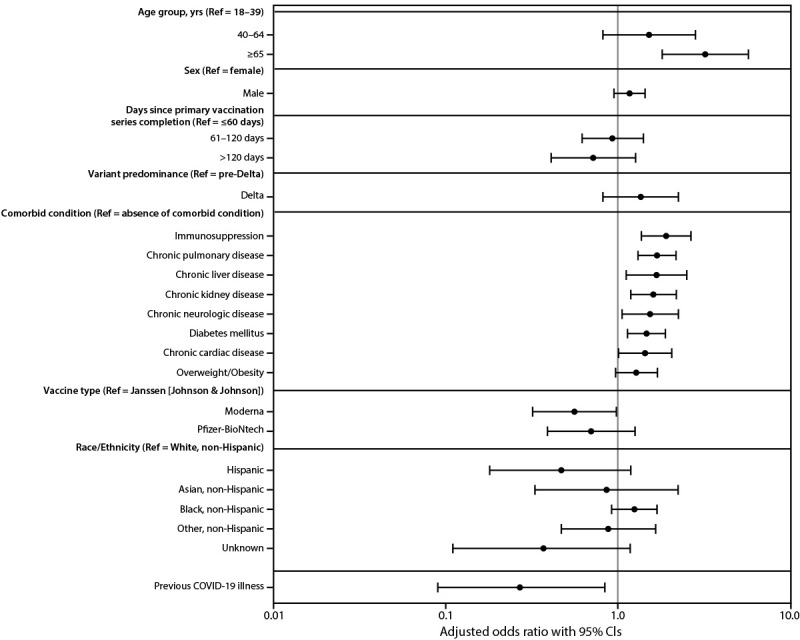
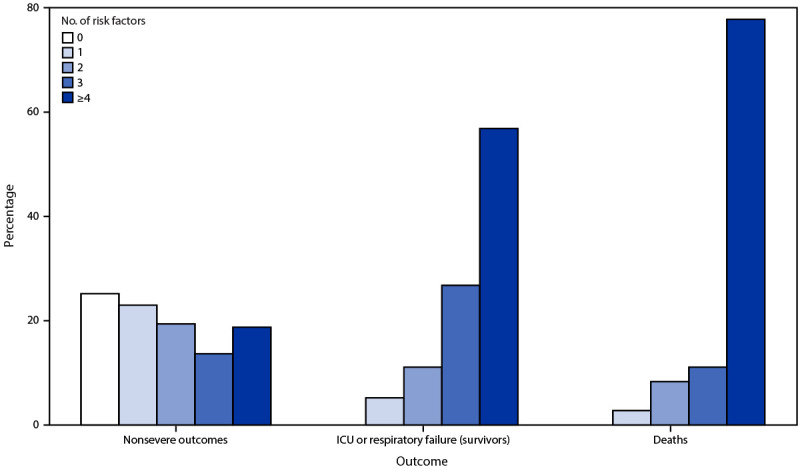
Description:Vaccination against SARS-CoV-2, the Virus that causes COVID-19, is highly effective at preventing COVID-19-associated hospitalization and death; however, some vaccinated persons might develop COVID-19 with severe outcomes| (1,2). Using data from 465 facilities in a large U.S. health care database, this study assessed the frequency of and risk factors for developing a severe COVID-19 outcome after completing a primary COVID-19 vaccination series (primary vaccination), defined as receipt of 2 doses of an mRNA vaccine (BNT162b2 Pfizer-BioNTech or mRNA-1273 Moderna) or a single dose of JNJ-78436735 Janssen (Johnson & Johnson) ≥14 days before illness onset. Severe COVID-19 outcomes were defined as hospitalization with a Diagnosis of acute respiratory failure, need for noninvasive ventilation (NIV), admission to an intensive care unit (ICU) including all persons requiring invasive mechanical ventilation, or death (including discharge to hospice). Among 1,228,664 persons who completed primary vaccination during December 2020-October 2021, a total of 2,246 (18.0 per 10,000 vaccinated persons) developed COVID-19 and 189 (1.5 per 10,000) had a severe outcome, including 36 who died (0.3 deaths per 10,000). Risk for severe outcomes was higher among persons who were aged ≥65 years, were immunosuppressed, or had at least one of six other underlying conditions. All persons with severe outcomes had at least one of these risk factors, and 77.8% of those who died had four or more risk factors. Severe COVID-19 outcomes after primary vaccination are rare; however, vaccinated persons who are aged ≥65 years, are immunosuppressed, or have other underlying conditions might be at increased risk. These persons should receive targeted interventions including chronic disease management, precautions to reduce exposure, additional primary and booster vaccine doses, and effective pharmaceutical therapy as indicated to reduce risk for severe COVID-19 outcomes. Increasing COVID-19 vaccination coverage is a public health priority.
-
Subjects:
-
Source:MMWR Morbidity Mortal Weekly Rep. 71(1):19-25
-
Series:
-
DOI:
-
ISSN:0149-2195 (print) ; 1545-861X (digital)
-
Pubmed ID:34990440
-
Pubmed Central ID:PMC8735560
-
Document Type:
-
Place as Subject:
-
Pages in Document:7 pdf pages
-
Volume:71
-
Issue:1
-
Download URL:
-
File Type:
 [PDF - 443.11 KB]
 -
Collection(s):
-
Main Document Checksum:urn:sha-512:157361bfca565ef617d623765f4901e1ac455178dfc621467989b2ae885120dc54fca9f45f61e862bd34b4b57052f7154fdc694aae2472a35d9210e00b6b60f0
Supporting Files


File Language:
English
 Was this page helpful?
 Found an issue?

CDC STACKS serves as an archival repository of CDC-published products including
scientific findings, journal articles, guidelines, recommendations, or other public health information authored or
co-authored by CDC or funded partners.
As a repository, CDC STACKS retains documents in their original published format to ensure public access to scientific information.
As a repository, CDC STACKS retains documents in their original published format to ensure public access to scientific information.
You May Also Like
COLLECTION
Morbidity and Mortality Weekly Report (MMWR)