



Associations between baseline and longitudinal semi-automated quantitative joint space width at the hip and incident hip osteoarthritis: Data from a community-based cohort
Supporting Files

-
12 2022 ; 12-2022
-
Available in CDC Stacks on December 01, 2023, 12:00 AM

File Language:
English
Details
-
Alternative Title:Arthritis Care Res (Hoboken)
-
Personal Author:
-
Description:Objective:
To evaluate quantitative joint space width (qJSW, at 10-, 30-, and 50-degree locations) in relation to incident radiographic and symptomatic hip osteoarthritis (rHOA and sxHOA, respectively) in a community-based cohort.
Methods:
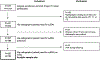
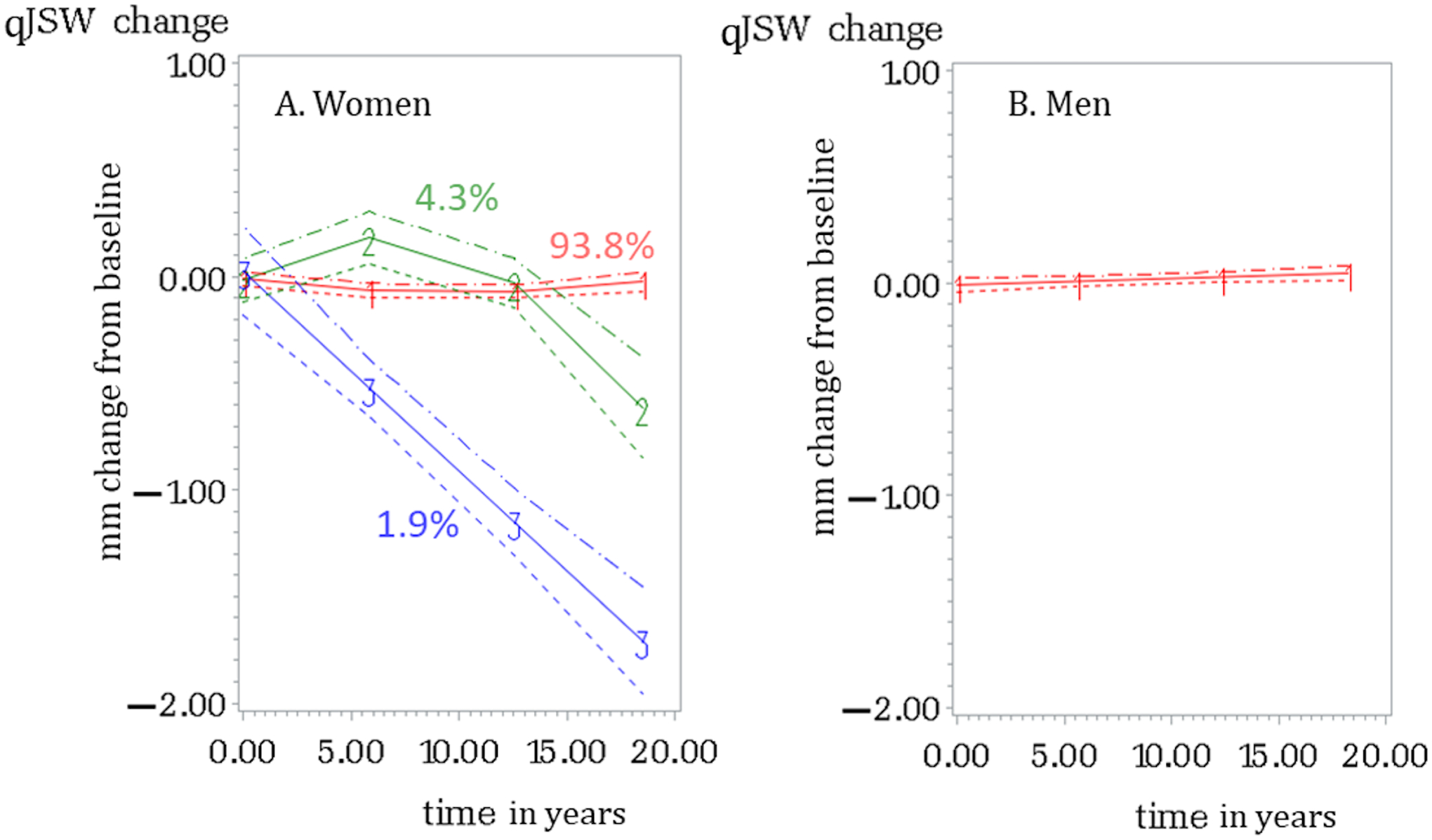
Data were from Johnston County OA Project (JoCoOA) participants with supine hip radiographs at each of 4 timepoints; all had Kellgren-Lawrence grades (KLG) and qJSW. We assessed covariates (age, race, height, weight, body mass index BMI) associated with qJSW, and hip-level associations between qJSW and HOA, over time using sex-stratified and multivariable-adjusted linear mixed models. A cluster analysis with logistic regression estimated associations between qJSW trajectory groups and incident rHOA and sxHOA.
Results:
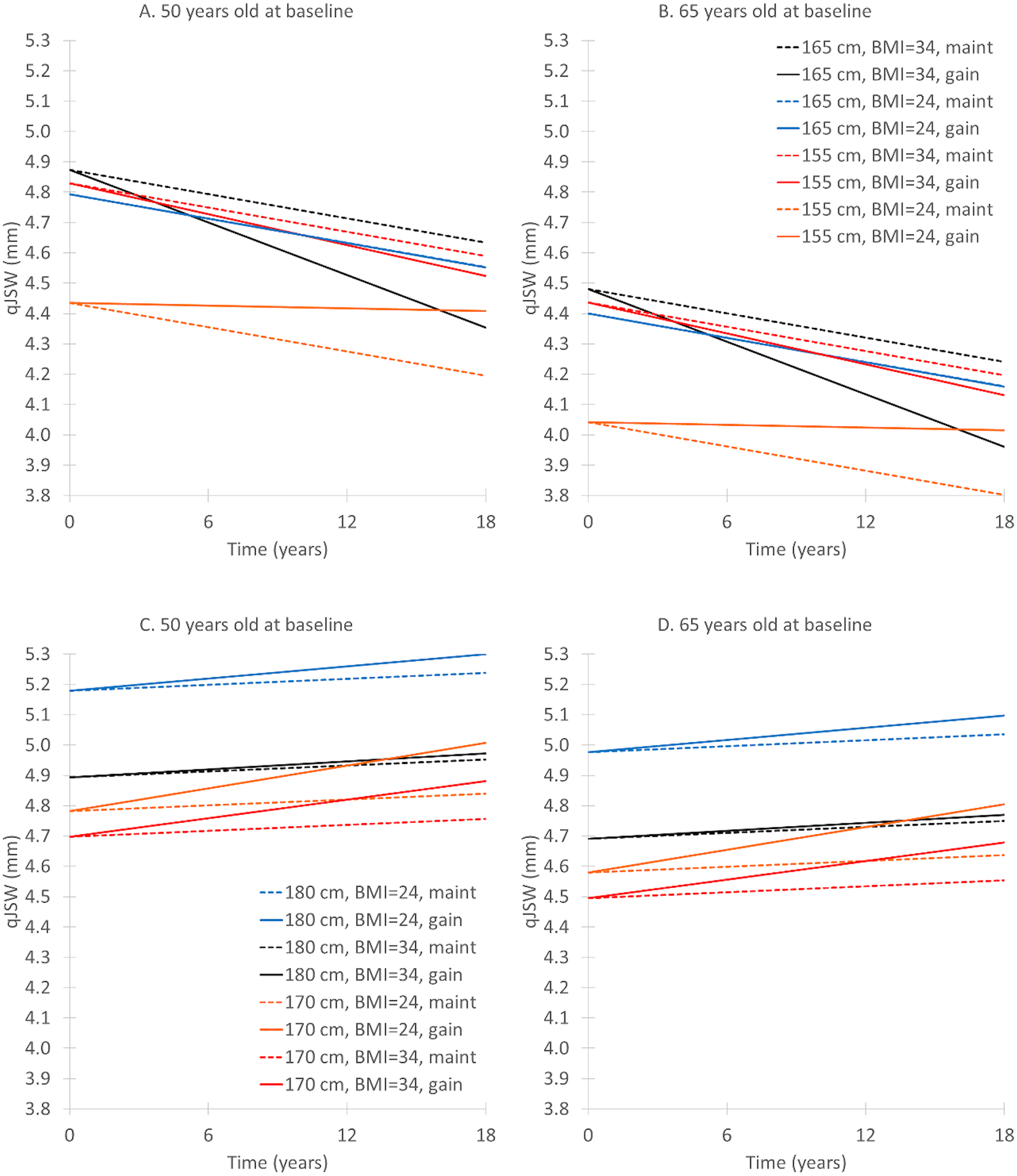
At baseline, 397 participants (784 hips, 41% men, 24% Black, mean age=57 years) had a mean BMI=29 kilograms/meter2. Over a mean of 18 years, 20% and 12% developed incident KLG-defined rHOA or sxHOA, respectively. QJSW was more sensitive to changes over time at 50 degrees. Values were stable among men but declined over time in women. Heavier women lost more qJSW; changes in qJSW were not significantly associated with race, education, or injury in women or men. In women only, loss of qJSW over time was associated with 2–3 times higher odds of rHOA and sxHOA; among women and men, narrower baseline qJSW was associated with these outcomes.
Conclusion:
Hip qJSW demonstrates marked sex differences, with significant loss over time only in women. Loss of qJSW over time in women, and narrower baseline qJSW in men and women, was associated with incident rHOA and sxHOA. -
Keywords:
-
Source:Arthritis Care Res (Hoboken). 74(12):1978-1988
-
Pubmed ID:34219398
-
Pubmed Central ID:PMC8727661
-
Document Type:
-
Funding:U01 DP006266/DP/NCCDPHP CDC HHSUnited States/ ; P60 AR030701/AR/NIAMS NIH HHSUnited States/ ; U01DP006266/ACL/ACL HHSUnited States/ ; P60 AR064166/AR/NIAMS NIH HHSUnited States/ ; P30 AR072580/AR/NIAMS NIH HHSUnited States/ ; P60 AR049465/AR/NIAMS NIH HHSUnited States/ ; U01 DP003206/DP/NCCDPHP CDC HHSUnited States/
-
Volume:74
-
Issue:12
-
Download URL:
-
File Type:
 [PDF - 1016.32 KB]
 -
Collection(s):
-
Main Document Checksum:urn:sha256:efa22e5c8847dedcd781bcb314c9d3a4d1467b78e5898254809a0e47e18de51e
Supporting Files


File Language:
English
 Was this page helpful?
 Found an issue?



CDC STACKS serves as an archival repository of CDC-published products including
scientific findings, journal articles, guidelines, recommendations, or other public health information authored or
co-authored by CDC or funded partners.
As a repository, CDC STACKS retains documents in their original published format to ensure public access to scientific information.
As a repository, CDC STACKS retains documents in their original published format to ensure public access to scientific information.
You May Also Like
COLLECTION
CDC Public Access