



The association between perceived community violence, police bias, race, and firearm carriage among urban adolescents and young adults
Supporting Files

-
1 2022 ; 1-2022
-
Available in CDC Stacks on 2023-01-01T00:00:00Z
File Language:
English
Details
-
Alternative Title:Prev Med
-
Personal Author:
-
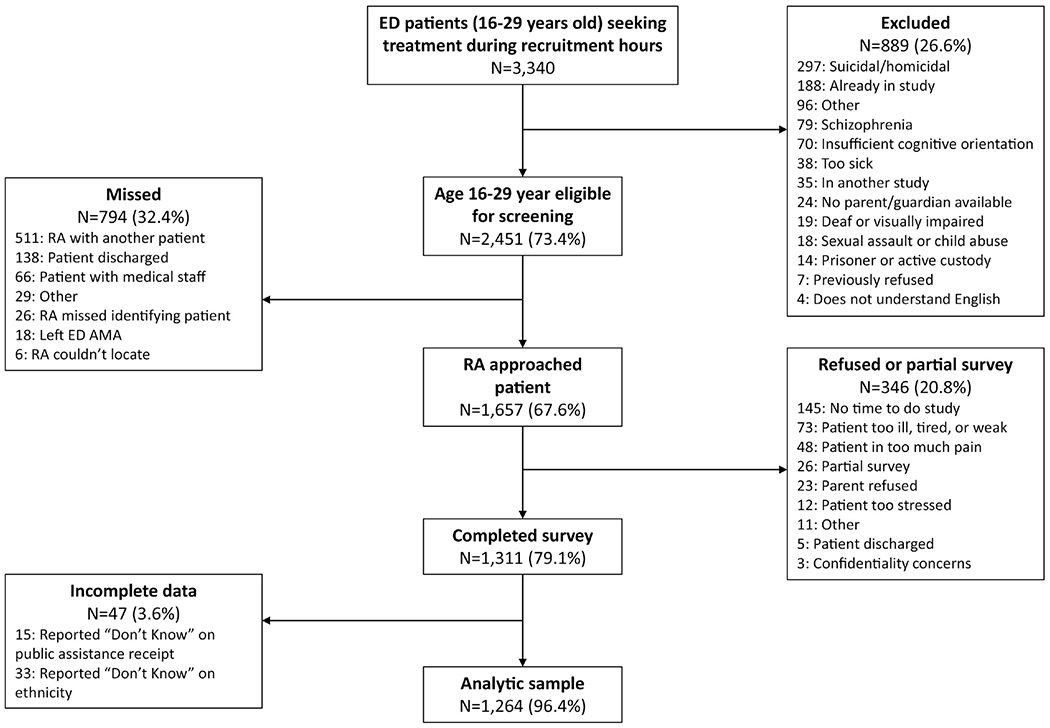
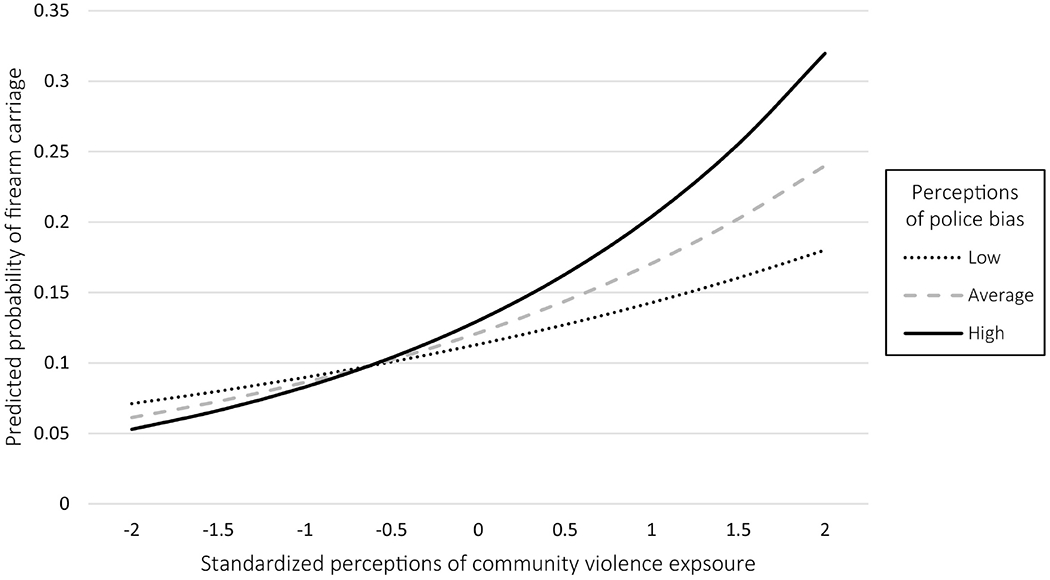
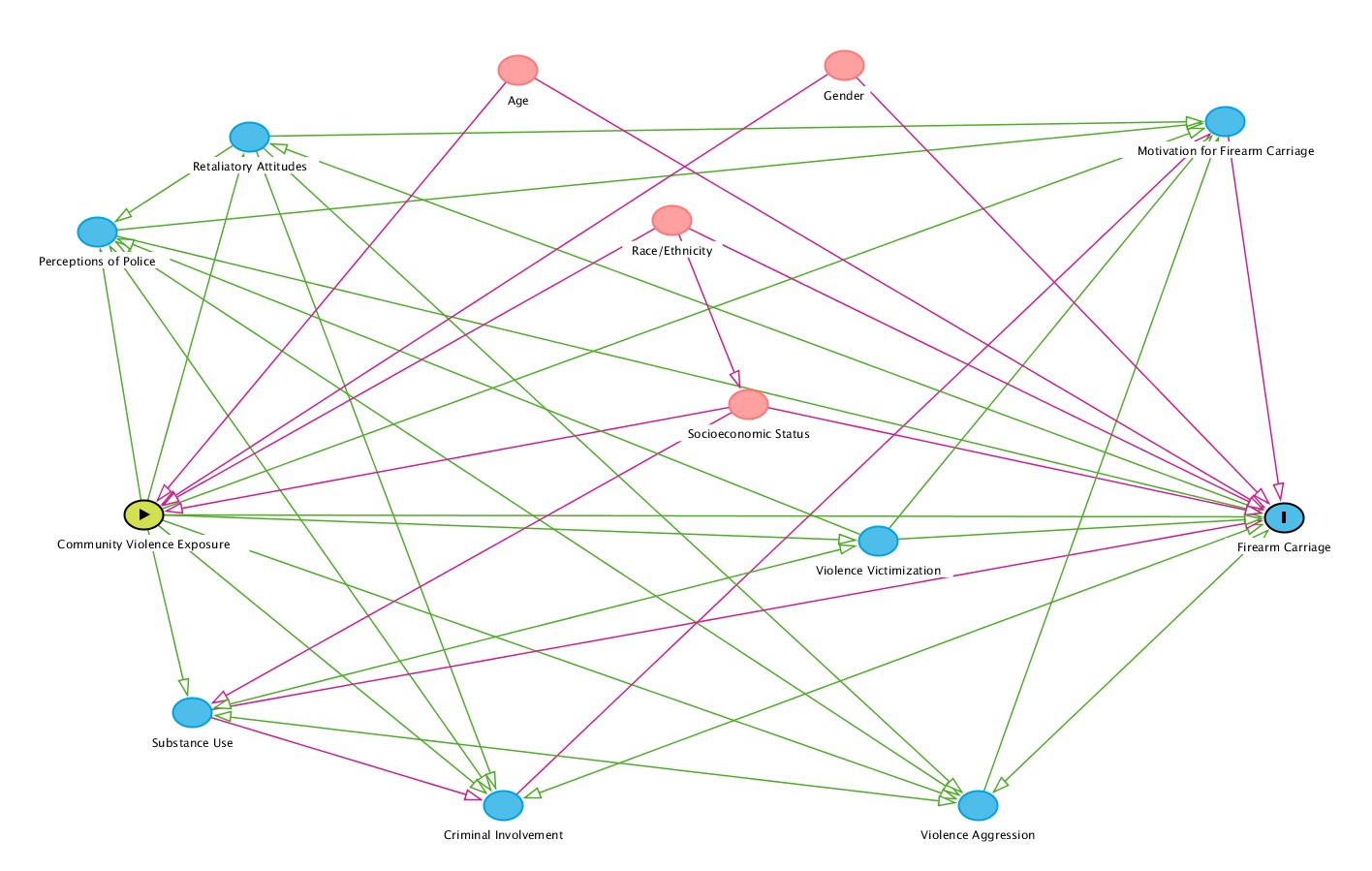
Description:Firearms are a leading cause of death among youth and young adults. Given community violence is an important correlate of youth firearm carriage, we evaluated: 1) If the association between perceived community violence and firearm carriage is stronger when perceived police bias is greater; and 2) If this moderated association differs by race. Cross-sectional data came from screening data for a longitudinal study of firearm behaviors among young adults seeking urban emergency department treatment between July 2017-June 2018 (N = 1264). We estimated Poisson regressions with robust error variance to evaluate associations between perceived community violence, police bias, race, and firearm carriage. Community violence was positively associated with firearm carriage (average marginal effect AME: 0.05; 95% Confidence Interval CI: 0.03, 0.07). We also found that the positive association between community violence and firearm carriage increased with higher perceptions of police bias (interaction p < 0.05). We did not find evidence of a three-way interaction by which the moderated association between violence exposure and firearm carriage by perceived police bias varied by race of the respondents. Our findings suggest that community-level strategies to reduce violence and police bias may be beneficial to decrease youth firearm carriage in socio-economically disadvantaged urban settings.
-
Subjects:
-
Keywords:
-
Source:Prev Med. 154:106897
-
Pubmed ID:34863814
-
Pubmed Central ID:PMC8724395
-
Document Type:
-
Funding:
-
Volume:154
-
Download URL:
-
File Type:
 [PDF - 448.24 KB]
 -
Collection(s):
-
Main Document Checksum:urn:sha256:71a07d0c8f79a0fabc979a3ad2c58558841247d4ebaa5b4d71fed362f77d1568
Supporting Files


File Language:
English
 Was this page helpful?
 Found an issue?

CDC STACKS serves as an archival repository of CDC-published products including
scientific findings, journal articles, guidelines, recommendations, or other public health information authored or
co-authored by CDC or funded partners.
As a repository, CDC STACKS retains documents in their original published format to ensure public access to scientific information.
As a repository, CDC STACKS retains documents in their original published format to ensure public access to scientific information.
You May Also Like
COLLECTION
CDC Public Access