


Measurements of human herpesvirus 8 viral load in blood before and after leukoreduction filtration
Supporting Files

-
10 2013
-
File Language:
English
Details
-
Alternative Title:Transfusion
-
Personal Author:
-
Description:BACKGROUND:
Human herpesvirus 8 (HHV-8) is likely transmitted through blood transfusion in high-prevalence areas. The efficacy of leukoreduction filtration for reducing HHV-8 in blood has not been reported.
STUDY DESIGN AND METHODS:
Blood was drawn from 45 human immunodeficiency virus–positive men either with Kaposi’s sarcoma (KS; n = 21) or without KS (n = 24) and subject to leukoreduction filtration. HHV-8 viral load was measured in plasma and in blood before and after filtration.
RESULTS:
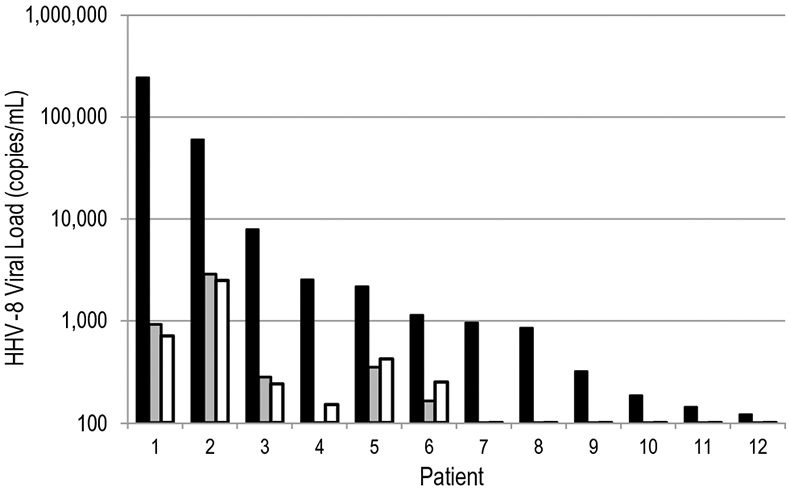
Twelve subjects, all with KS, had detectable HHV-8 viremia before filtration with viral loads of 102 to 105 copies/mL (mean, 3 × 10⁴ copies/mL). After filtration, seven of 12 subjects no longer had detectable HHV-8 in their blood, and five of 12 subjects had detectable HHV-8 that was 90% reduced on average from prefiltration levels. The presence of HHV-8 in the blood after filtration was strongly associated with prefiltration viral loads greater than 1000 copies/mL and the presence of cell-free virus in plasma. None of the subjects without KS had detectable levels of HHV-8 virus in blood before or after filtration.
CONCLUSION:
Cell-associated HHV-8 appeared to be effectively removed by leukoreduction filtration. Cell-free HHV-8 was present in 42% of subjects as 1% to 20% of the total virus which was not removed by filtration.
-
Subjects:
-
Source:Transfusion. 53(10):2164-2167
-
Pubmed ID:23362994
-
Pubmed Central ID:PMC8721744
-
Document Type:
-
Funding:
-
Volume:53
-
Issue:10
-
Collection(s):
-
Main Document Checksum:urn:sha256:64f9a6af5cdbf7f9119842be1c9b133291f726e4d7786fc0ca057ebf5feb7ea4
-
Download URL:
-
File Type:
 [PDF
- 315.43 KB
]
[PDF
- 315.43 KB
]
Supporting Files


File Language:
English
ON THIS PAGE

CDC STACKS serves as an archival repository of CDC-published products including
scientific findings,
journal articles, guidelines, recommendations, or other public health information authored or
co-authored by CDC or funded partners.
As a repository, CDC STACKS retains documents in their original published format to ensure public access to scientific information.
As a repository, CDC STACKS retains documents in their original published format to ensure public access to scientific information.
You May Also Like
COLLECTION
CDC Public Access