


Characteristics of an Outbreak of E-cigarette, or Vaping, Product Use-Associated Lung Injury—North Carolina, 2019
Supporting Files

-
2021
-
File Language:
English
Details
-
Alternative Title:N C Med J
-
Personal Author:
-
Description:BACKGROUND
In August 2019, the North Carolina Division of Public Health (NCDPH) began investigating e-cigarette, or vaping, product use-associated lung injury (EVALI) cases as part of a national response. We describe clinical, epidemiologic, and laboratory findings of North Carolina EVALI patients.
METHODS
NCDPH requested that physicians report cases of respiratory illness or bilateral pulmonary infiltrates or opacities in patients who reported using e-cigarette, or vaping, products and had no infection or alternative plausible diagnoses. We reviewed medical records, interviewed patients, and tested vaping products for substances.
RESULTS
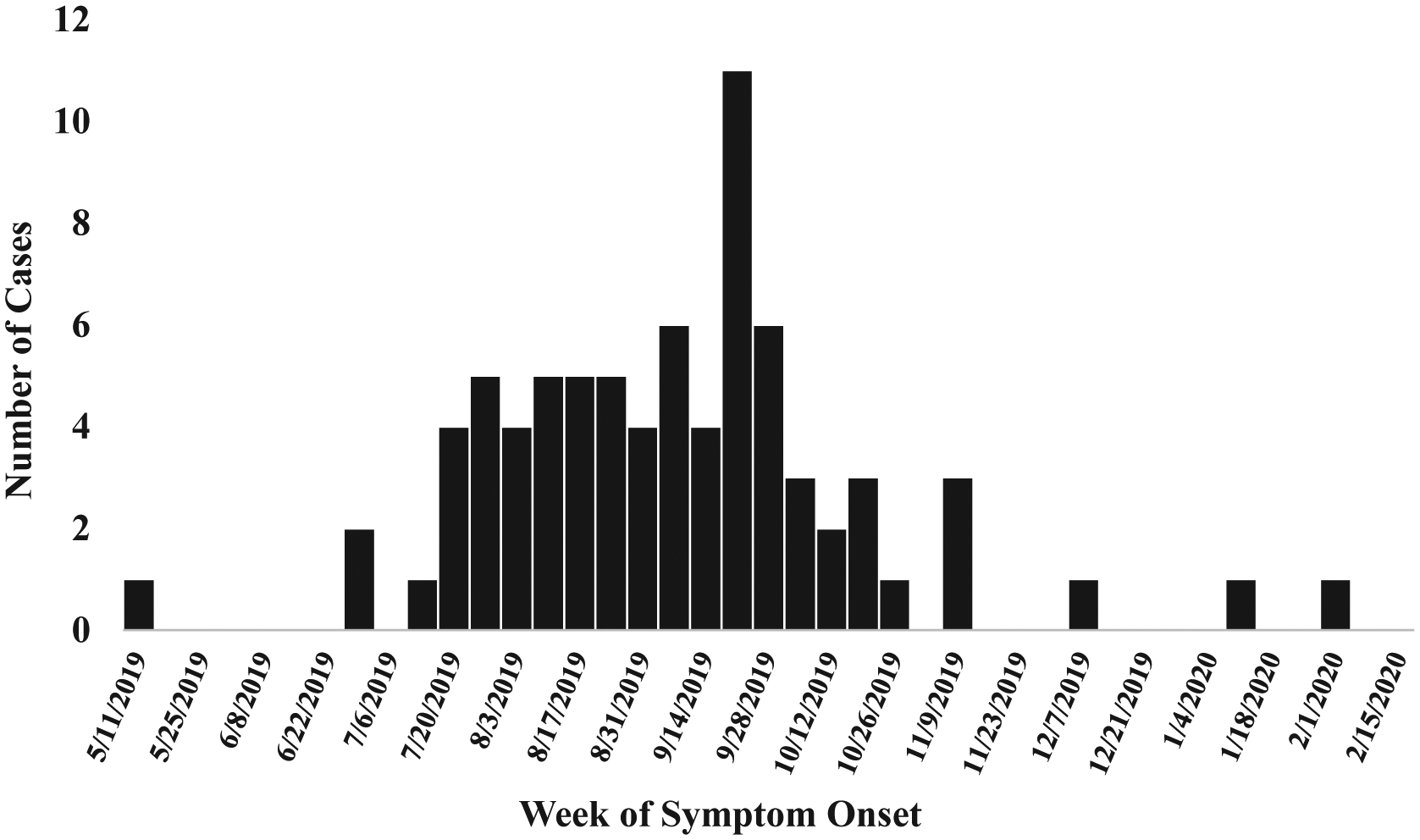
During August 13, 2019–February 18, 2020, 78 EVALI cases were reported in North Carolina. Median age of cases was 24 years (range: 13–72 years); 49 (63%) patients were male. Symptoms included cough (n = 70; 90%), shortness of breath (n = 66; 85%), and gastrointestinal symptoms (n = 63; 81%). Seventy-five patients (96%) were hospitalized, 32 (41%) required intensive care, and 12 (16%) required mechanical ventilation; none died. Among 20 patients interviewed, most reported using tetrahydrocannabinol (THC) (n = 16; 80%) or nicotine-containing products (n = 14; 70%). All obtained THC-containing products from informal sources, such as family, friends, or dealers, as THC is illegal in North Carolina. Among 82 products tested, 74 (90%) contained THC, cannabidiol, or cannabinol; 54 (66%) contained vitamin E acetate.
LIMITATIONS
In North Carolina, EVALI is not reportable by law, and THC is illegal. Thus, cases and exposures are likely underreported.
CONCLUSIONS
THC-containing products, particularly those containing vitamin E acetate, are associated with EVALI. Persons should not use these products, particularly from informal sources. Continued communication of health risks to persons who use e-cigarette, or vaping, products is essential.
-
Subjects:
-
Source:N C Med J. 82(6):384-392
-
Pubmed ID:34750211
-
Pubmed Central ID:PMC8670725
-
Document Type:
-
Funding:
-
Place as Subject:
-
Volume:82
-
Issue:6
-
Collection(s):
-
Main Document Checksum:urn:sha256:9c8662c5a94a1f28405d7f1de244249a358f8032b3e7e0c67b97e59ae68ffb5c
-
Download URL:
-
File Type:
 [PDF
- 174.81 KB
]
[PDF
- 174.81 KB
]
Supporting Files


File Language:
English
ON THIS PAGE

CDC STACKS serves as an archival repository of CDC-published products including
scientific findings,
journal articles, guidelines, recommendations, or other public health information authored or
co-authored by CDC or funded partners.
As a repository, CDC STACKS retains documents in their original published format to ensure public access to scientific information.
As a repository, CDC STACKS retains documents in their original published format to ensure public access to scientific information.
You May Also Like
COLLECTION
CDC Public Access