


Using marketing automation to modernize data collection in the California Teachers Study cohort
Supporting Files

-
4 2020
-
File Language:
English
Details
-
Alternative Title:Cancer Epidemiol Biomarkers Prev
-
Personal Author:
-
Description:Background:
Like other cancer epidemiological cohorts, the California Teachers Study (CTS) has experienced declining participation to follow-up questionnaires; neither the reasons for these declines nor the steps that could be taken to mitigate these trends are fully understood.
Methods:
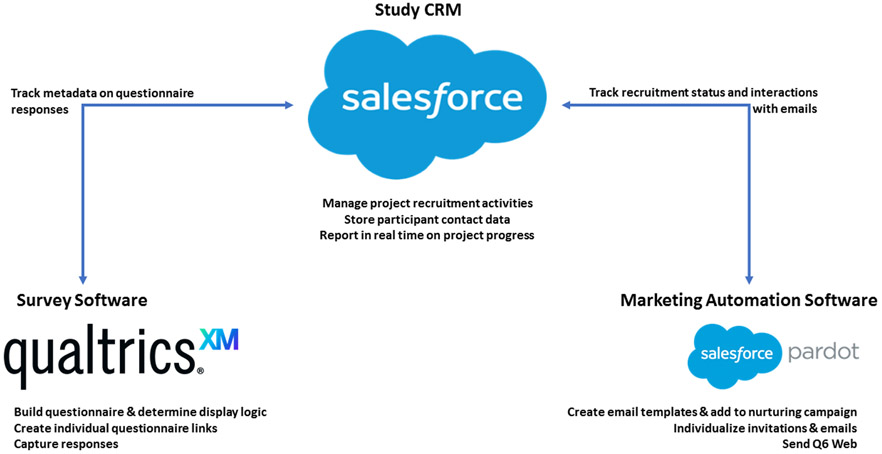
The CTS offered their 6th study questionnaire (Q6) in the fall of 2017 using an integrated, online system. The team delivered a web and mobile-adaptive questionnaire to 45,239 participants via email using marketing automation technology. The study’s integrated platform captured data on recruitment activities that may influence overall response, including the date and time invitations and reminders were emailed and the date and time questionnaires were started and submitted.
Results:
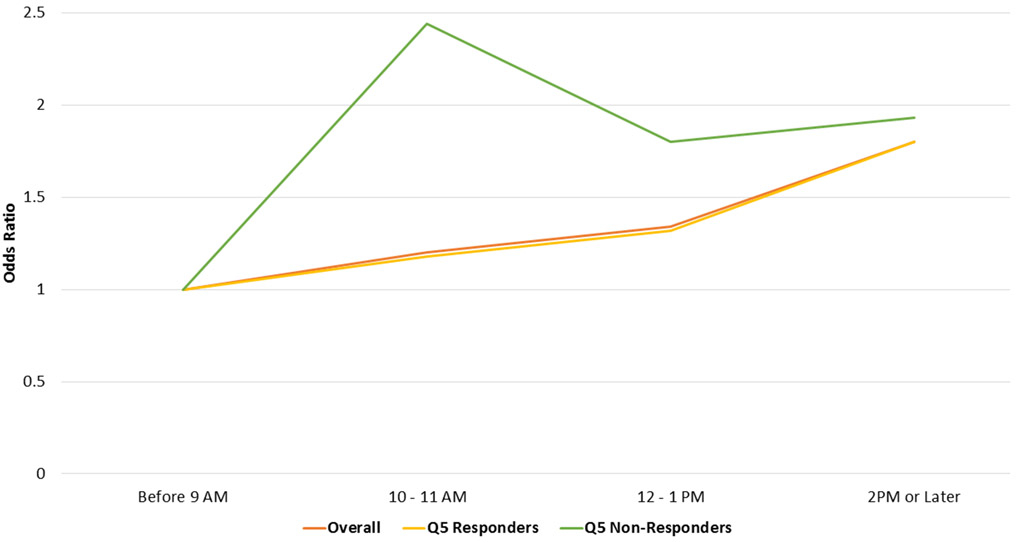
The overall response rate was 43%. Participants ages 65 – 69 were 25% more likely to participate than their younger counterparts (OR=1.25, 95% CI, 1.18-1.32) and non-white participants were 28% less likely to participate than non-Hispanic white cohort members (OR=0.72, 95% CI, 0.68-0.76). Previous questionnaire participation was strongly associated with response (OR=6.07, 95% CI, 5.50-6.70). Invitations sent after 2 PM had the highest response (OR=1.75, 95% CI, 1.65-1.84), as did invitations sent on Saturdays (OR=1.48, 95% CI, 1.36-1.60).
Conclusions:
An integrated system that captures paradata about questionnaire recruitment and response can enable studies to quantify the engagement patterns and communication desires of cohort members.
Impact:
As cohorts continue to collect scientific data, it is imperative to collect and analyze information on how participants engage with the study.
-
Subjects:
-
Source:Cancer Epidemiol Biomarkers Prev. 29(4):714-723
-
Pubmed ID:32054690
-
Pubmed Central ID:PMC8667715
-
Document Type:
-
Funding:HHSN261201800032C/CA/NCI NIH HHSUnited States/ ; HHSN261201800009C/CA/NCI NIH HHSUnited States/ ; NU58DP006344/DP/NCCDPHP CDC HHSUnited States/ ; HHSN261201800015I/CA/NCI NIH HHSUnited States/ ; HHSN261201800032I/CA/NCI NIH HHSUnited States/ ; P30 CA033572/CA/NCI NIH HHSUnited States/ ; HHSN261201800015C/CA/NCI NIH HHSUnited States/ ; HHSN261201800009I/CA/NCI NIH HHSUnited States/ ; U01 CA199277/CA/NCI NIH HHSUnited States/ ; UM1 CA164917/CA/NCI NIH HHSUnited States/ ; P30 CA023100/CA/NCI NIH HHSUnited States/ ; R01 CA077398/CA/NCI NIH HHSUnited States/
-
Place as Subject:
-
Volume:29
-
Issue:4
-
Collection(s):
-
Main Document Checksum:urn:sha256:849290be0a4d3bb988dff23e499c4ea2a330e727f748094196a4182dc3df2df8
-
Download URL:
-
File Type:
 [PDF
- 857.87 KB
]
[PDF
- 857.87 KB
]
Supporting Files


File Language:
English
ON THIS PAGE








CDC STACKS serves as an archival repository of CDC-published products including
scientific findings,
journal articles, guidelines, recommendations, or other public health information authored or
co-authored by CDC or funded partners.
As a repository, CDC STACKS retains documents in their original published format to ensure public access to scientific information.
As a repository, CDC STACKS retains documents in their original published format to ensure public access to scientific information.
You May Also Like
COLLECTION
CDC Public Access