



Personal exposure of dairy workers to dust, endotoxin, muramic acid, ergosterol, and ammonia on large-scale dairies in the high plains Western United States
Supporting Files

-
3 2018
-
Available in CDC Stacks on 2021-12-03T00:00:00Z
File Language:
English
Details
-
Alternative Title:J Occup Environ Hyg
-
Personal Author:Davidson, Margaret E. ; Schaeffer, Joshua ; Clark, Maggie L. ; Magzamen, Sheryl ; Brooks, Elizabeth J. ; Keefe, Thomas J. ; Bradford, Mary ; Roman-Muniz, Noa ; Mehaffy, John ; Dooley, Gregory ; Poole, Jill A. ; Mitloehner, Frank M. ; Reed, Sue ; Schenker, Marc B. ; Reynolds, Stephen J.
-
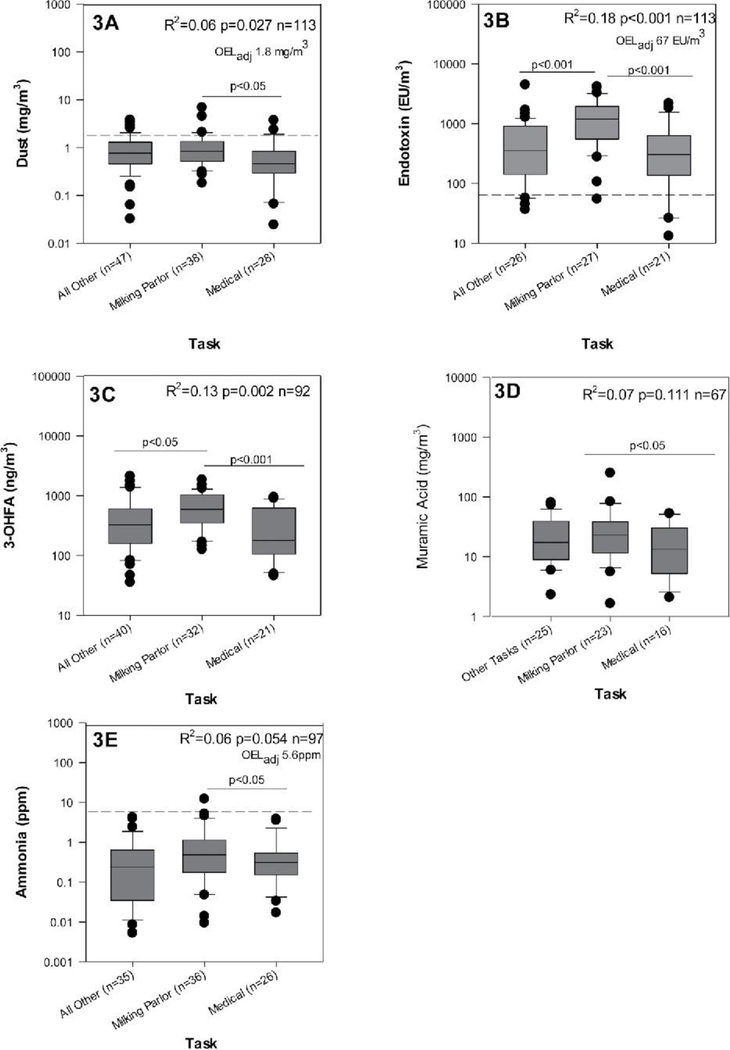
Description:Dairy workers experience a high degree of bioaerosol exposure, composed of an array of biological and chemical constituents, which have been tied to adverse health effects. A better understanding of the variation in the magnitude and composition of exposures by task is needed to inform worker protection strategies. To characterize the levels and types of exposures, 115 dairy workers grouped into three task categories on nine farms in the high plains Western United States underwent personal monitoring for inhalable dust, endotoxin, 3-hydroxy fatty acids (3-OHFA), muramic acid, ergosterol, and ammonia through one work shift. Eighty-nine percent of dairy workers were exposed to endotoxin at concentrations exceeding the recommended exposure guidelines (adjusted for a long work shift). The proportion of workers with exposures exceeding recommended guidelines was lower for inhalable dust (12%), and ammonia (1%). Ergosterol exposures were only measurable on 28% of samples, primarily among medical workers and feed handlers. Milking parlor workers were exposed to significantly higher inhalable dust, endotoxin, 3-OHFA, ammonia, and muramic acid concentrations compared to workers performing other tasks. Development of large modern dairies has successfully made progress in reducing worker exposures and lung disease prevalence. However, exposure to endotoxin, dust, and ammonia continues to present a significant risk to worker health on North American dairies, especially for workers in milking parlors. This study was among the first to concurrently evaluate occupational exposure to assayable endotoxin (lipid A), 3-hydroxy fatty acids or 3-OHFA (a chemical measure of cell bound and noncell-bound endotoxins), muramic acid, ergosterol, and ammonia among workers on Western U.S. dairies. There remains a need for cost-effective, culturally acceptable intervention strategies integrated in OHS Risk Management and production systems to further optimize worker health and farm productivity.
-
Subjects:
- Article
- 3-hydroxy fatty acid
- bioaerosol
- dairy
- endotoxin
- ergosterol
- muramic acid
- organic dust
- task
- Adolescent
- Adult
- Aged
- Air Pollutants, Occupational
- Ammonia
- Colorado
- Dairying
- Dust
- Endotoxins
- Ergosterol
- Fatty Acids
- Female
- Humans
- Male
- Middle Aged
- Muramic Acids
- Occupational Exposure
- Particulate Matter
- Wyoming
-
Source:J Occup Environ Hyg. 15(3):182-193
-
Pubmed ID:29157144
-
Pubmed Central ID:PMC8641559
-
Document Type:
-
Funding:
-
Volume:15
-
Issue:3
-
Download URL:
-
File Type:
 [PDF - 967.99 KB]
 -
Collection(s):
-
Main Document Checksum:urn:sha256:08b276a34c64c9dc5729b6f168693e2dc8b33dd81a7ba108740921c7f9268f64
Supporting Files


File Language:
English
 Was this page helpful?
 Found an issue?



CDC STACKS serves as an archival repository of CDC-published products including
scientific findings, journal articles, guidelines, recommendations, or other public health information authored or
co-authored by CDC or funded partners.
As a repository, CDC STACKS retains documents in their original published format to ensure public access to scientific information.
As a repository, CDC STACKS retains documents in their original published format to ensure public access to scientific information.
You May Also Like
COLLECTION
CDC Public Access