



Treatment Practices for Adults With Candidemia at 9 Active Surveillance Sites—United States, 2017–2018
Supporting Files

-
11 02 2021
-
Available in CDC Stacks on 2021-11-23T00:00:00Z
File Language:
English
Details
-
Alternative Title:Clin Infect Dis
-
Personal Author:Gold, Jeremy A. W. ; Seagle, Emma E. ; Nadle, Joelle ; Barter, Devra M. ; Czaja, Christopher A. ; Johnston, Helen ; Farley, Monica M. ; Thomas, Stepy ; Harrison, Lee H. ; Fischer, Jill ; Pattee, Brittany ; Mody, Rajal K. ; Phipps, Erin C. ; Davis, Sarah Shrum ; Tesini, Brenda L. ; Zhang, Alexia Y. ; Markus, Tiffanie M. ; Schaffner, William ; Lockhart, Shawn R. ; Vallabhaneni, Snigdha ; Jackson, Brendan R. ; Lyman, Meghan
-
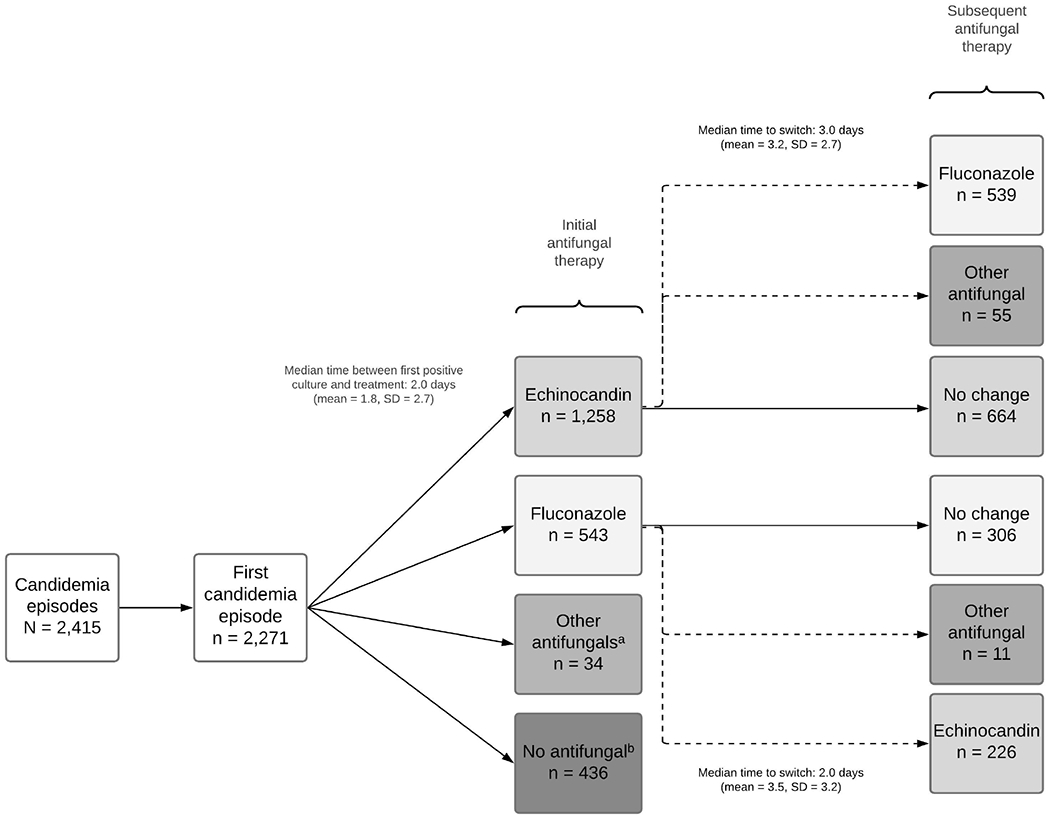
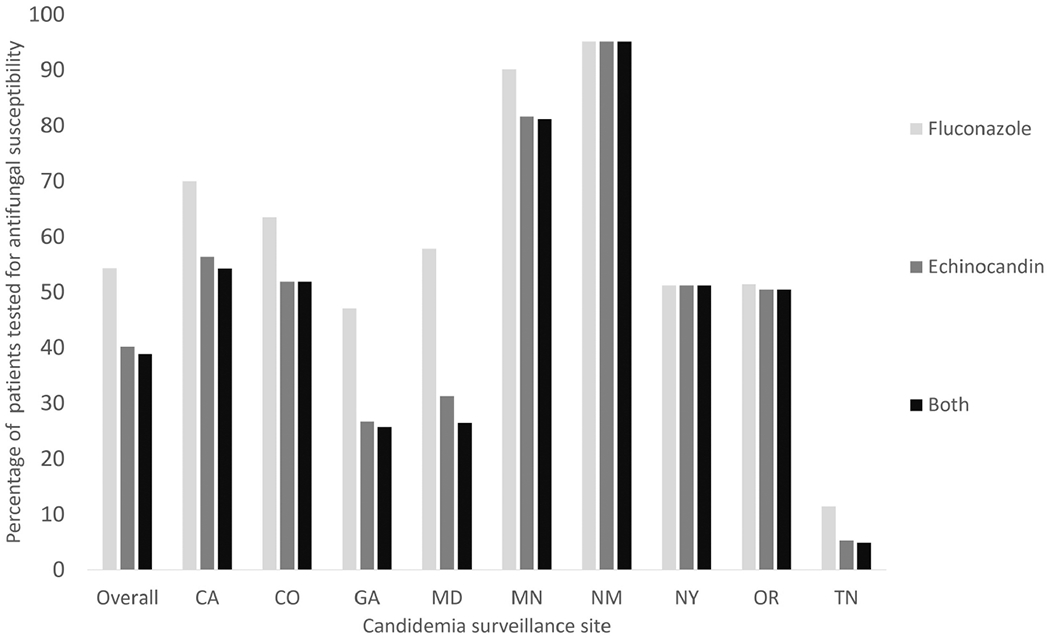
Description:Background. ; Candidemia is a common opportunistic infection causing substantial morbidity and mortality. Because of an increasing proportion of non-albicans Candida species and rising antifungal drug resistance, the Infectious Diseases Society of America (IDSA) changed treatment guidelines in 2016 to recommend echinocandins over fluconazole as first-line treatment for adults with candidemia. We describe candidemia treatment practices and adherence to the updated guidelines. ; Methods. ; During 2017–2018, the Emerging Infections Program conducted active population-based candidemia surveillance at 9 US sites using a standardized case definition. We assessed factors associated with initial antifungal treatment for the first candidemia case among adults using multivariable logistic regression models. To identify instances of potentially inappropriate treatment, we compared the first antifungal drug received with species and antifungal susceptibility testing (AFST) results from initial blood cultures. ; Results. ; Among 1835 patients who received antifungal treatment, 1258 (68.6%) received an echinocandin and 543 (29.6%) received fluconazole as initial treatment. Cirrhosis (adjusted odds ratio = 2.06; 95% confidence interval, 1.29–3.29) was the only underlying medical condition significantly associated with initial receipt of an echinocandin (versus fluconazole). More than one-half (n = 304, 56.0%) of patients initially treated with fluconazole grew a non-albicans species. Among 265 patients initially treated with fluconazole and with fluconazole AFST results, 28 (10.6%) had a fluconazole-resistant isolate. ; Conclusions. ; A substantial proportion of patients with candidemia were initially treated with fluconazole, resulting in potentially inappropriate treatment for those involving non-albicans or fluconazole-resistant species. Reasons for nonadherence to IDSA guidelines should be evaluated, and clinician education is needed.
-
Subjects:
-
Source:Clin Infect Dis. 73(9):1609-1616
-
Pubmed ID:34079987
-
Pubmed Central ID:PMC8609664
-
Document Type:
-
Funding:
-
Place as Subject:
-
Volume:73
-
Issue:9
-
Download URL:
-
File Type:
 [PDF - 462.04 KB]
 -
Collection(s):
-
Main Document Checksum:urn:sha256:04252a5b4fcc6f1c0ab0df04d0d9bff3802f8d59df87b65d1e08f716c031ce48
Supporting Files


File Language:
English
 Was this page helpful?
 Found an issue?

CDC STACKS serves as an archival repository of CDC-published products including
scientific findings, journal articles, guidelines, recommendations, or other public health information authored or
co-authored by CDC or funded partners.
As a repository, CDC STACKS retains documents in their original published format to ensure public access to scientific information.
As a repository, CDC STACKS retains documents in their original published format to ensure public access to scientific information.
You May Also Like
COLLECTION
CDC Public Access