


Web-Based Genome Analysis of Bacterial Meningitis Pathogens for Public Health Applications Using the Bacterial Meningitis Genomic Analysis Platform (BMGAP)
Supporting Files

-
11 26 2020
-
File Language:
English
Details
-
Alternative Title:Front Genet
-
Personal Author:
-
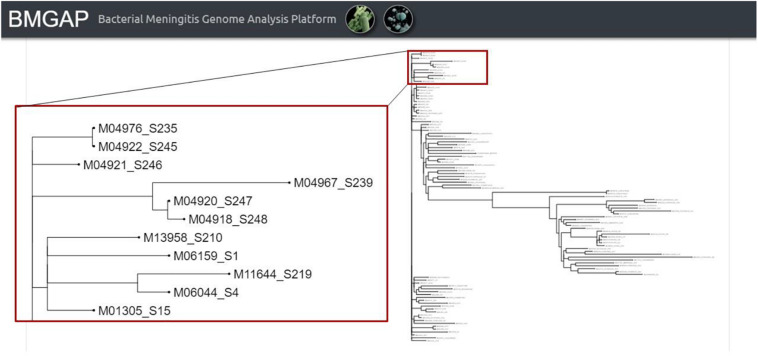
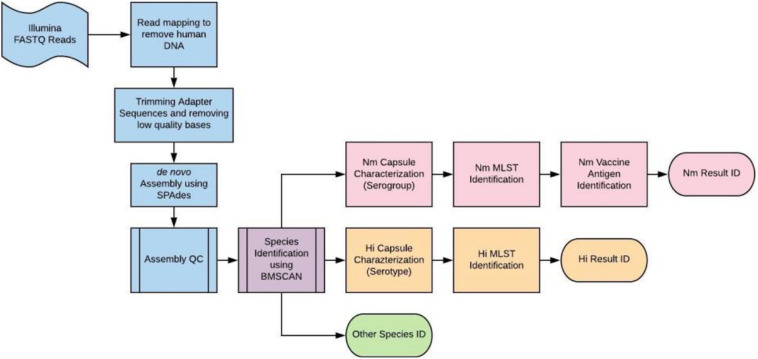
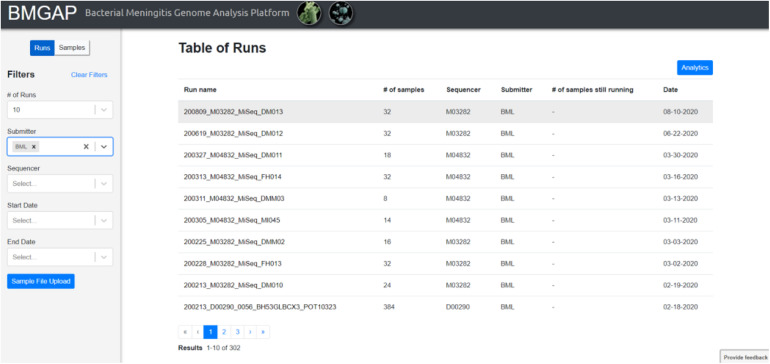
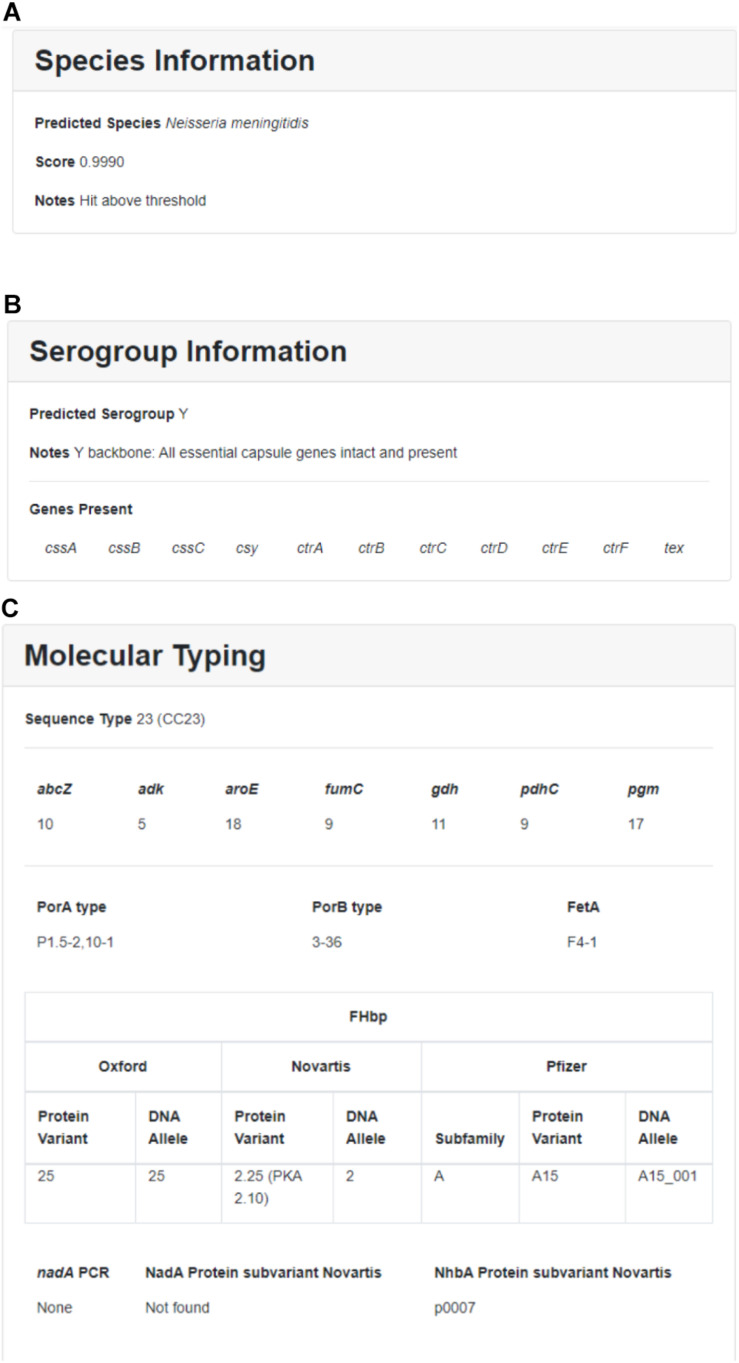
Description:Effective laboratory-based surveillance and public health response to bacterial meningitis depends on timely characterization of bacterial meningitis pathogens. Traditionally, characterizing bacterial meningitis pathogens such as | (Nm) and | (Hi) required several biochemical and molecular tests. Whole genome sequencing (WGS) has enabled the development of pipelines capable of characterizing the given pathogen with equivalent results to many of the traditional tests. Here, we present the Bacterial Meningitis Genomic Analysis Platform (BMGAP): a secure, web-accessible informatics platform that facilitates automated analysis of WGS data in public health laboratories. BMGAP is a pipeline comprised of several components, including both widely used, open-source third-party software and customized analysis modules for the specific target pathogens. BMGAP performs | draft genome assembly and identifies the bacterial species by whole-genome comparisons against a curated reference collection of 17 focal species including Nm, Hi, and other closely related species. Genomes identified as Nm or Hi undergo multi-locus sequence typing (MLST) and capsule characterization. Further typing information is captured from Nm genomes, such as peptides for the vaccine antigens FHbp, NadA, and NhbA. Assembled genomes are retained in the BMGAP database, serving as a repository for genomic comparisons. BMGAP's species identification and capsule characterization modules were validated using PCR and slide agglutination from 446 bacterial invasive isolates (273 Nm from nine different serogroups, 150 Hi from seven different serotypes, and 23 from nine other species) collected from 2017 to 2019 through surveillance programs. Among the validation isolates, BMGAP correctly identified the species for all 440 isolates (100% sensitivity and specificity) and accurately characterized all Nm serogroups (99% sensitivity and 98% specificity) and Hi serotypes (100% sensitivity and specificity). BMGAP provides an automated, multi-species analysis pipeline that can be extended to include additional analysis modules as needed. This provides easy-to-interpret and validated Nm and Hi genome analysis capacity to public health laboratories and collaborators. As the BMGAP database accumulates more genomic data, it grows as a valuable resource for rapid comparative genomic analyses during outbreak investigations.
-
Subjects:
-
Source:Front Genet. 2020; 11
-
Pubmed ID:33324449
-
Pubmed Central ID:PMC7726215
-
Document Type:
-
Funding:
-
Volume:11
-
Collection(s):
-
Main Document Checksum:urn:sha256:d4597f33ec0a2618e250da413a2ee6c43bd681eb6c5396eae305458e4ee8b51e
-
Download URL:
-
File Type:
 [PDF
- 1.30 MB
]
[PDF
- 1.30 MB
]
Supporting Files


File Language:
English
ON THIS PAGE

CDC STACKS serves as an archival repository of CDC-published products including
scientific findings,
journal articles, guidelines, recommendations, or other public health information authored or
co-authored by CDC or funded partners.
As a repository, CDC STACKS retains documents in their original published format to ensure public access to scientific information.
As a repository, CDC STACKS retains documents in their original published format to ensure public access to scientific information.
You May Also Like
COLLECTION
CDC Public Access