



A Pose Independent Method for Accurate and Precise Body Composition from 3D Optical Scans
Supporting Files

-
11 2021 ; 11-2021
-
Available in CDC Stacks on 2022-11-01T00:00:00Z
File Language:
English
Details
-
Alternative Title:Obesity (Silver Spring)
-
Personal Author:Wong, Michael C
 ;
Ng, Bennett K
;
Tian, Isaac
;
Sobhiyeh, Sima
;
Pagano, Ian
;
Dechenaud, Marcelline
;
Kennedy, Samantha F
;
Liu, Yong E
;
Kelly, Nisa
;
Chow, Dominic
;
Garber, Andrea K
;
Maskarinec, Gertraud
;
Pujades, Sergi
;
Black, Michael J
;
Curless, Brian
;
Heymsfield, Steven B
;
Shepherd, John A
;
Ng, Bennett K
;
Tian, Isaac
;
Sobhiyeh, Sima
;
Pagano, Ian
;
Dechenaud, Marcelline
;
Kennedy, Samantha F
;
Liu, Yong E
;
Kelly, Nisa
;
Chow, Dominic
;
Garber, Andrea K
;
Maskarinec, Gertraud
;
Pujades, Sergi
;
Black, Michael J
;
Curless, Brian
;
Heymsfield, Steven B
;
Shepherd, John A
-
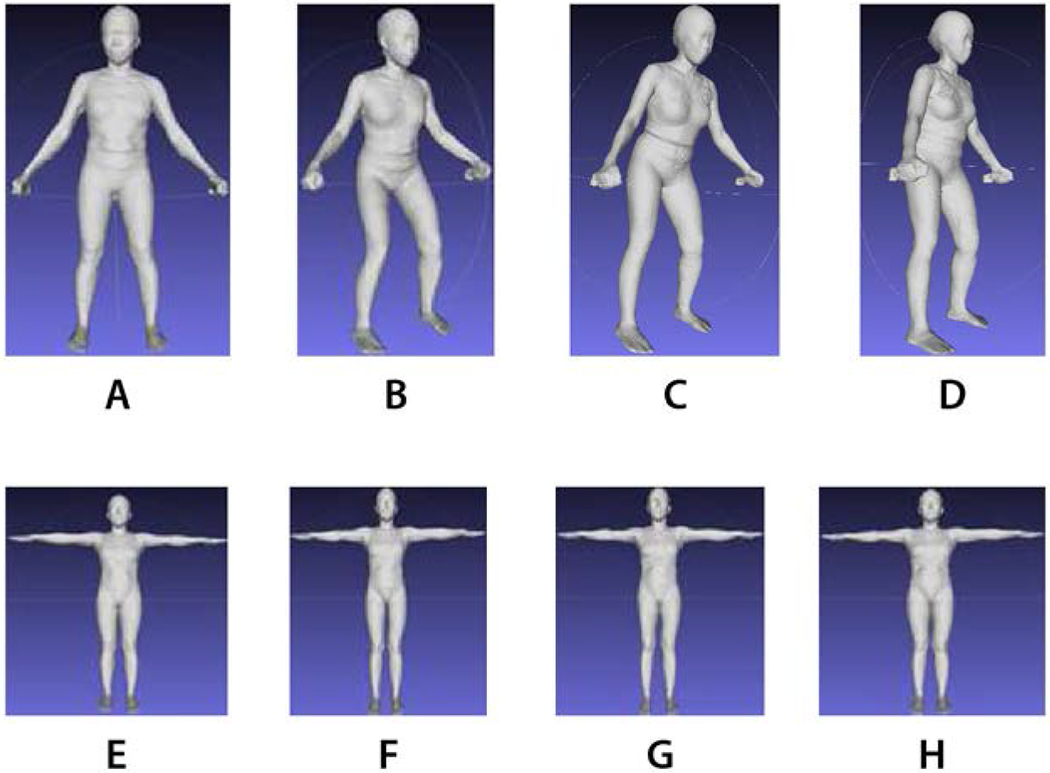
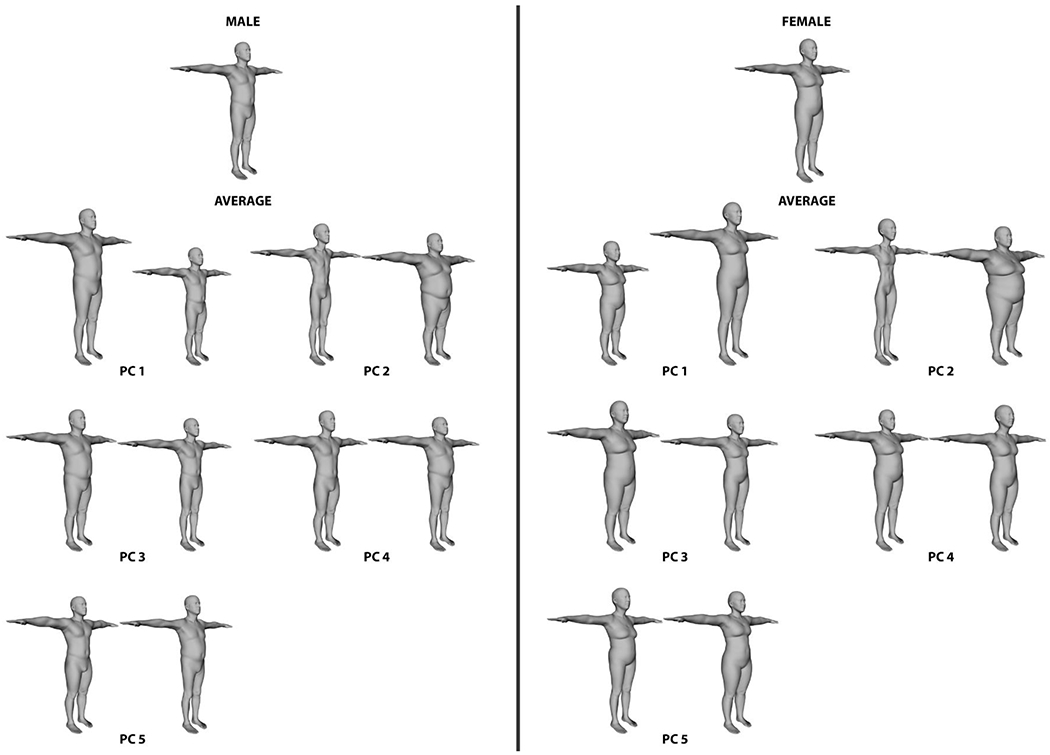
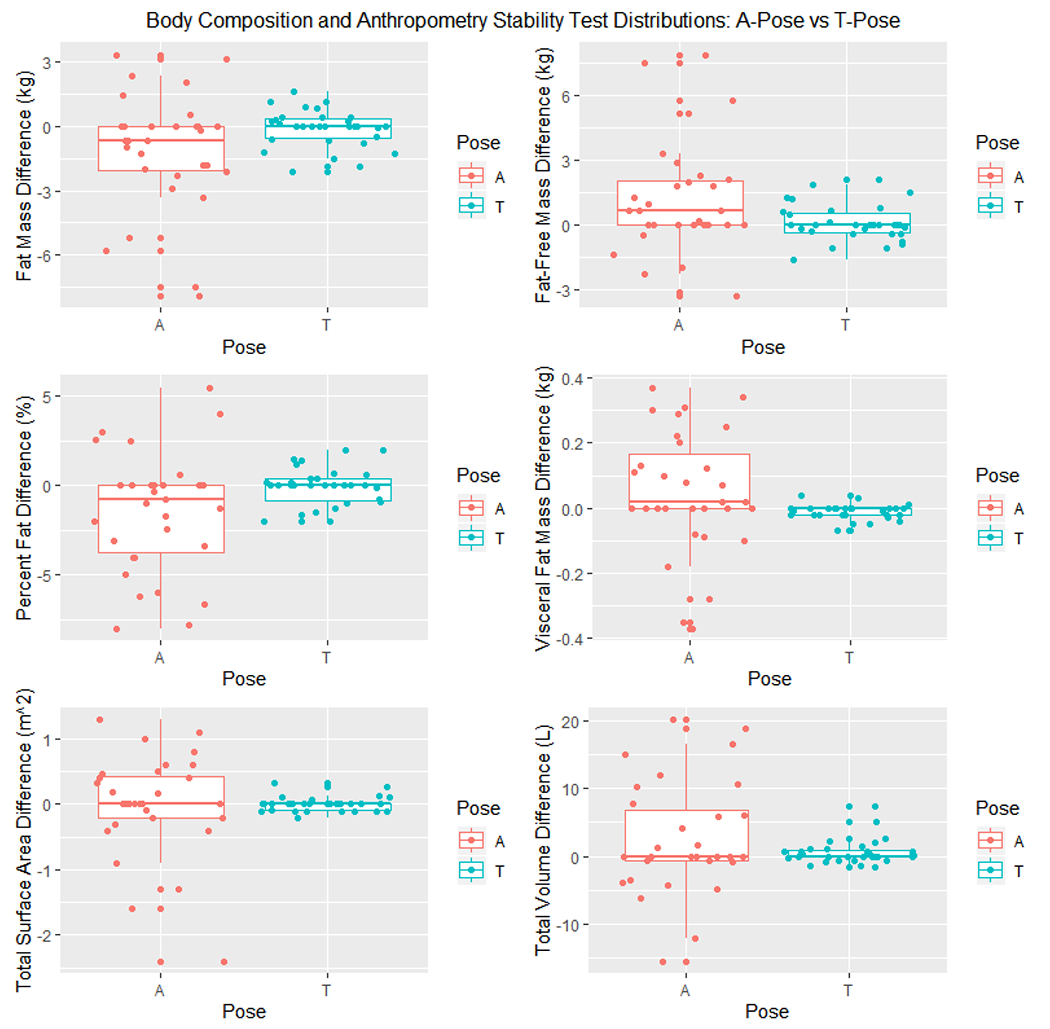
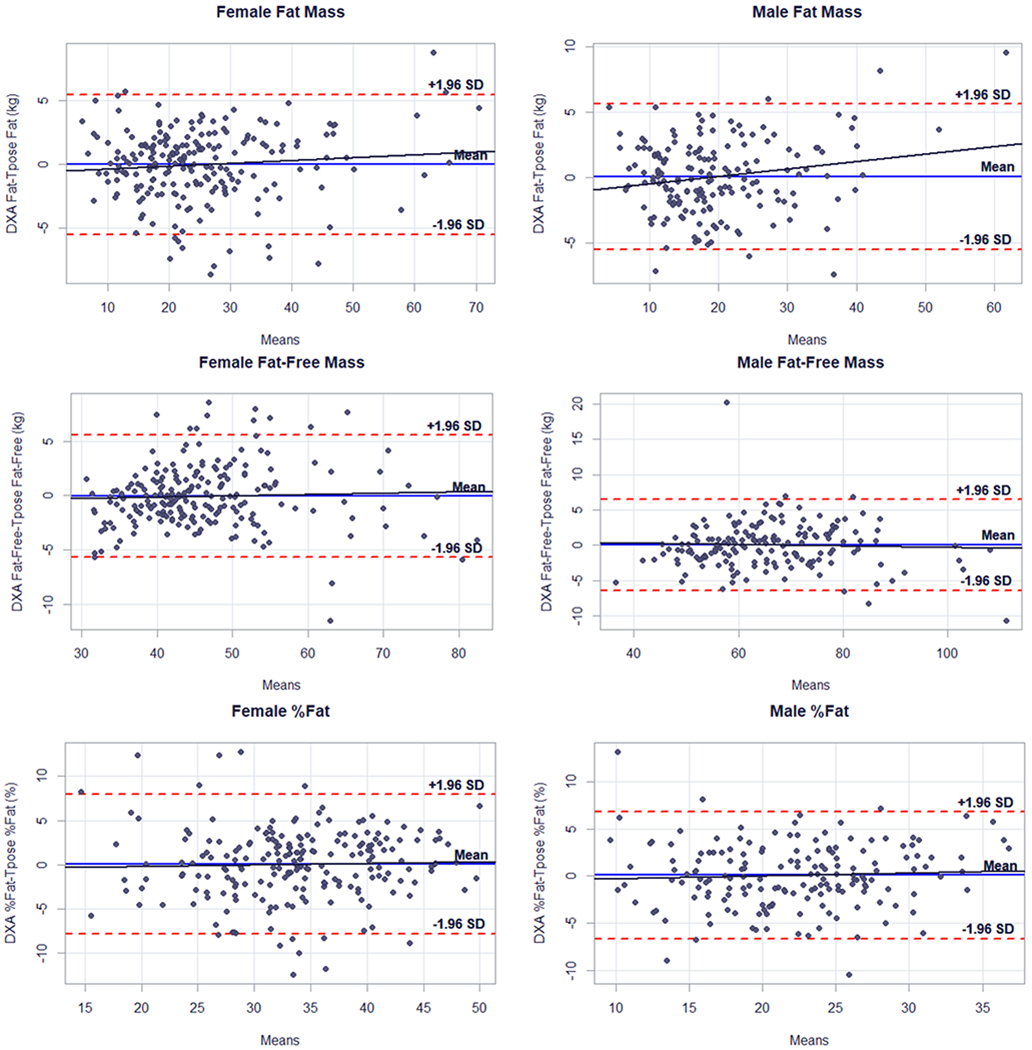
Description:Objective: ; To investigate if digitally reposing three-dimensional optical (3DO) whole-body scans to a standardized pose would improve body composition accuracy and precision regardless of initial pose. ; Methods: ; Healthy adults (n=540), stratified by sex, BMI, and age, completed whole-body 3DO and dual-energy X-ray absorptiometry (DXA) scans in the Shape Up! Adults study. The 3DO mesh vertices were represented with standardized templates and a low-dimensional space by principal component analysis (stratified by sex). Total sample was split into a training (80%) and test (20%) set for both males and females. Stepwise linear regression was used to build prediction models for body composition and anthropometry outputs using 3DO principal components (PCs). ; Results: ; The analysis included 472 participants after exclusions. After reposing, three PCs described 95% of the shape variance in the male and female training sets. 3DO body composition accuracy compared to DXA was: fat mass R2 = 0.91 male, 0.94 female; fat-free mass R2 = 0.95 male, 0.92 female; visceral fat mass R2 = 0.77 male, 0.79 female. ; Conclusions: ; Reposed 3DO body shape PCs produced more accurate and precise body composition models that may be used in clinical or nonclinical settings when DXA is unavailable or when frequent ionizing radiation exposure is unwanted.
-
Subjects:
-
Keywords:
- Imaging
- Principal Component Analysis
- Body Composition
- Dual Energy X-ray Absorptiometry
- Obesity
- Metabolic Disease
- 3D scanning
- Body Shape
- Alzheimer's disease
- Alzheimer's disease sequencing project
- antiviral agents
- herpes simplex
- human papillomavirus
- torque teno viruses
- whole exome sequencing
- whole genome sequencing
-
Source:Obesity (Silver Spring). 29(11):1835-1847
-
Pubmed ID:34549543
-
Pubmed Central ID:PMC8570991
-
Document Type:
-
Funding:
-
Volume:29
-
Issue:11
-
Download URL:
-
File Type:
 [PDF - 659.18 KB]
 -
Collection(s):
-
Main Document Checksum:urn:sha-512:0233e78f1c5e12b111a24f14f4897e50ae813626571082f4c63a51cf020eee06db81d3bcff4b63997c4780cb9b532f00ae8ba968ac35407d1b7c7e3c30089c07
Supporting Files


File Language:
English
 Was this page helpful?
 Found an issue?



CDC STACKS serves as an archival repository of CDC-published products including
scientific findings, journal articles, guidelines, recommendations, or other public health information authored or
co-authored by CDC or funded partners.
As a repository, CDC STACKS retains documents in their original published format to ensure public access to scientific information.
As a repository, CDC STACKS retains documents in their original published format to ensure public access to scientific information.
You May Also Like
COLLECTION
CDC Public Access