



Assessment of Contraceptive Use in Puerto Rico during the 2016 Zika Virus Outbreak
Supporting Files

-
6 2020
-
Available in CDC Stacks on October 21, 2021, 12:00 AM
File Language:
English
Details
-
Alternative Title:Contraception
-
Personal Author:
-
Description:Objectives
The objectives of this analysis were to 1) estimate prevalence of contraceptive use among women at risk for unintended pregnancy and 2) identify correlates of contraceptive use among women with ongoing or potential need for contraceptive services in Puerto Rico during the 2016 Zika virus (ZIKV) outbreak.
Study Design
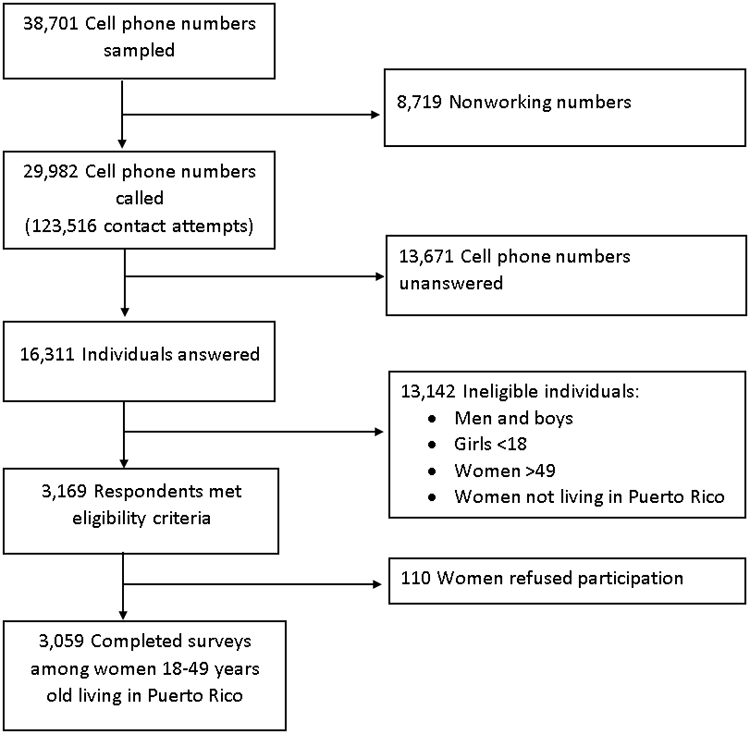
We conducted a cell-phone survey July–November, 2016. Women aged 18–49 years living in Puerto Rico were eligible. We completed 3,059 interviews; the overall response rate was 69.2%. After weighting, the data provide population-based estimates. For this analysis, we included women at risk for unintended pregnancy, and assessed ongoing or potential need for contraceptive services in this group, excluding women using permanent contraceptive methods.
Results
Most women reported using contraception (82.8%), and use increased with age. Female sterilization and male condoms were most frequently reported (40.8% and 17.1%, respectively). Among women with ongoing or potential need for contraceptive services, 24.7% talked to a healthcare provider about ZIKV, and 31.2% reported a change in childbearing intentions due to ZIKV. Most women were at least a little worried about getting infected with ZIKV (74.3%) or having a baby with a birth defect (80.9%). Being very worried about getting infected with ZIKV and already having Zika were significantly associated with use of any contraception (adjusted prevalence ratio: 1.19, 95% CI: 1.03–1.38 and 1.32, 95% CI: 1.01–1.72, respectively).
Conclusions
These findings underscore the need for regular contraceptive prevalence studies to inform programs about contraceptive needs, especially during public health emergencies.
Implications:
When the 2016 Zika virus outbreak began in Puerto Rico there were no recent population-based data available on contraceptive prevalence. To fill this information gap, we conducted a population-based survey. Our findings provided baseline contraceptive prevalence estimates to support response planning and allocation of health resources. -
Subjects:
-
Source:Contraception. 101(6):405-411
-
Pubmed ID:32194040
-
Pubmed Central ID:PMC8530539
-
Document Type:
-
Funding:
-
Volume:101
-
Issue:6
-
Download URL:
-
File Type:
 [PDF - 140.30 KB]
 -
Collection(s):
-
Main Document Checksum:urn:sha-512:04abaf73f00a69d06f0a0e2ec2ae3a8a3dc488da7ef39254c8142bdad6385053544b0c64da92ec372de786597edf8347f5d8ee4455857a17803f6ac9f2c41dc5
Supporting Files


File Language:
English
 Was this page helpful?
 Found an issue?

CDC STACKS serves as an archival repository of CDC-published products including
scientific findings, journal articles, guidelines, recommendations, or other public health information authored or
co-authored by CDC or funded partners.
As a repository, CDC STACKS retains documents in their original published format to ensure public access to scientific information.
As a repository, CDC STACKS retains documents in their original published format to ensure public access to scientific information.
You May Also Like
COLLECTION
CDC Public Access