



Human JCV Infections as a Bio-Anthropological Marker of the Formation of Brazilian Amazonian Populations
Supporting Files
Public Domain

-
Oct 12 2012
File Language:
English
Details
-
Alternative Title:PLoS One
-
Personal Author:
-
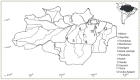
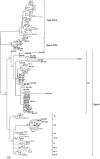
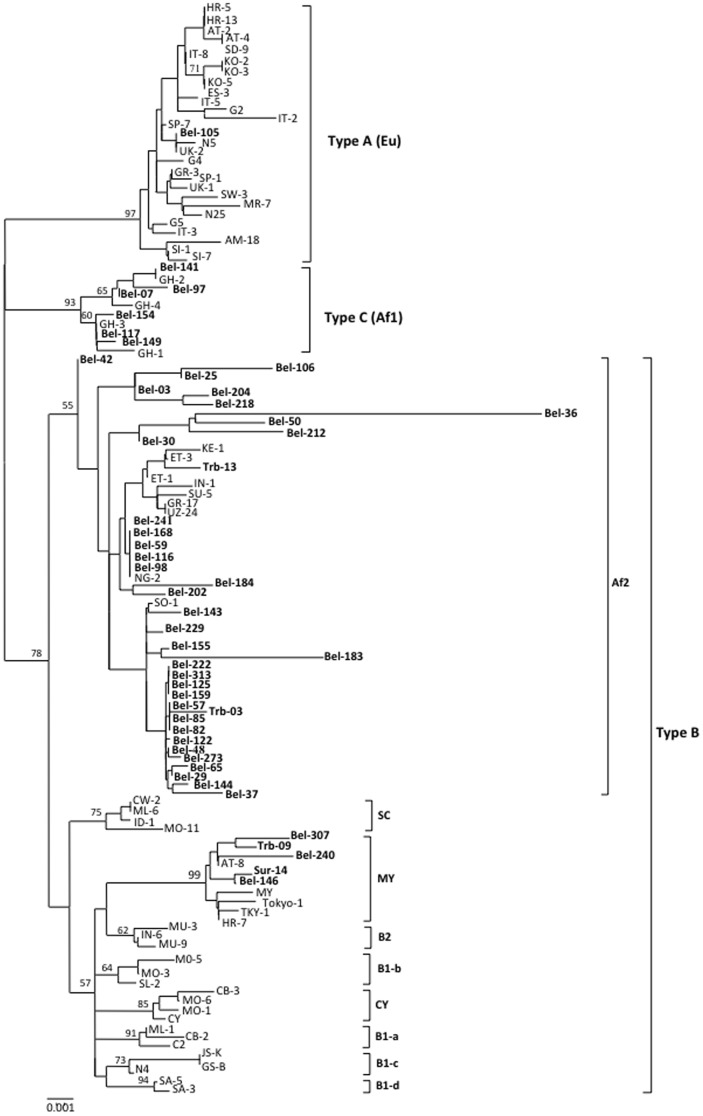
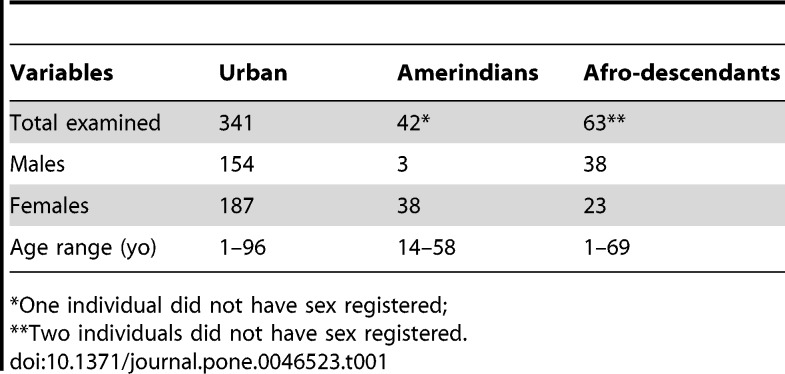
Description:JC polyomavirus (JCV) is a member of the Polyomaviridae family. It presents a tropism to kidney cells, and the infection occurs in a variety of human population groups of different ethnic background. The present study investigated the prevalence of JCV infection among human populations from the Brazilian Amazon region, and describes the molecular and phylogenetic features of the virus. Urine samples from two urban groups of Belém (healthy subjects), one Brazilian Afro-descendant "quilombo" from the Rio Trombetas region, and native Indians from the Wai-Wai, Urubu-Kaapor, Tembé, Assurini, Arara do Laranjal, Aukre, Parakanã, Surui and Munduruku villages were investigated for the presence of the virus by amplifying VP1 (230 bp) and IG (610 bp) regions using a polymerase chain reaction. Nucleotide sequences (440 nucleotides, nt) from 48 samples were submitted to phylogenetic analysis. The results confirmed the occurrence of types A (subtype EU), B (subtypes Af-2, African and MY, Asiatic) and C (subtype Af-1) among healthy subjects; type B, subtypes Af-2 and MY, among the Afro-Brazilians; and type B, subtype MY, within the Surui Indians. An unexpected result was the detection of another polyomavirus, the BKV, among Afro-descendants. The present study shows, for the first time, the occurrence of JC and BK polyomaviruses infecting humans from the Brazilian Amazon region. The results show a large genetic variability of strains circulating in the region, infecting a large group of individuals. The presence of European, Asiatic and African subtypes associated to the ethnic origin of the population samples investigated herein, highlights the idea that JCV is a fairly good marker for studying the early migration of human populations, reflecting their early and late history. Furthermore, the identification of the specific mutations associated to the virus subtypes, suggests that these mutations have occurred after the entrance of the virus in the Amazon region of Brazil.
-
Subjects:
-
Source:PLoS One. 2012; 7(10).
-
Document Type:
-
Place as Subject:
-
Volume:7
-
Issue:10
-
Download URL:
-
File Type:
 [PDF - 389.47 KB]
 -
Collection(s):
-
Main Document Checksum:urn:sha256:a2e70fc8b1afb6eb900c9e7d20e8d9661cda4c3bb482c413f7bf83ccfc45e38a
Supporting Files


File Language:
English
 Was this page helpful?
 Found an issue?



CDC STACKS serves as an archival repository of CDC-published products including
scientific findings, journal articles, guidelines, recommendations, or other public health information authored or
co-authored by CDC or funded partners.
As a repository, CDC STACKS retains documents in their original published format to ensure public access to scientific information.
As a repository, CDC STACKS retains documents in their original published format to ensure public access to scientific information.
You May Also Like
COLLECTION
CDC Public Access