



Safety Monitoring of an Additional Dose of COVID-19 Vaccine — United States, August 12–September 19, 2021
Supporting Files
Public Domain

-
10 01 2021
File Language:
English
Details
-
Journal Article:Morbidity and Mortality Weekly Report (MMWR)
-
Personal Author:
-
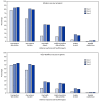
Description:On August 12, 2021, the Food and Drug Administration (FDA) amended Emergency Use Authorizations (EUAs) for the Pfizer-BioNTech and Moderna Covid-19 Vaccines to authorize administration of an additional dose after completion of a primary vaccination series to eligible persons with moderate to severe immunocompromising conditions (1,2). On September 22, 2021, FDA authorized an additional dose of Pfizer-BioNTech vaccine ≥6 months after completion of the primary series among persons aged ≥65 years, at high risk for severe COVID-19, or whose occupational or institutional exposure puts them at high risk for COVID-19 (1). Results from a phase 3 clinical trial conducted by Pfizer-BioNTech that included 306 persons aged 18-55 years showed that adverse reactions after receipt of a third dose administered 5-8 months after completion of a 2-dose primary mRNA vaccination series were similar to those reported after receipt of dose 2; these adverse reactions included mild to moderate injection site and systemic reactions (3). CDC developed v-safe, a voluntary, smartphone-based safety Surveillance system, to provide information on adverse reactions after COVID-19 vaccination. Coincident with authorization of an additional dose for persons with immunocompromising conditions, the v-safe platform was updated to allow registrants to enter information about additional doses of COVID-19 vaccine received. During August 12-September 19, 2021, a total of 22,191 v-safe registrants reported receipt of an additional dose of COVID-19 vaccine. Most (97.6%) reported a primary 2-dose mRNA vaccination series followed by a third dose of the same vaccine. Among those who completed a health check-in survey for all 3 doses (12,591; 58.1%), 79.4% and 74.1% reported local or systemic reactions, respectively, after dose 3, compared with 77.6% and 76.5% who reported local or systemic reactions, respectively, after dose 2. These initial findings indicate no unexpected patterns of adverse reactions after an additional dose of COVID-19 vaccine; most of these adverse reactions were mild or moderate. CDC will continue to monitor vaccine safety, including the safety of additional doses of COVID-19 vaccine, and provide data to guide vaccine recommendations and protect public health.
-
Subjects:
- Adolescent
- Adult
- Adverse Drug Reaction Reporting Systems
- Aged
- Aged, 80 and over
- COVID-19
- COVID-19 Vaccines
- Child
- Child, Preschool
- CoronaVirus Infections
- Drug-Related Side Effects and Adverse Reactions
- Female
- Humans
- Infant
- Infant, Newborn
- Male
- Middle Aged
- Product Surveillance, Postmarketing
- Vaccines, Synthetic
- Young Adult
-
Source:MMWR Morbidity Mortal Weekly Rep. 70(39):1379-1384
-
Series:
-
DOI:
-
ISSN:0149-2195 (print) ; 1545-861X (digital)
-
Pubmed ID:34591835
-
Pubmed Central ID:PMC8486391
-
Document Type:
-
Place as Subject:
-
Pages in Document:6 pdf pages
-
Volume:70
-
Issue:39
-
Download URL:
-
File Type:
 [PDF - 146.62 KB]
 -
Collection(s):
-
Main Document Checksum:urn:sha-512:97f724e38173278c61ad1133b4327ffdbec331ef1e544dc780d4c610f137593e8df0c7d14393d6b8dbe79d7cfee5feabb0ee5afc210ce39b7c8e795371beccd1
Supporting Files


File Language:
English
 Was this page helpful?
 Found an issue?


CDC STACKS serves as an archival repository of CDC-published products including
scientific findings, journal articles, guidelines, recommendations, or other public health information authored or
co-authored by CDC or funded partners.
As a repository, CDC STACKS retains documents in their original published format to ensure public access to scientific information.
As a repository, CDC STACKS retains documents in their original published format to ensure public access to scientific information.
You May Also Like
COLLECTION
Morbidity and Mortality Weekly Report (MMWR)