


A Commentary on Current Diagnostic Challenges and Research Needs for Evaluating Reproductive Sequelae of Sexually Transmitted Infections
Supporting Files

-
8 16 2021
File Language:
English
Details
-
Alternative Title:J Infect Dis
-
Personal Author:
-
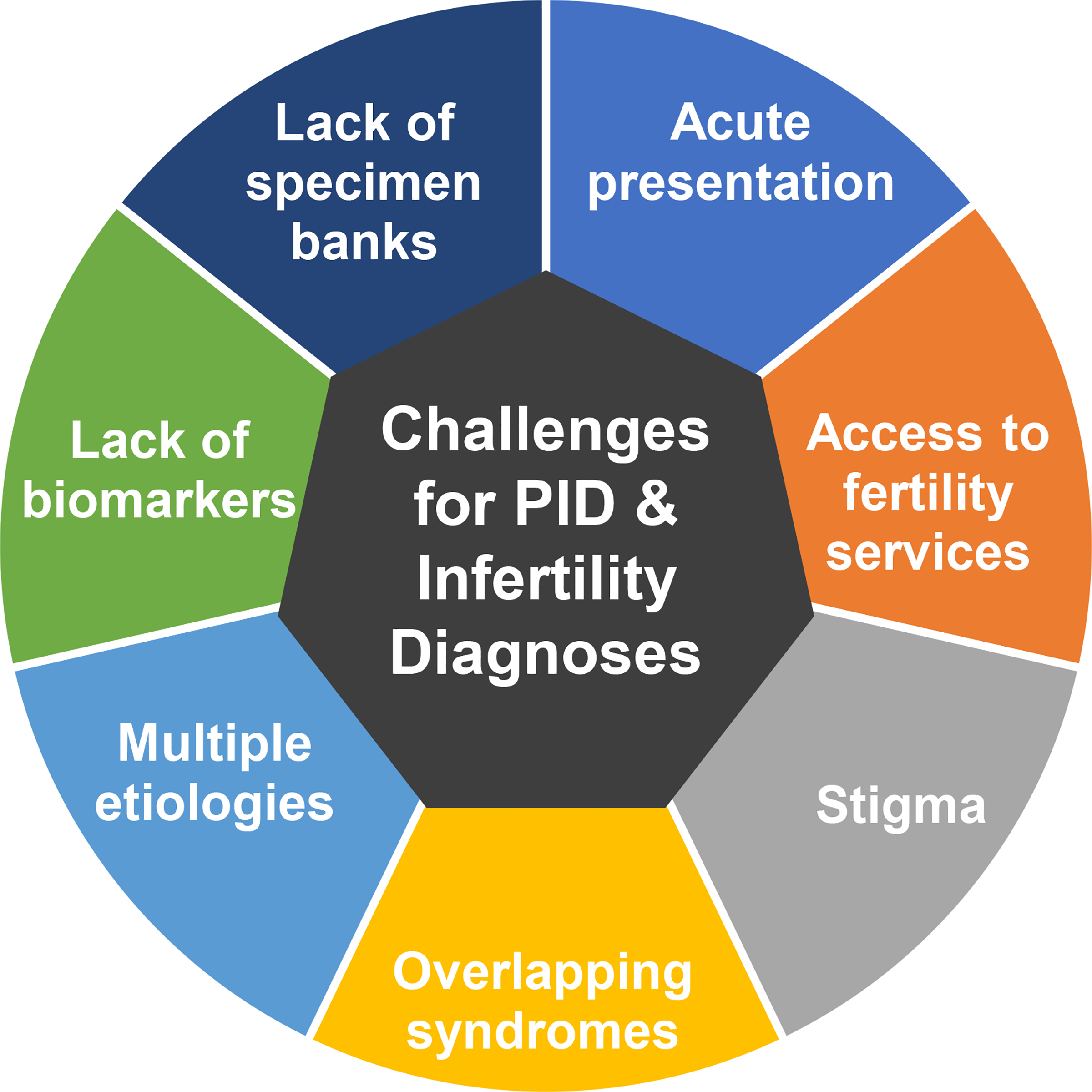
Description:Advancing the understanding of pelvic inflammatory disease (PID) requires access to advanced diagnostic approaches for evaluating reproductive sequelae of sexually transmitted infections (STIs). Current limitations of clinical criteria and advanced imaging technologies for diagnosing reproductive sequelae make diagnosis and surveillance of PID a challenge. We summarize and comment on major challenges in diagnostic evaluation of reproductive sequelae: limited point-of-care clinical diagnostic options for reproductive sequelae, economic and geographical obstacles to accessing state-of-the-art diagnostics, an expanding list of STIs that may cause reproductive sequelae and the complexities in evaluating them, and the need for coordinated research efforts to systematically evaluate biomarkers with gold-standard, well-defined specimens and associated clinical data. The future use of biomarkers in readily accessible mucosal or blood-derived specimens as a noninvasive approach to determining STI etiologies may be fruitful and requires more research. Biomarkers under consideration include cytokines, STI-specific antibody responses, and mRNA transcriptional profiles of inflammatory markers.
-
Subjects:
-
Source:J Infect Dis. 224(Suppl 2):S72-S74
-
Pubmed ID:34396409
-
Pubmed Central ID:PMC8499708
-
Document Type:
-
Funding:
-
Volume:224
-
Collection(s):
-
Main Document Checksum:urn:sha256:5e107add0aed581a527590a07adc6bfacfdc106816a6d7524952f0508d373f55
-
Download URL:
-
File Type:
 [PDF
- 202.61 KB
]
[PDF
- 202.61 KB
]
Supporting Files


File Language:
English
ON THIS PAGE

CDC STACKS serves as an archival repository of CDC-published products including
scientific findings,
journal articles, guidelines, recommendations, or other public health information authored or
co-authored by CDC or funded partners.
As a repository, CDC STACKS retains documents in their original published format to ensure public access to scientific information.
As a repository, CDC STACKS retains documents in their original published format to ensure public access to scientific information.
You May Also Like
COLLECTION
CDC Public Access