


Scale-up of home-based management of malaria based on rapid diagnostic tests and artemisinin-based combination therapy in a resource-poor country: results in Senegal
Supporting Files
Public Domain

-
Sep 25 2012
-
File Language:
English
Details
-
Alternative Title:Malar J
-
Personal Author:
-
Description:Background
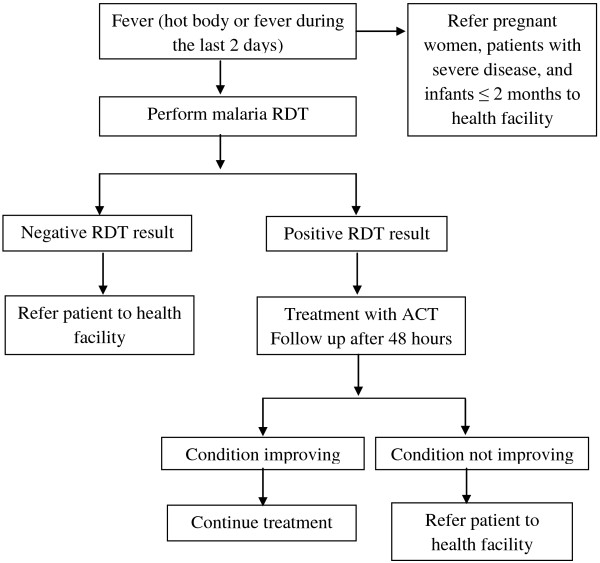
Effective case management of malaria requires prompt diagnosis and treatment within 24 hours. Home-based management of malaria (HMM) improves access to treatment for populations with limited access to health facilities. In Senegal, an HMM pilot study in 2008 demonstrated the feasibility of integrated use of RDTs and ACT in remote villages by volunteer Home Care Providers (HCP). Scale-up of the strategy began in 2009, reaching 408 villages in 2009 and 861 villages in 2010. This paper reports the results of the scale-up in the targeted communities and the impact of the strategy on malaria in the formal health sector.
Methods
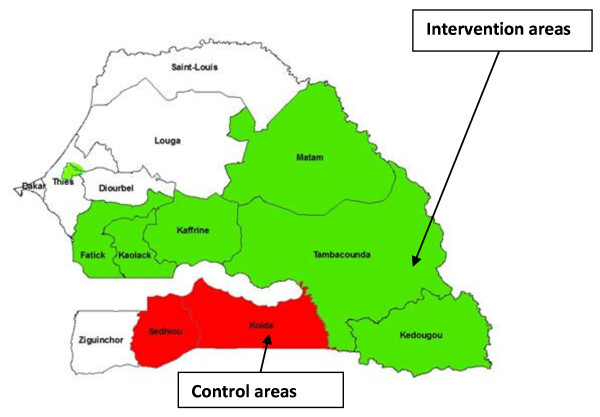
Data reported by the HCPs were used to assess their performance in 2009 and 2010, while routine malaria morbidity and mortality data were used to assess the impact of the HMM programme. Two high transmission regions where HMM was not implemented until 2010 were used as a comparison.
Results and discussion
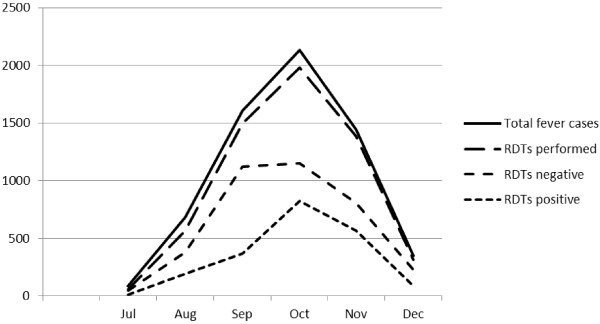
From July 2009 through May 2010, 12582 suspected cases were managed by HCPs, 93% (11672) of whom were tested with an RDT. Among those tested, 37% (4270) had a positive RDT, 97% (4126) of whom were reported treated and cured. Home care providers referred 6871 patients to health posts for management: 6486 with a negative RDT, 119 infants < 2 months, 105 pregnant women, and 161 severe cases. There were no deaths among these patients. In 2009 compared to 2008, incidence of suspected and confirmed malaria cases, all hospitalizations and malaria-related hospitalizations decreased in both intervention and comparison regions. Incidence of in-hospital deaths due to malaria decreased by 62.5% (95% CI 43.8-81.2) in the intervention regions, while the decrease in comparison regions was smaller and not statistically significant.
Conclusion
Home-based management of malaria including diagnosis with RDT and treatment based on test results is a promising strategy to improve the access of remote populations to prompt and effective management of uncomplicated malaria and to decrease mortality due to malaria. When scaled-up to serve remote village communities in the regions of Senegal with the highest malaria prevalence, home care providers demonstrated excellent adherence to guidelines, potentially contributing to a decrease in hospital deaths attributed to malaria.
-
Subjects:
-
Source:Malar J. 2012; 11:334.
-
Document Type:
-
Place as Subject:
-
Volume:11
-
Collection(s):
-
Main Document Checksum:urn:sha256:5ad7313431b72f39e4c72c94b405b38273e73f33f57dd88b521367b010cc5b56
-
Download URL:
-
File Type:
 [PDF
- 921.39 KB
]
[PDF
- 921.39 KB
]
Supporting Files


File Language:
English
ON THIS PAGE


CDC STACKS serves as an archival repository of CDC-published products including
scientific findings,
journal articles, guidelines, recommendations, or other public health information authored or
co-authored by CDC or funded partners.
As a repository, CDC STACKS retains documents in their original published format to ensure public access to scientific information.
As a repository, CDC STACKS retains documents in their original published format to ensure public access to scientific information.
You May Also Like
COLLECTION
CDC Public Access