



Characterizing initiation, use, and discontinuation of extended-release buprenorphine in a nationally representative United States commercially insured cohort
Supporting Files

-
8 01 2021
-
Available in CDC Stacks on August 01, 2022, 12:00 AM
File Language:
English
Details
-
Alternative Title:Drug Alcohol Depend
-
Personal Author:
-
Description:Background and Aims:
While the United States is in the midst of an overdose epidemic, effective treatments are underutilized and commonly discontinued. Innovations in medication delivery, including an extended-release formulations, have the potential to improve treatment access and reduce discontinuation. We sought to assess extended-release buprenorphine discontinuation among individuals with opioid use disorder (OUD) in a real-world, nationally representative cohort.
Setting:
United States
Participants:
Commercially insured individuals initiating one of four FDA-approved medications for opioid use disorder (MOUD) in 2018: extended-release buprenorphine, extended-release naltrexone, mucosal buprenorphine (mono- or co-formulated with naloxone), or methadone.
Measurements:
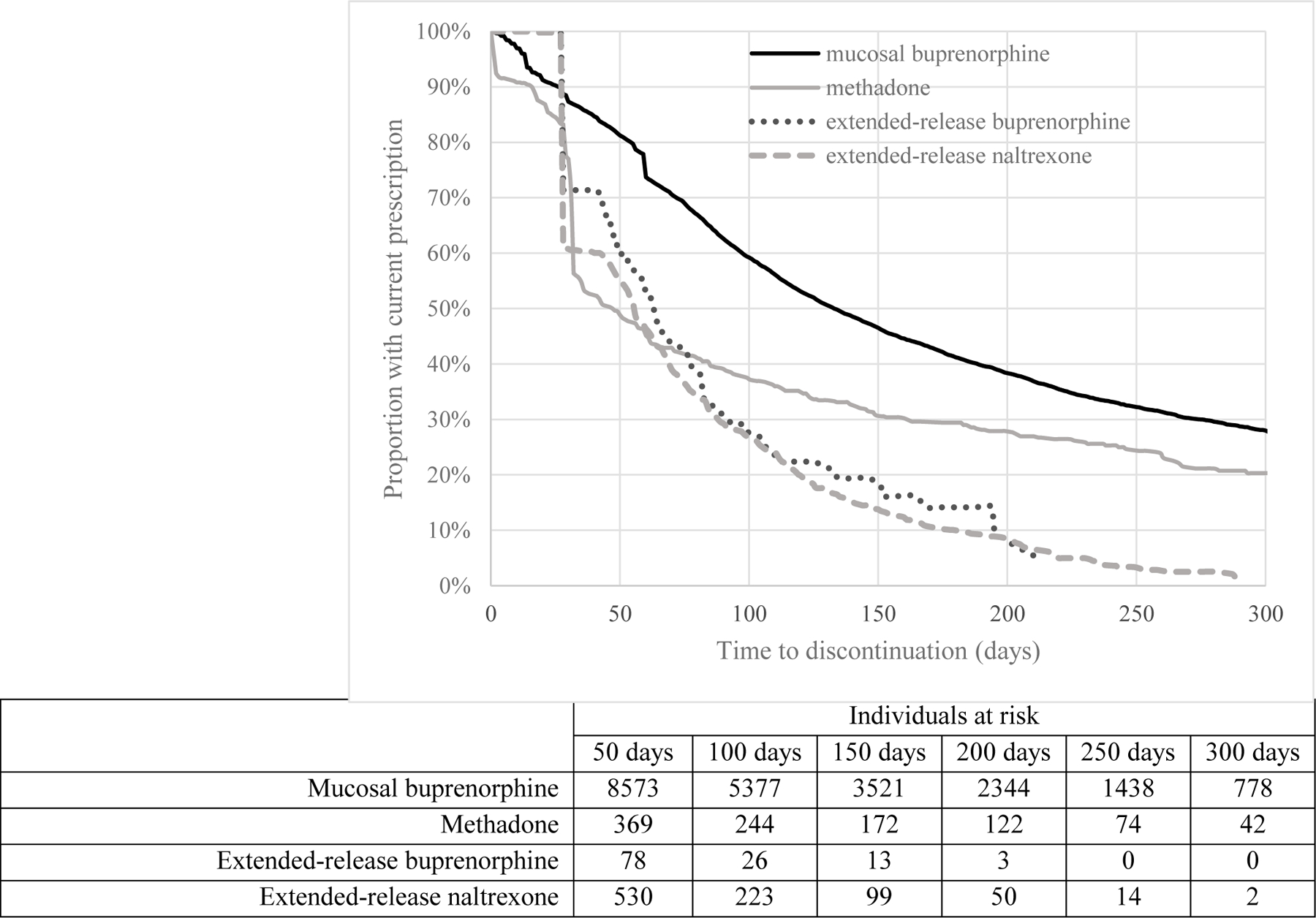
Our primary outcome was medication discontinuation, defined as a gap of more than 14 days between the end of one prescription or administration and the subsequent dose.
Findings:
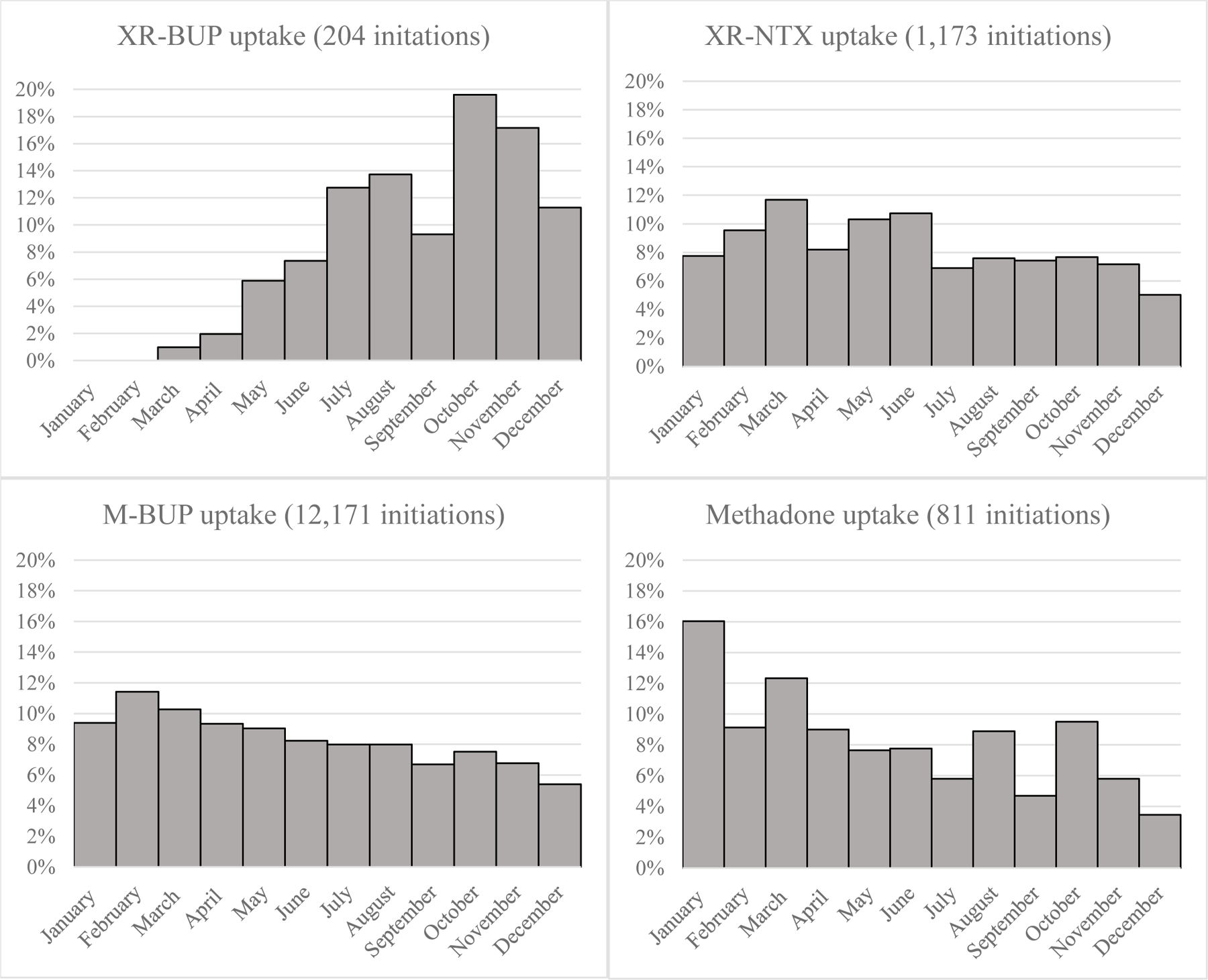
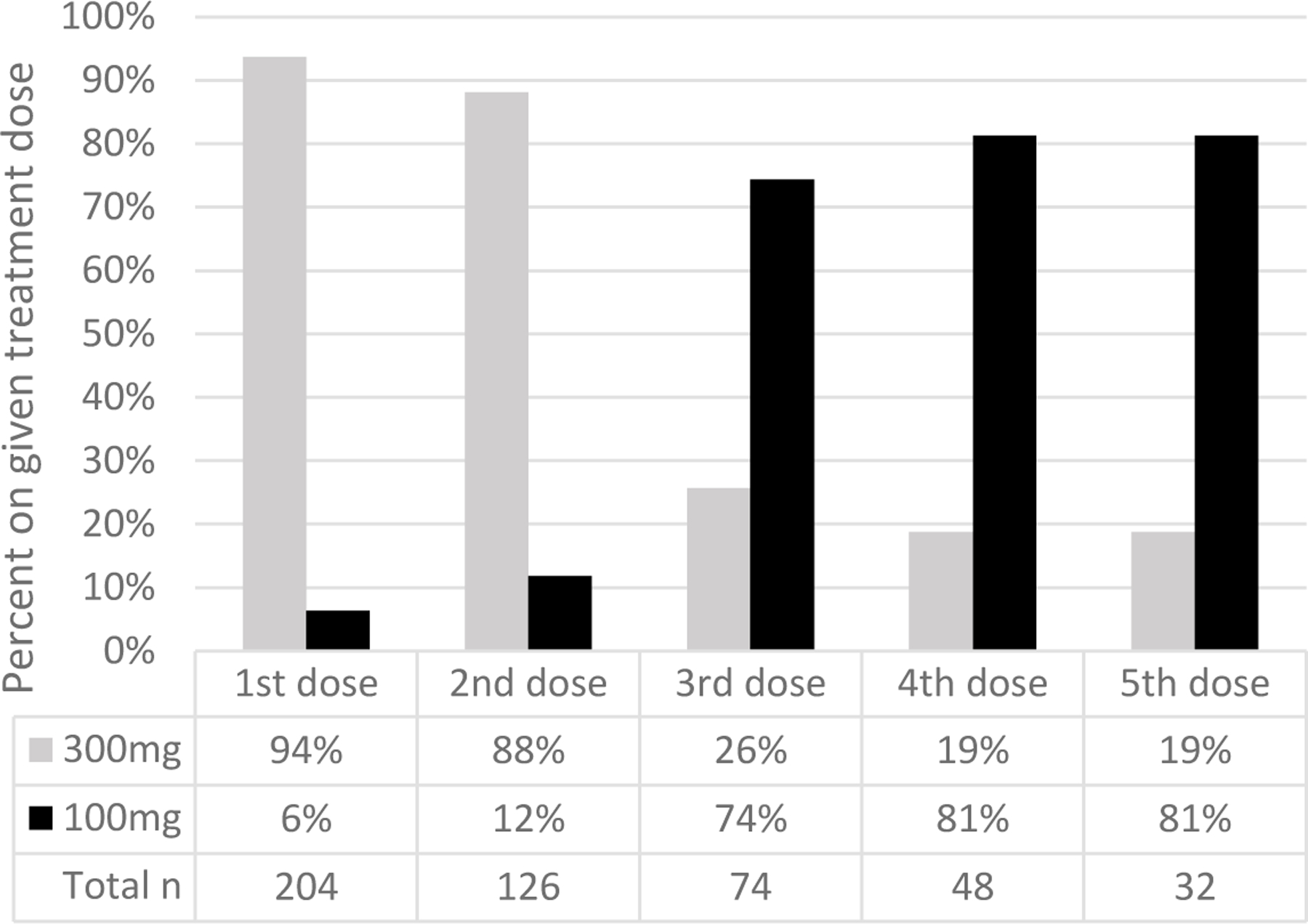
We identified 14,358 individuals initiating MOUD in 2018, including 204 (1%) extended-release buprenorphine, 1,173 (8%) extended-release naltrexone, 12,171 (85%) mucosal buprenorphine, and 810 (6%) methadone initiations. Three months after initiation, 50% (95% confidence interval CI 40%−60%) of extended-release buprenorphine, 64% (95% CI 61%−69%) of extended-release naltrexone, 34% (95% CI 33%−35%) of mucosal buprenorphine, and 58% (95% CI 54%−62%) of methadone initiators had discontinued treatment.
Conclusions:
Across all treatment groups, medication discontinuation was high, and in this sample of early adopters with limited follow-up time, we found no evidence that extended-release buprenorphine offered a retention advantage compared to other MOUD in real-world settings. Retention continues to represent a major obstacle to treatment effectiveness, and interventions are needed to address this challenge even as new MOUD formulations become available. -
Subjects:
-
Keywords:
-
Source:Drug Alcohol Depend. 225:108764
-
Pubmed ID:34051547
-
Pubmed Central ID:PMC8488795
-
Document Type:
-
Funding:
-
Place as Subject:
-
Volume:225
-
Download URL:
-
File Type:
 [PDF - 701.80 KB]
 -
Collection(s):
-
Main Document Checksum:urn:sha256:52ffccb571bc3caaa806a531bcd0b6585237c6dfc08f435c799f919ca50f2642
Supporting Files


File Language:
English
 Was this page helpful?
 Found an issue?


CDC STACKS serves as an archival repository of CDC-published products including
scientific findings, journal articles, guidelines, recommendations, or other public health information authored or
co-authored by CDC or funded partners.
As a repository, CDC STACKS retains documents in their original published format to ensure public access to scientific information.
As a repository, CDC STACKS retains documents in their original published format to ensure public access to scientific information.
You May Also Like
COLLECTION
CDC Public Access